Sailors Can't Swim
by Jessica Moore, translated from Dominique Scali
In Good Issois
Ys is an island. We don’t say “the isles of Ys” or “the Ys Archipelago,” because it is only on the main island – that big hunk of land lost between Saint-Jean-of-Newfoundland and Ouessant – that people can live year-round. The rocks that guard its waters and the dunes that block access from the south share the peculiarity of being submerged during the great equinoctial tides. These reefs were never true islets and were given names the way we give human names to pets. Ys is an island. Ys is unique.
In the beginning it was not marked on any nautical chart. The island was only known to whale hunters willing to chase the cetacean in its furthest fleeing. They were the boldest sailors of their time. They had no interest in having their competitors locate the island on a map and every interest in letting the powerful believe the route to be dotted with venomous sirens and abyssal falls. The island had had several names, one in each language and dialect. The Breton name, tide after tide and decade after decade, is the one that came to be adopted by all, perhaps because it was the shortest or maybe because it touched the imagination, reviving the memory of a mythical and sublime city, swallowed by the sea for being too pagan.
That was before the Age of Discoveries, before the Spanish galleons returned from the other side of the ocean laden with treasures, before the Portuguese built a wall there pierced by gunports, before the island became the main outpost in the heart of the crossings, a supply haven for pirates, a clandestine liquidation site for privateers unwilling to see the entirety of their loot confiscated by nitpicking officials. That was before the English and the French fought over it and further ringed it with ever more numerous and higher ramparts. The Portuguese had constructed a small fort at the tip of Old Man’s Point. When the French seized it, they built a second one across from it, on Longcouchant Point, their crossfire locking down the entrance to the Bay of Partance. By seizing both strongholds, the English were able to take control of Ys and build in turn a series of flanking towers on the multiple islets that served as the island’s outposts.
Whoever controlled the forts and the wall controlled Ys. Whoever controlled Ys controlled the Atlantic. But no one ever managed to control the Issois themselves.
In the year one hundred and twenty-seven before the Massacre of the First Men, our ancestors fomented what would later be known as the Great Mutiny: they did away with all the English officers who commanded the ships. England sent more ships and more officers. They were pushed back, and Ys became a republic. No monarch could henceforth claim dominion over the indomitable rock in the middle of the ocean. Not even the French, who tried for ten years to reconquer the island during the War of Reclamation. The Issois earned the reputation of being the most fearless fighters in the civilized world, blowing up their own ships rather than allowing themselves to be defeated, sacrificing elderly volunteers to pilot fire ships, resorting to suicide missions rather than giving up their freedom.
Elsewhere, they said we were mad, and now they say we are nationalistic. We prefer to say we are Issois. “Issois” is anything that is stubborn, audacious, and vengeful. “Issois” is what makes the chest puff out. The fisherman who brings in more quintals of cod than the rest, or the commander who always follows through on his threats – these are the ones who are considered “true Issois.” An eloquent speaker might be complimented by saying, “Now there’s one who speaks real Issois.” When the weather is fair, with just enough wind to set sail, people say: “The sky’s turning Issois.” We waste no time calling something worthy, brave, or pleasant, when we could simply say it is “Issois.” Some even go so far as to use the words “Issoisement” and “Issoiseté,” but we consider these to be in poor taste.
Danaé Poussin, nine years old, had never worn a pair of shoes that hadn’t first belonged to someone else. Every pair she inherited came from children who no longer needed them, some because they had grown, and most because they had died. Danaé was an ancient name, that of a Greek princess who had been imprisoned, sailed the seas to escape, and given birth to a demigod. It was, above all, the name of a ship. Ships were christened with women’s names, and women with the names of ships. A galliot had only to be celebrated in song to give rise to a multitude of girls who would, in turn, engender countless galleons.
Danaé was an orphan. The orphans of the shore were like the yellowish foam that accumulated in rock crevices and on the strands of seaweed: remnants of rough weather. A foam that clung after the tide receded, lives more tenacious than misfortune. Each storm held its share, and some storms were more memorable than others, like the one in the year twenty-seven before the Massacre of the First Men. A wind to tear the doors off, dislodge the dunes, loosen the stones. A sea that came unhinged, rebelling against being contained in a too-small vessel. Ships at berth dragged on their anchors, colliding with each other. Peaceful hulls transformed into untameable beasts. Six flutes, four schooners, three sloops, two frigates, grounded, wrecked, their cargo lost and crews decimated. Impossible to draw a full assessment, so complete was the devastation, and contents strewn from the Bay of Partance all the way to the far shores of the Sablons Archipelago, and the seething coast of the Strandings. Impossible to know the number of fishermen who set out in their open boats never to return. It would have required going to each cove, each hamlet, every corner of the coastline to tally each cluster of lives cut short and thereby measure the magnitude of the disaster. Hundreds of fathers who left behind hundreds of wives, dozens of whom had too many children to meet their needs on their own. Dozens of children who already had no mother and who, in the space of a single night, would have no one at all.
The older orphans gathered in gangs, forming swarms of troublemakers who scoured the beaches, terrorizing defenceless shore dwellers, feeding the chain of crime around the Grand Port. The youngest were taken in by an aunt, a neighbour, or wandered until they found a new place to anchor. In the Strandings, every creek had its natural offspring and collected its wards. They were adopted like stray dogs: if you fed them, they stayed. The frailest children were favoured, and they died all the same. The most robust orphans were neglected, and they survived nonetheless. Every storm brought its lot of kids ready to fill the void left by those who had died. Never perfectly, never completely, but just enough. The inhabitants were accustomed to bargaining with the ocean: sometimes it takes, sometimes it brings gifts.
*
Ambouche did not derive its name from the mouth of any watercourse—l'embouchure, in French—but from the place where, in times of yore, Basque fishermen had ambushed English fishermen. The latter had shouted “Ambush!” so loudly and for so long that every name formerly employed for the place was forgotten.
The harbour of Ambouche was a port. It earned this title because of an old pier of yellow and grey stones that formed a narrow channel at the entrance to its enclave. Boats and schooners with russet sails came to moor at its rusted rings. Ambouche was also referred to as “Petit Port.” There was only one true port in Ys, with a bay that could accommodate behemoths and a swarm of stevedores, munitions handlers, barge drivers, and grain measurers. This was the port in the Bay of Partance, which opened onto the entrance to the city, called the “Grand Port” by the shore dwellers, and the “Port of Ys” by foreigners. But this port was on the other side of the island, a one- or two-days’ sail in fair winds.
Ambouche was also the only cove in the Strandings with a guardhouse still in operation: a bronze cannon, a spartan cabin built with red rock taken from another slope, where the Admiralty’s watchmen took turns. Erected high on the rock, the stone hut was spared from the high equinoctial tides, but was whipped by a wind that blew harder and sharper than in the cottages below. The uniforms surveyed the wide expanse and the inhabitants who lived in the shadow of the cliff with a distracted eye. On calm days you could hear the song of the salters and the flapping of sheets drying on a line strung between two remnants of masts. In dry weather you could see the mothers hanging them with a vacant look. Perhaps they were thinking of the shining eyes of their children when they put on these new rags, or perhaps of the bulging eyes of the drowned bodies on which the rags had been found.
Les marins ne savent pas nager was published by La Peuplade in 2022. Jessica Moore’s translation, Sailors Can’t Swim, is forthcoming with Talonbooks in fall 2026.
ABOUT THE CREATORs
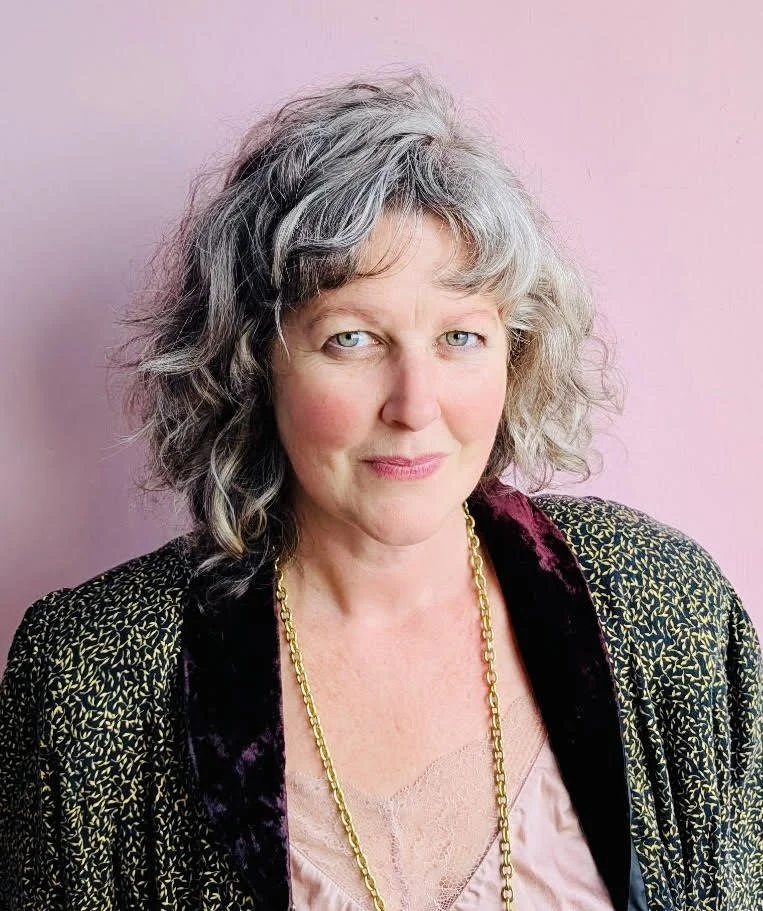
Photo credit: Brooke Lockyer
Jessica Moore is an award-winning literary translator and the author of two books, Everything, now and The Whole Singing Ocean.
Instagram: @the.whole.singing.ocean
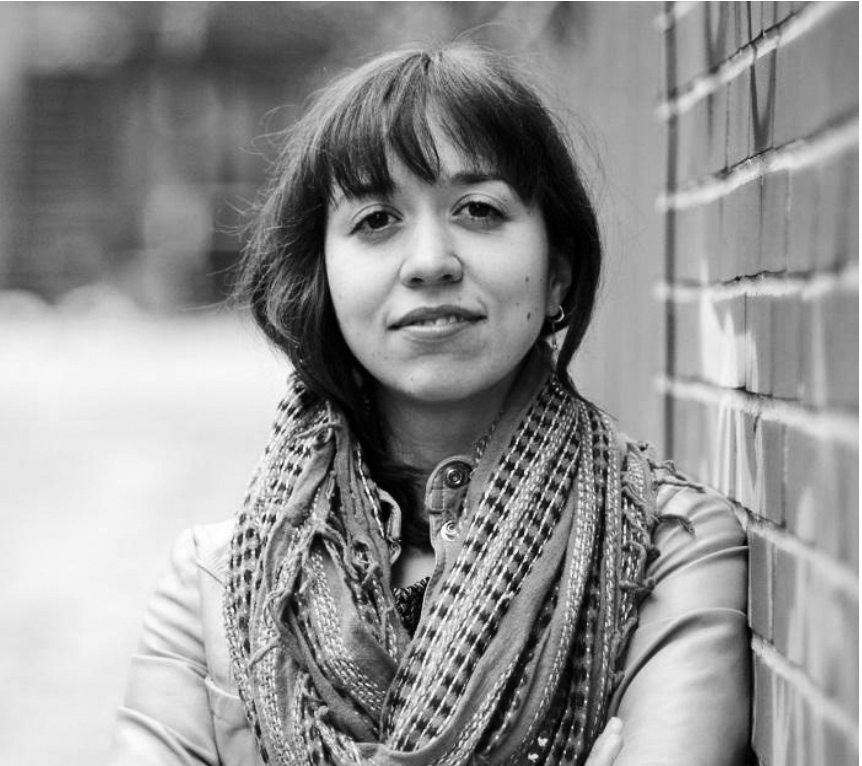
Dominique Scali is a novelist and journalist from Montréal. Sailors Can’t Swim, her second novel, has been awarded the Prix des libraires du Québec, the Prix Jacques-Brossard de la science-fiction et du fantastique, and the French Prix Imaginales.
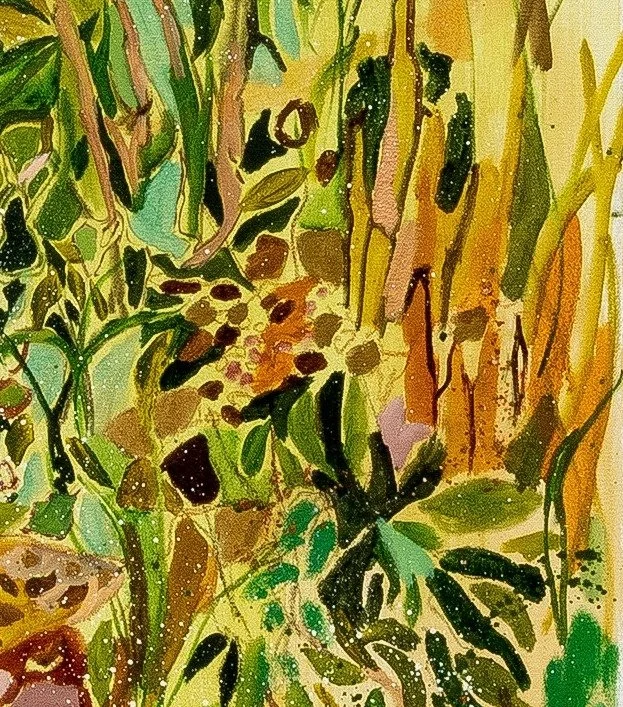
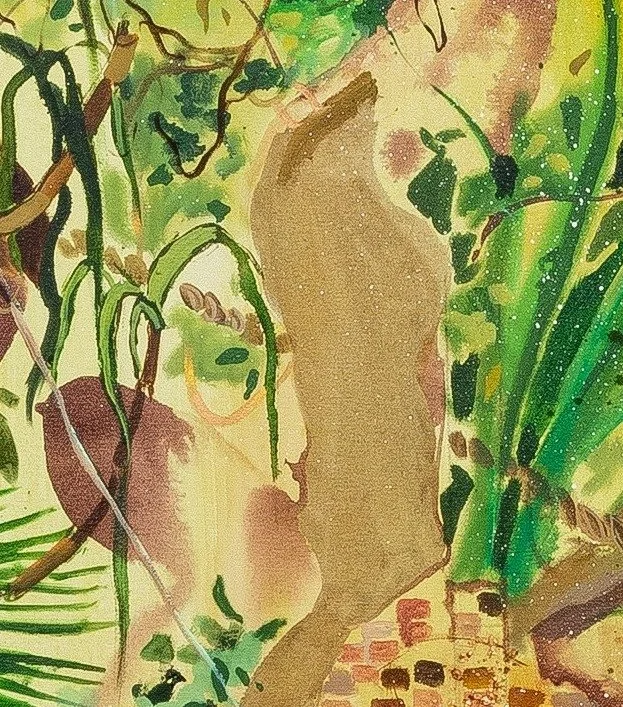
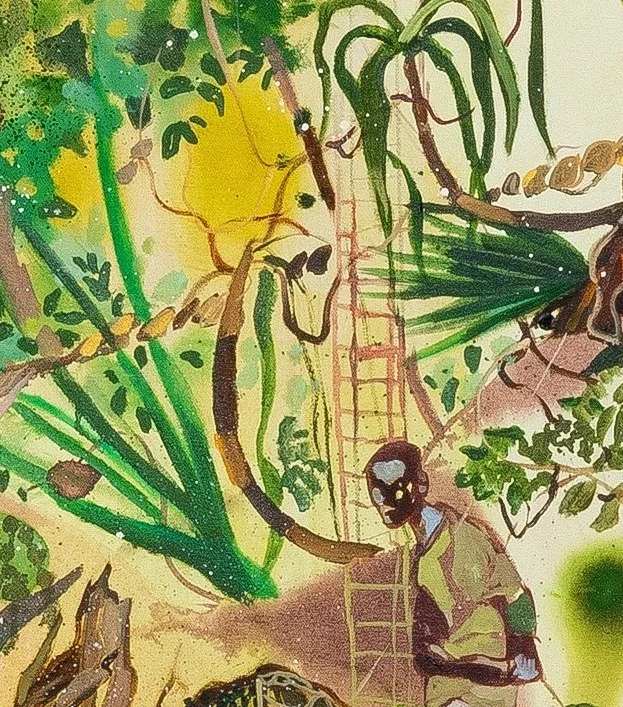
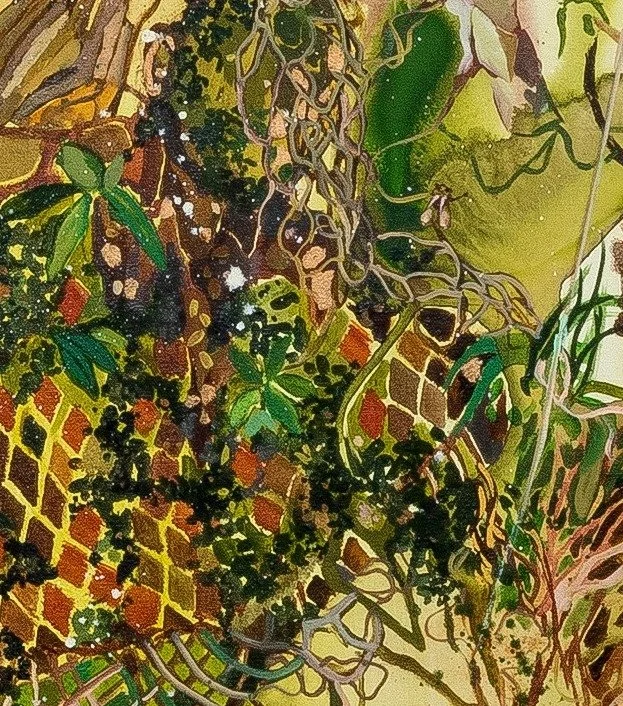
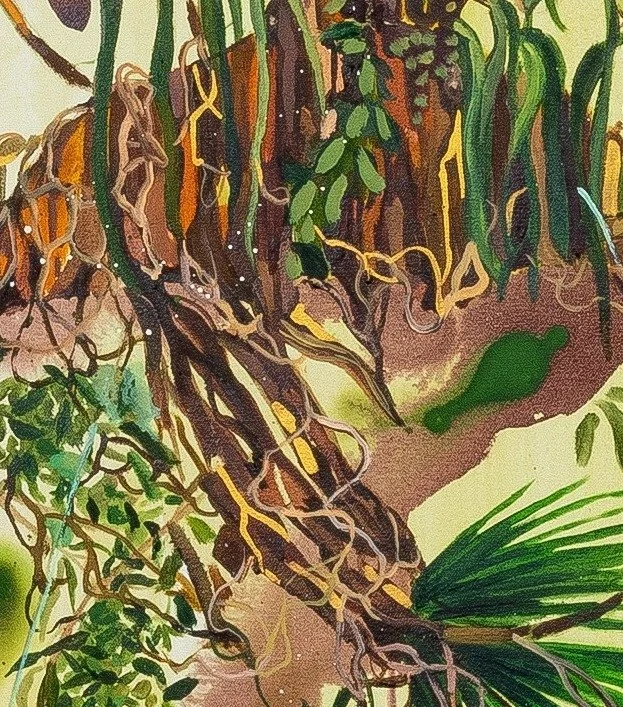
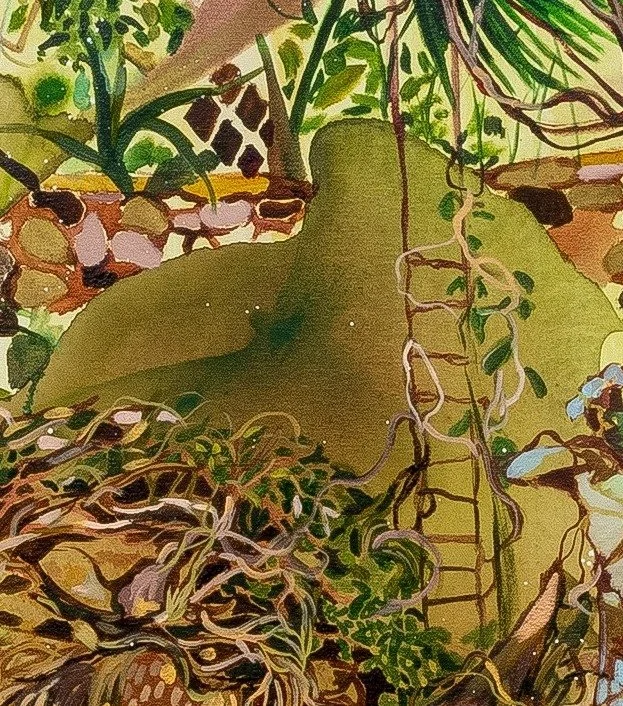
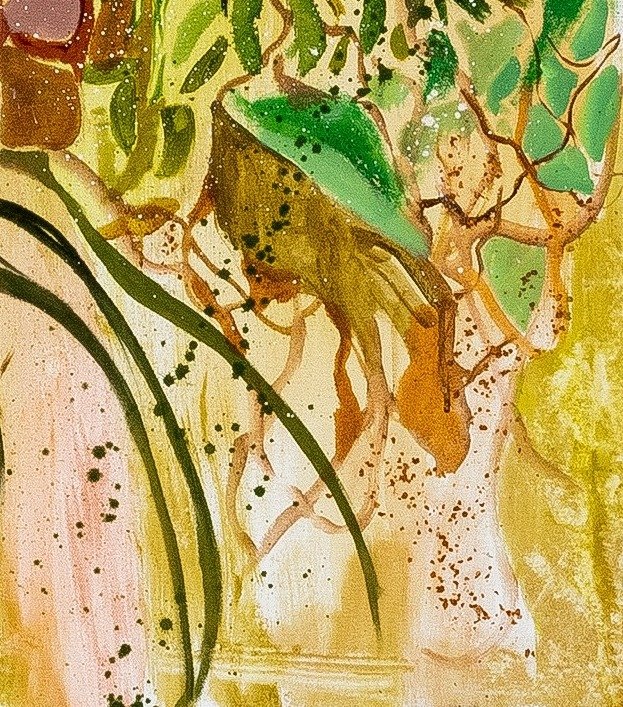
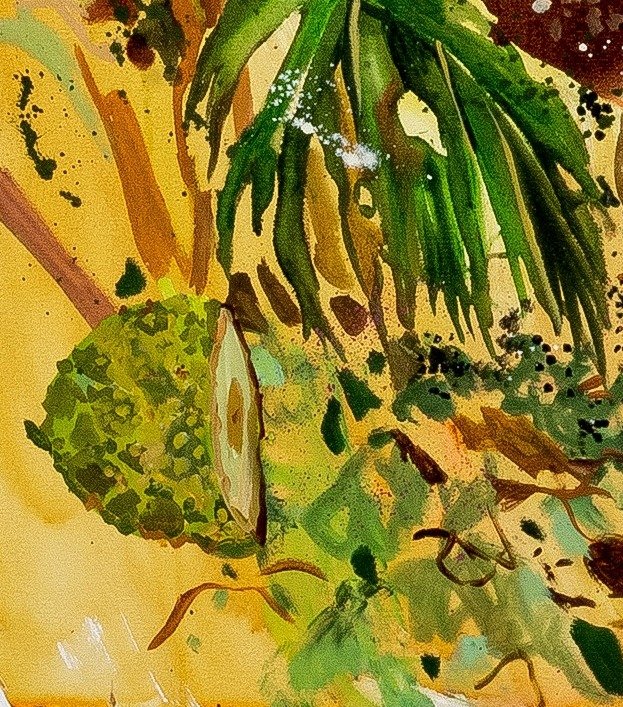
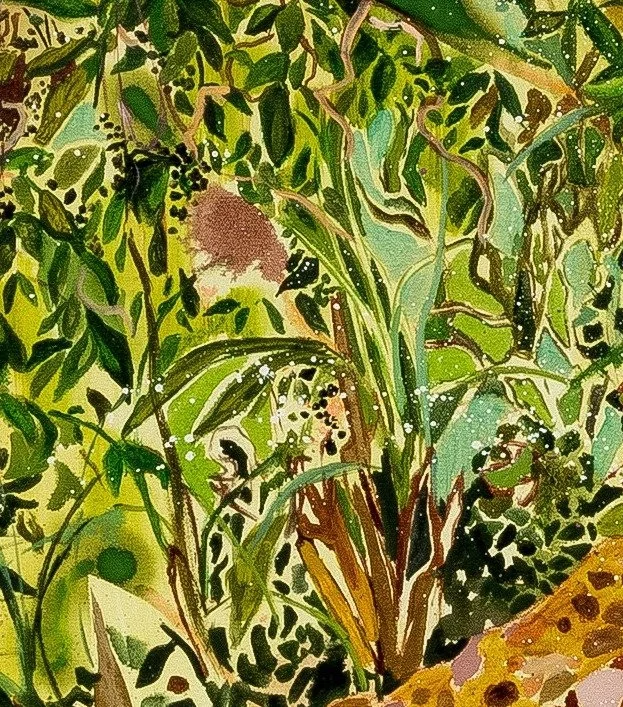
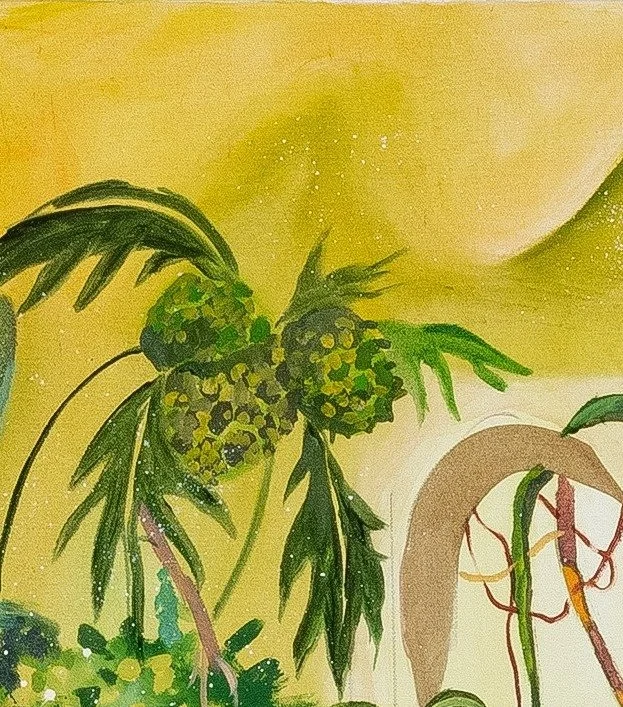
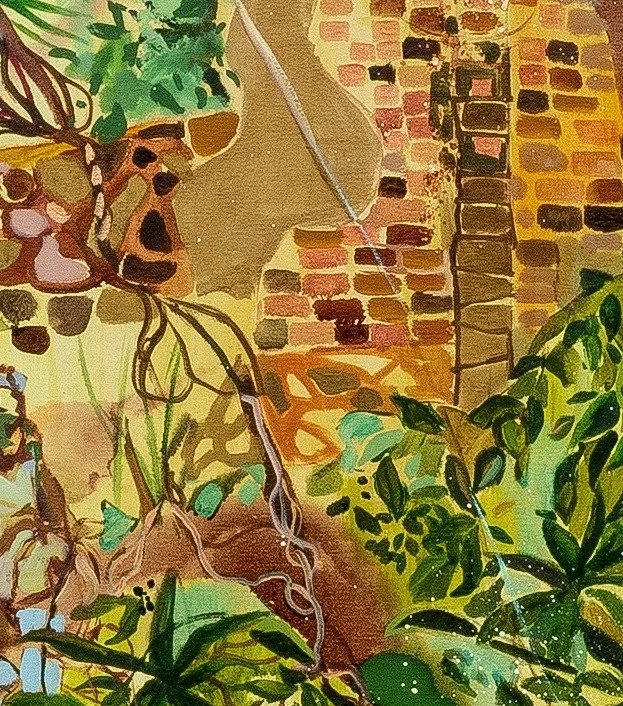
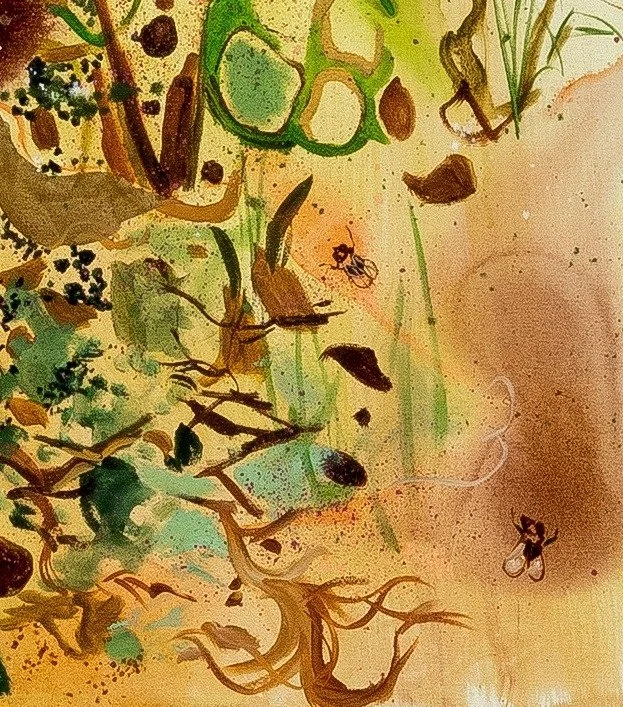
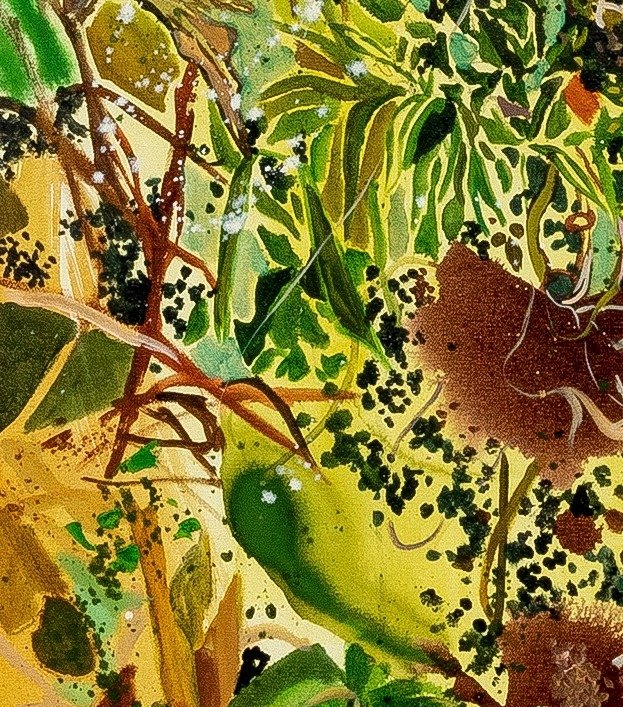
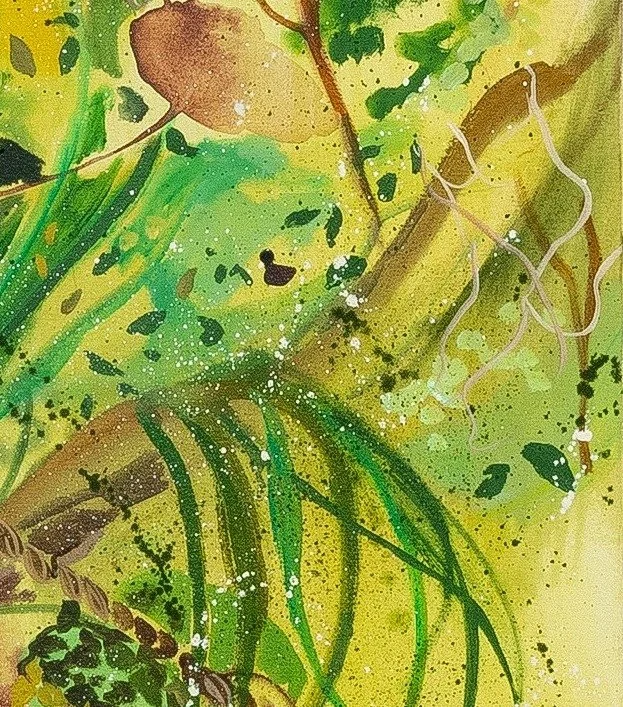
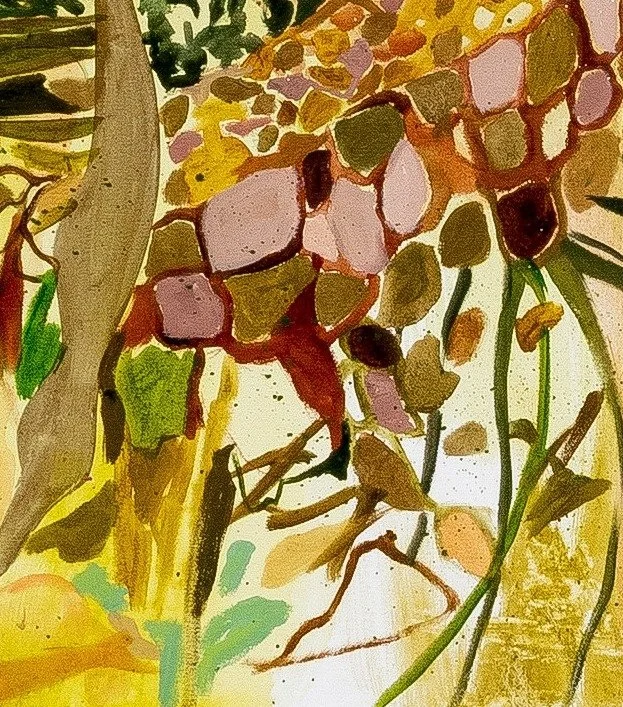
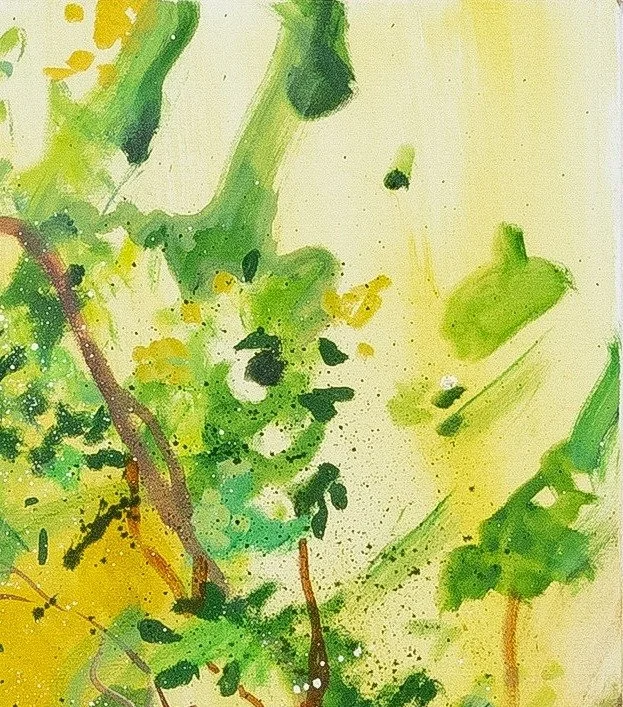
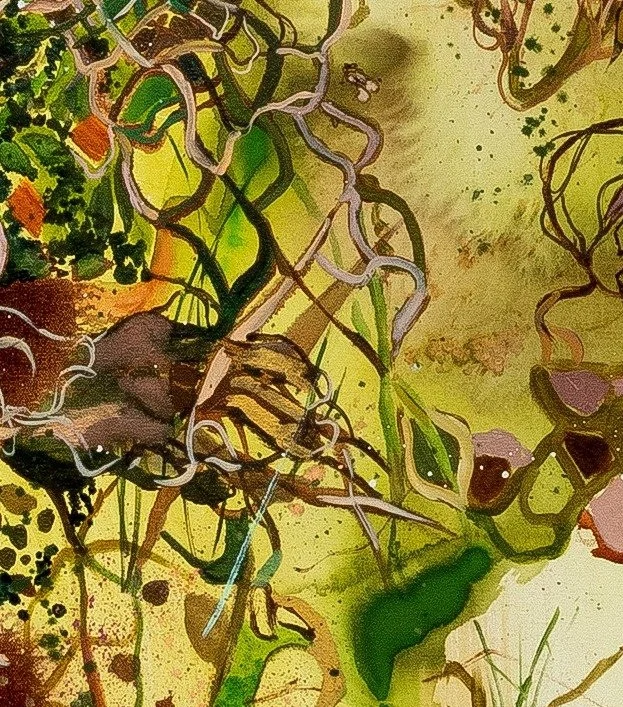
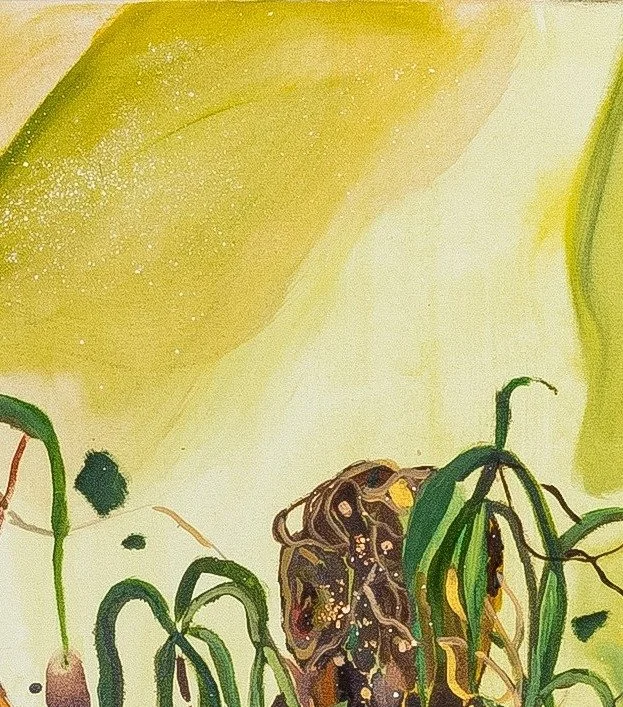
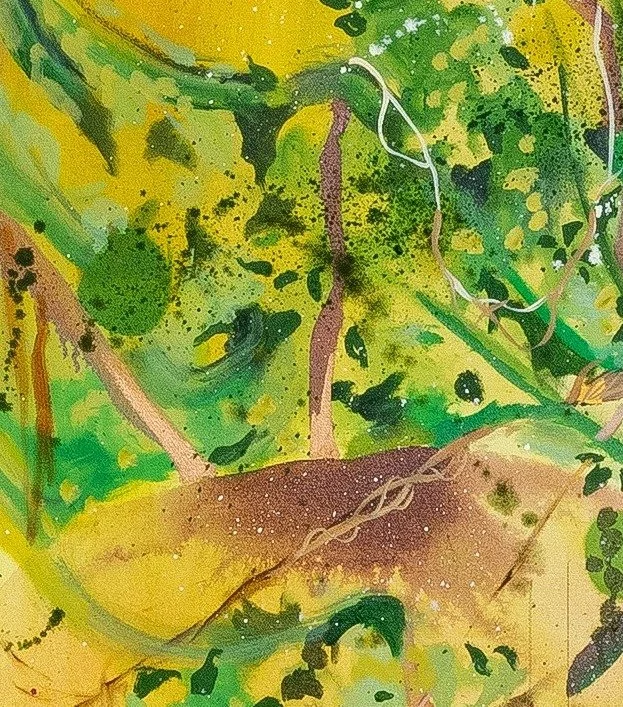
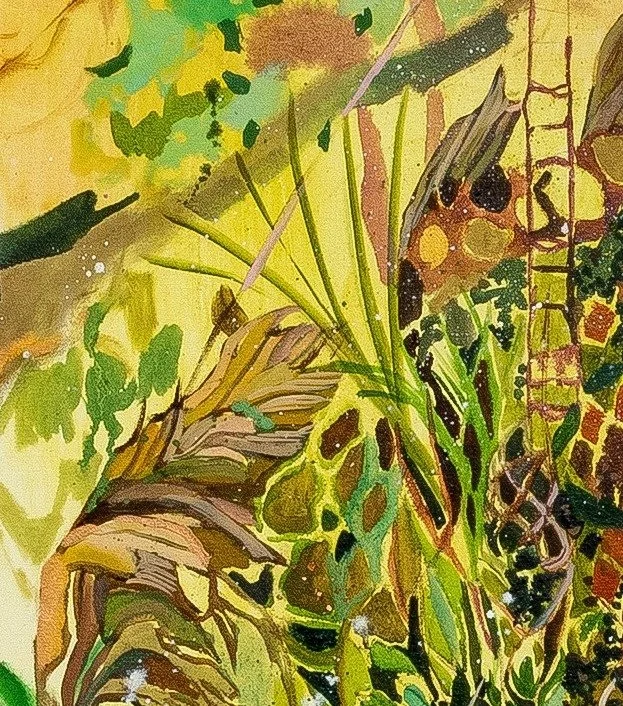
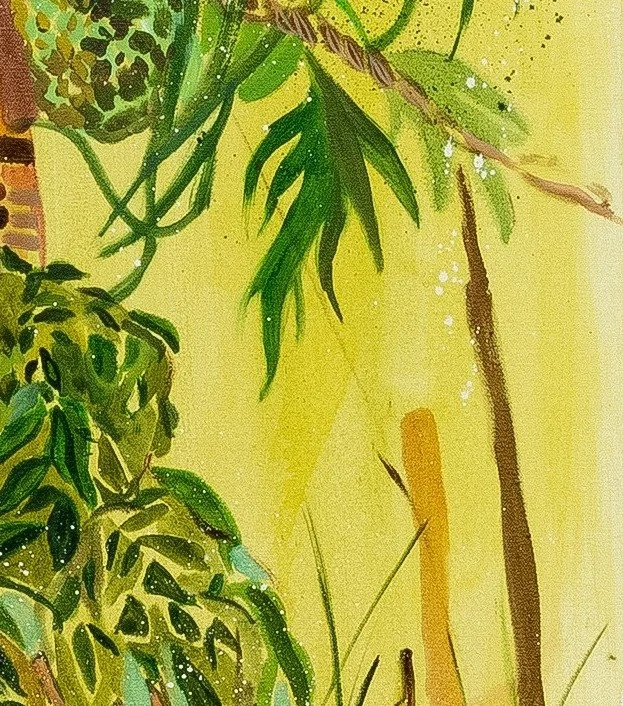
Cover art by Laurena Finéus
In “Jardin de Mackandal” (The Garden of Mackandal), the focus is the breadfruit tree, a hardy symbol of survival. Known for its role in Haiti's reforestation, the breadfruit tree thrives in poor soil and is a reliable source of sustenance, especially in times of crisis.