
Of Time
by Theresa Lin
Three Days on End
In his essay “Exhaling,” Carrère quotes Freud, who quotes Ludwig Börne:
Take a few sheets of paper and for three days on end write down, without fabrication or hypocrisy, everything that comes into your head. Write down what you think of yourself, of your wife, of the Turkish war, of Goethe, of Fonk’s trial, of the Last Judgment, of your superiors—and when three days have passed you will be quite out of your senses with astonishment at the new and unheard-of thoughts you have had. This is the art of becoming an original writer in three days.
At a café with Amy, I write almost nonstop, encouraged by this instruction. I flesh out ideas that I’d started in my journal and I separate the sections with titles, giving the impression of thematic intention rather than the happenstance byproducts of living. It all comes together, and I enter a meditative state, which is unusual for me.
The sky is bright but gray. I feel unmoored but happy at least to be with my friend. Morgan had walked me across the park to the café but at the exit near The Met, he pulled away and smiled coldly. He held me at arm’s length when I tried to kiss him. He was still upset. I text Morgan “sorry” again—I’d acted stupidly the night before (out of jealousy as usual), but he doesn’t respond.
Afterwards, Amy and I get bratwurst from a little window of an Austrian butchery that opens up onto the street. The woman at the window is beautiful and young and, maybe because of or in spite of these two things, pleasant. I could benefit from having more of her demeanor, I think to myself. We sit outdoors, which we haven’t done all winter. The picnic table tilts at a 45 degree angle because it is near a cellar door and Amy’s sauerkraut keeps falling out of her pretzel bun for this reason. “It’s okay,” she says with gentleness, “he’ll forgive you.”
Wild Geese
All day I furiously type up what I wrote at the café. The sentences are coming to me as if I were just taking dictation, I think, with the same bafflement as Salieri in Amadeus. Still, I am nervous. I fear that I’ll inevitably come to a point where it will all fall apart, that of course it will, since the piece came too easily for me, which, again, never happens. But when I finish, I am thrilled. The work seems to be whole. And what is more, the problem I have been having for years with voice that it is too formal or academic—too lifeless—seems to be corrected. There is an urgency and intimacy, that desire for the speaker to figure things out, as Vivian Gornick talks about.
Morgan and I walk once again to the reservoir. We are coming back together. “How is the book?” I ask. He is reading Beloved Son Felix: Coming of Age in the Renaissance, the journals of a medical student who exhumes bodies to examine their anatomy in an age when medicine still meant learning how to leech patients. Yet, at one point, Felix also tries on new riding boots and trips on his own spurs, nearly tumbling down a flight of stairs. “Later, he feels humiliated after falling at a dance in front of a pretty girl,” says Morgan. These details amuse him. They suggest that, yes, this is an exceptional man for whom we can credit modern neurology, but he is also just a man.
I point to a goose whose head is submerged in the water. It doesn’t come up for air. There is another. Their necks are like the handles of pitchers. I look over the railing and there is one that seems spatchcocked, split down the middle, all sinew and red flesh with its legs splayed in midair. There is a slurry of feathers in the water that, despite the warm weather, is still icy. Closer to the fountain, the water flows freely, but it was as though these geese knew they were dying and came to this chilled, remote area to leave their bodies.
“How upsetting,” I keep saying over and over until Morgan pulls me away. “There are maybe a thousand birds,” he says. “These are just a handful.” It isn’t so unusual, is what he means. Morgan resumes, a little frustrated at the stopping and starting of his story, and he holds my hand more tightly as though to corral my thoughts along our walk.
“Felix and his two companions,” Morgan resumes, “ride on horseback for three weeks from Basel to southern France. Eventually, they need to rest overnight at a shady inn. They are so afraid of the surly clientele that they barricade their door and sleep in shifts and leave before sunrise. Later, when they’ve made it to the next town, the villagers tell them they were right to flee. The group of men at the inn were in fact brigands who planned to hide out in the woods that next day to rob then kill Felix and his friends.”
We make our way back to where we entered the reservoir. All this time, the image of the geese has haunted me. I continue looking for headless lumps nestled in the ice. Sure enough there are others. Ducks this time. And more geese. Maybe a dozen dead birds in total.
After he gets everything out, “Thank you for asking me about my book,” says Morgan.
He speaks so cordially that I wonder if I ask enough about his life. On an early date six years ago, we took this same walk around this reservoir. I’d leant him Salinger’s Nine Stories and we talked about the humor in “A Perfect Day for Bananafish,” and he lamented how Holden Caulfield was the only exposure most Americans had to this brilliant writer. This was the day he says he knew that he loved me. He loved how we could talk and talk about readings, how I took curiosity in him. Then a couple of years into being married, he recalled this day. He wanted to make an amendment. I only entertained him because it was a book I recommended. I was happy to be teacher and him student. It could never be the other way around or a neutral exchange of ideas.
Once More to the Reservoir
I am thinking of the geese again wondering why they chose the water to die, or if there was choice involved. It recalls for me the opening of My Struggle in which Karl Ove muses on the need for death to be hidden, or more accurately, why the dead need to be hidden. Death is all around us but only as an abstraction: in movies, in the news, in the stories we hear about other people’s lives. I guess my shock was that I saw the geese dead and that I saw them dead in Central Park, a place of nature, yes, but one that is so manicured as to be something apart from nature as well, something where certain phenomena of nature such as death do not occur at least out in the open. Their mass of feathers pooled together but what did that have to do with their dying, I wonder. The bodies were already disintegrating so soon?
I read “Death of a Moth” twice just before teaching it, but I run out of time and only reread the first few paragraphs and the last of “Once More to the Lake,” which I am also teaching. A mistake. Sometimes I overplan one aspect then completely neglect another, so confident or satisfied am I about the state of the first that it overflows to the second, when they have nothing to do with each other.
A term E.B. White uses that I adore: transposition. He brings his son—only ever referred to as “the boy”—back to the same camp his own father used to take him to every 1st of August. In his own words, White experiences a “creepy sensation” brought on by the passage of time. In some moments, he is comforted to know things have stayed just the same: “I knew it, lying in bed the first morning, smelling the bedroom, and hearing the boy sneak quietly out and go off along the shore in a boat.” In others, this same concept—that time has not passed—petrifies him: “I would be in the middle of some simple act, I would be picking up a bait box or laying down a table fork, or I would be saying something, and suddenly it would be not I but my father who was saying the words or making the gesture.” If things are the same, what does that mean about him? Is he the boy, and no time at all has passed, or is he himself? Is the boy him, in which case he is his father? There is the incredible moment where he notes the minnows in the shallows of the lake. They cast shadows that make the school appear double in size. Another transposition.
In my rush while reading, however, I missed the most important throughline, which was the decline of White’s masculinity, his sexuality, his virility. And as a result, I keep dismissing the appearance of innuendos when we read through the essay as a class.
“Everywhere we went I had trouble making out which was I, the one walking at my side, the one walking in my pants. Why pants? That’s strange,” I say to the silent squares on Zoom.
Or in another paragraph: “We stared silently at the tips of our rods, at the dragonflies…There had been no years between the ducking of this dragonfly and the other one--the one that was part of memory. I looked at the boy, who was silently watching his fly, and it was my hands that held his rod, my eyes watching. I felt dizzy and didn't know which rod I was at the end of.” A student laughs. “Yes, rod is an unfortunate word choice, isn’t it?”
Then the final paragraph, when the penile diction can no longer be ignored: “When the others went swimming my son said he was going in too. He pulled his dripping trunks from the line where they had hung all through the shower, and wrung them out. Languidly, and with no thought of going in, I watched him, his hard little body, skinny and bare, saw him wince slightly as he pulled up around his vitals the small, soggy, icy garment. As he buckled the swollen belt suddenly my groin felt the chill of death.”
My student Polly says very gently, “Well everything was very beautiful, but I didn’t like White at all. He uses a memory with his son to talk about himself.”
I agree. I blunder some about how White cannot individuate from his son. While they work on their exercise, I write in the chat: “This is the author of Charlotte’s Web and Stuart Little. It’s interesting that he would write and share about the decline of his virility and what is more, have the emerging sexuality of his son prompt these thoughts. I definitely think the story upon further thought is riskier than the pastoral images of camp life would have you initially believe. He does fashion an unlikable speaker because he doesn’t like himself.” I feel somewhat redeemed. But I’d already shown my cards! I was not prepared!
After class, I collapse onto the bed beside Morgan who is reading The New Yorker. Looking at the ceiling, I tell him about the essay. “Sounds fascinating,” he says. “It reminds me of something Uncle Lanny said this last time I visited him in Austin: You get older and you see the world the same, but you catch yourself in the mirror and you are a stranger to yourself. The world no longer sees you either. There are experiences that are no longer available to you because they require people to regard you in a way that they no longer do. With your inside self still the same but your outer one changed, you are sometimes more the boy than you are yourself.”
Why Don’t You Dance?
For my birthday, we watch Beaches of Agnès at Film Forum. Amy is about to leave the tickets at the front counter for Keighton and Clint who are running late but just then, they are carried in by a chilled gust of wind. The film is sold out and we’re seated too close to the screen. The old man next to me smells of urine. He looks especially frail, folded into his seat, too light it seems to keep his chair pressed down. His jacket and cane are stuffed between us so that he appears in a nest of his own belongings. He wears a medical mask that he’s slipped under his nose. It’s always curious to me when someone does this. He deems us safe enough. Just to be sure, I run a quick mental check of my health as not to endanger him. Safe enough, I agree.
Something about seeing this documentary by an aged Varda recounting her own life, the incontinence of this old man, I am thinking of some sort of joke to make when we get out of the theater. Something to call attention to the odor that the rest of them must also be picking up on and the geriatric way I want to celebrate turning 33. The old man tucks his head into his chest like a bird and shuts his eyes. Does Varda or the documentary hold a special significance for him? I wonder. He is alone, after all, and perhaps he closes his eyes because he is remembering the last time he watched it, the person he watched it with last.
I recall how, years ago, in this very screening room, Morgan and I sat behind two seats whose engraved dedications read: “Ronald Cote: Her Cinephile” and “Edrie Cote: His Sidekick.” At home, I searched their names. Ronald recently died at 81. He taught math at Trinity School for 32 years. He was survived by Edrie. I imagined them visiting the theater together so regularly that when Ronald passed, Edrie thought to remember him there. The city had narrowed to those two seats while they shared in the sacred darkness and, later, to the lobby, where they resumed their filmic talk. At least that is how it is for Morgan and me. “Place is completed through the word,” writes anthropologist Marc Augé, “the allusive exchange of a few passwords between speakers who are conniving in private complicity.”
So moved was I by my own imagination of this couple that I emailed the theater about engravings for Morgan and me. $2,000 for one. Maybe when I die, I thought.
More and more of the movie passes the old man by. Beaches is in French, but maybe he understands and doesn’t need the subtitles. He can afford to look away from the screen. Maybe he’s just asleep. A long moment passes. Not a sound or stir and I wonder if I should check on him. This is much more than remembering. A much more permanent sleep. He eventually picks up his head. Ah! Later, he laughs when the rest of us laugh at the part where Varda steps into her childhood home and is regaled by the current owner about his extensive and expensive train collection.
I had a father growing up who liked to make jokes at our expense. I still have the instinct to make a joke about the old man because of my old man. Why are you so wicked? I remind myself sometimes of the girl from the Carver story “Why Don’t You Dance?”. Just like White’s son is only ever “the boy” and this movie patron is for me “the old man,” there is “the man” who opens the story by sipping his whiskey looking out onto his yard staged with a bedroom furniture set. A bed, two night stands, two reading lamps. His side, her side. Passing by his yard are “a girl” and “a boy” who wish to buy the pieces. “Would you take forty?” the girl asks about the bed. “I’ll take forty,” says the man. “Would you take fifteen?” the girl asks about the TV. “I could take fifteen,” says the man. He accepts whatever prices they name. Then he sits on the sofa, and stares at the boy and the girl. Eventually, it gets dark, but because he ran cables out into the yard, all the lamps work, and they even put on some records. “Why don’t you dance?” he says to the girl and the boy. The boy is a little more reserved than the girl and he’s drunk because they’ve been drinking beers, so the man dances with her.
The girl dances with the man. It is a tender moment. Only in the last couple of lines, after some time has passed, the girl retells the story to anyone who will listen. She tries to make fun of the old man, but no one quite understands what exactly is funny. Eventually she stops trying to retell the story.
What is her impulse? Why sully the original memory? The girl feels embarrassed about the gentleness? She has second thoughts about the man’s intentions? No, I don’t think so. She is too immature to understand his heartache yet. She laughs at pain she does not yet know.
We leave the theater, my face is wet. The love Varda had for Demy. How one must go before the other.
We walk around the West Village for wine and small bites then later for well drinks at Stonewall. I’d mentioned to Morgan offhandedly months ago that I was interested in buying a matching vintage coat and dress set from the 60s or 70s. He bought me a few, and that morning I tried them on. I wear a cropped brocade jacket embroidered in a black floral pattern with a fur collar. Everywhere, the wind finds its way under the jacket and chills me, but it feels good to be alive.
ABOUT THE CREATOR

Theresa Lin lives in New York City and teaches Creative Writing at The Cooper Union, 92NY, and The Center for Fiction.
Instagram: @theresalin
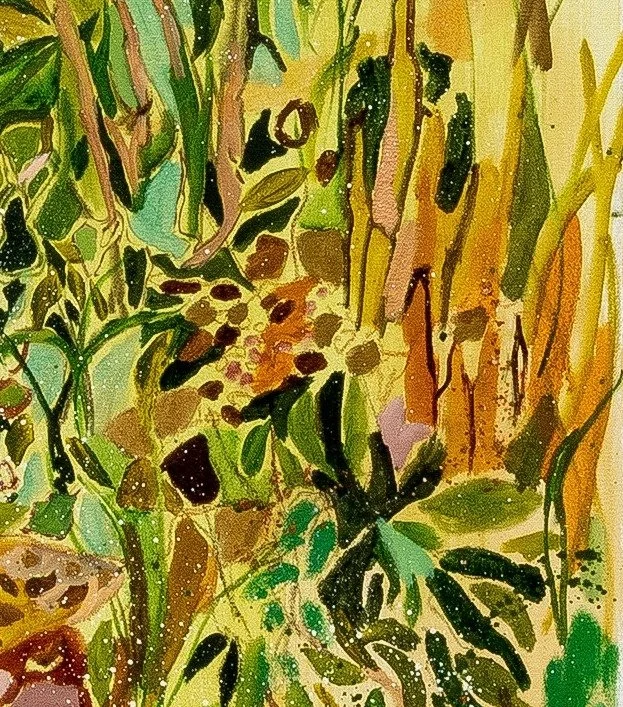
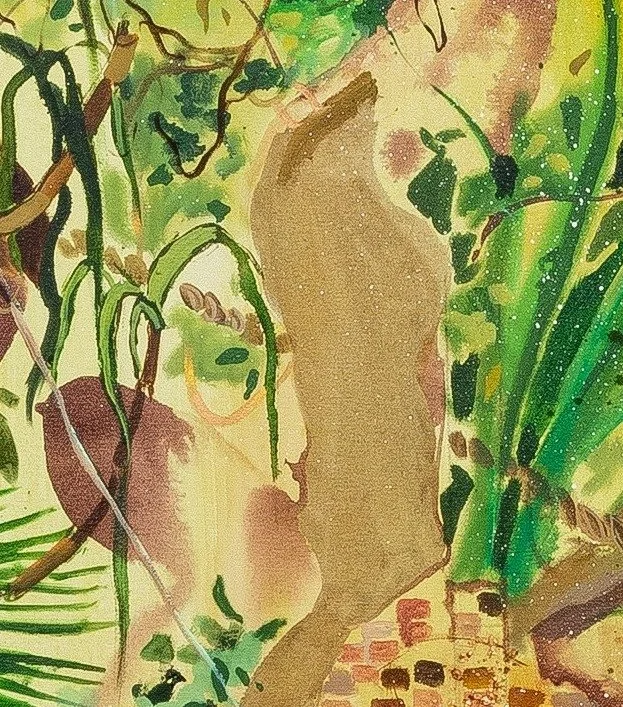
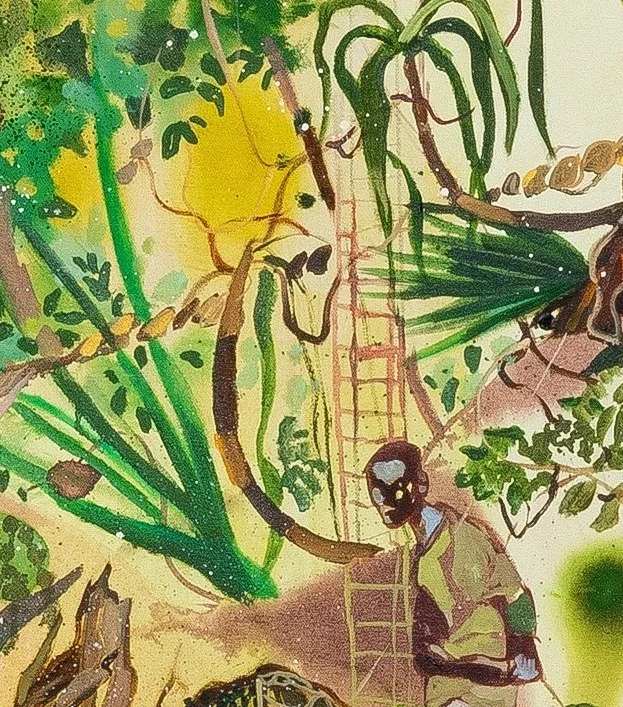
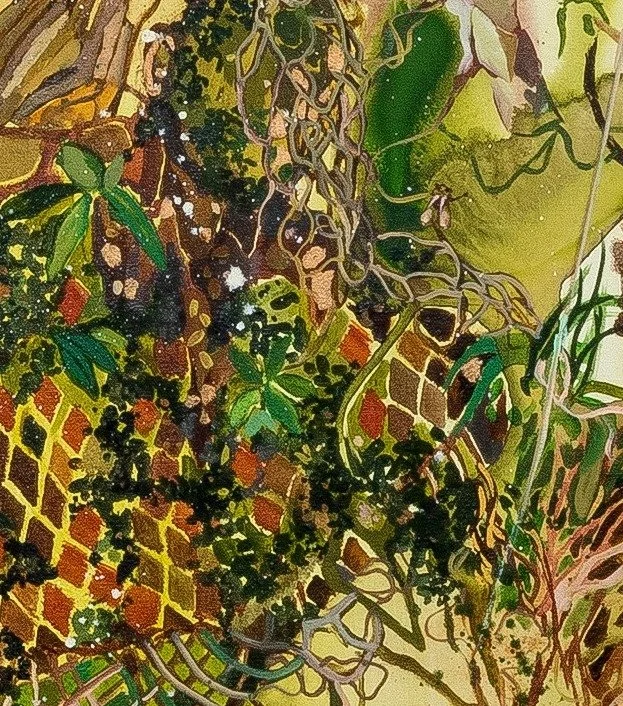
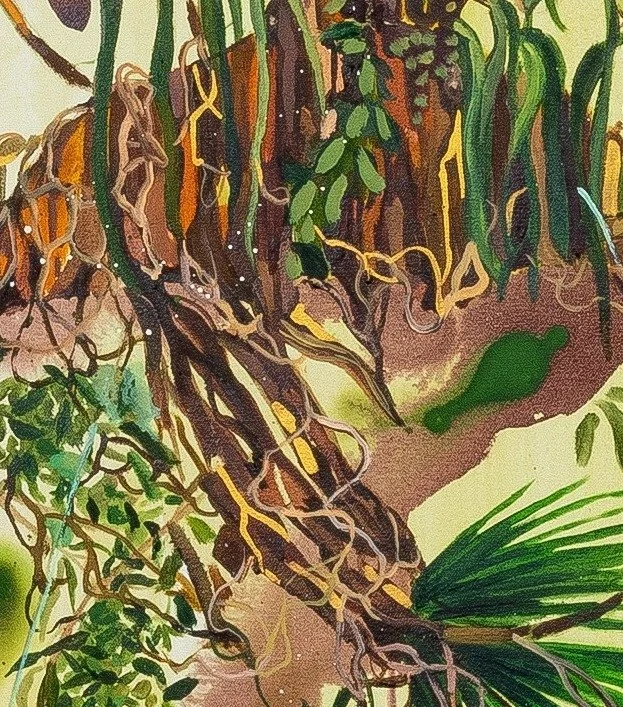
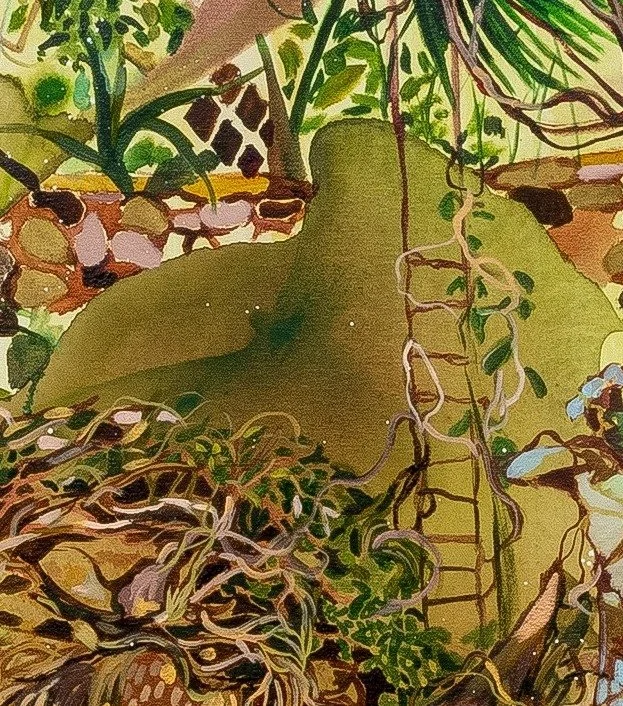
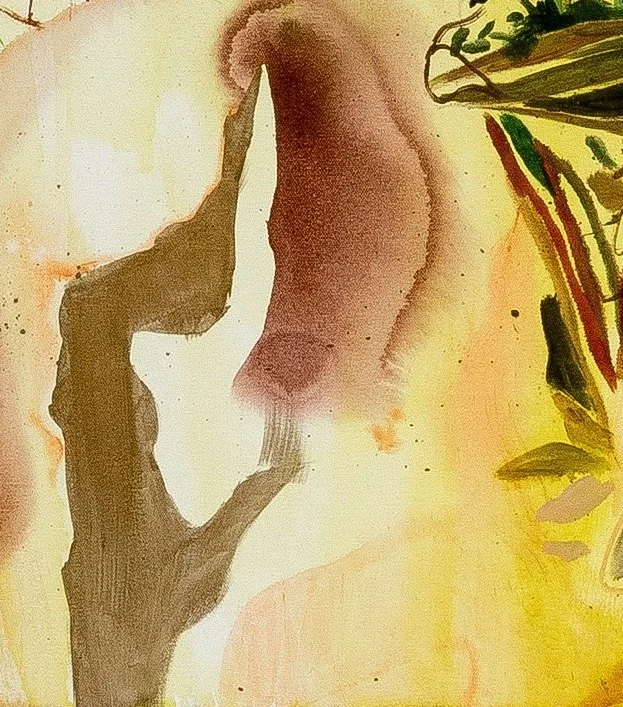
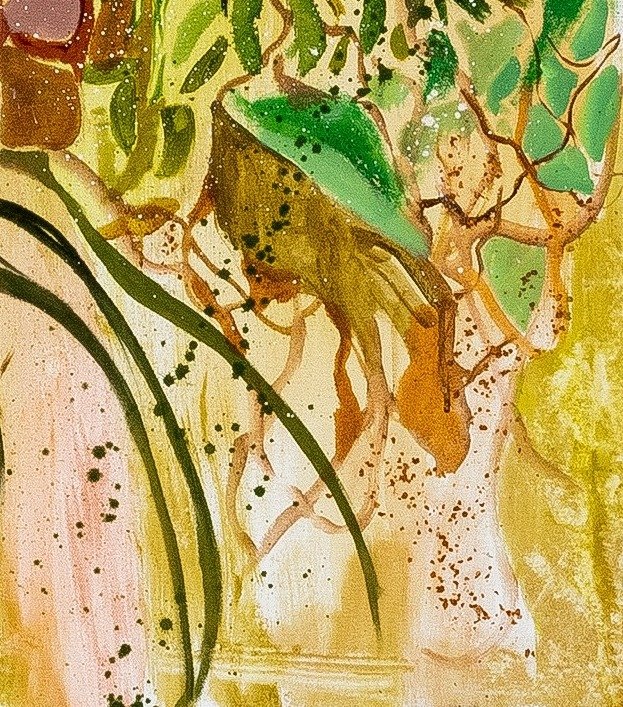
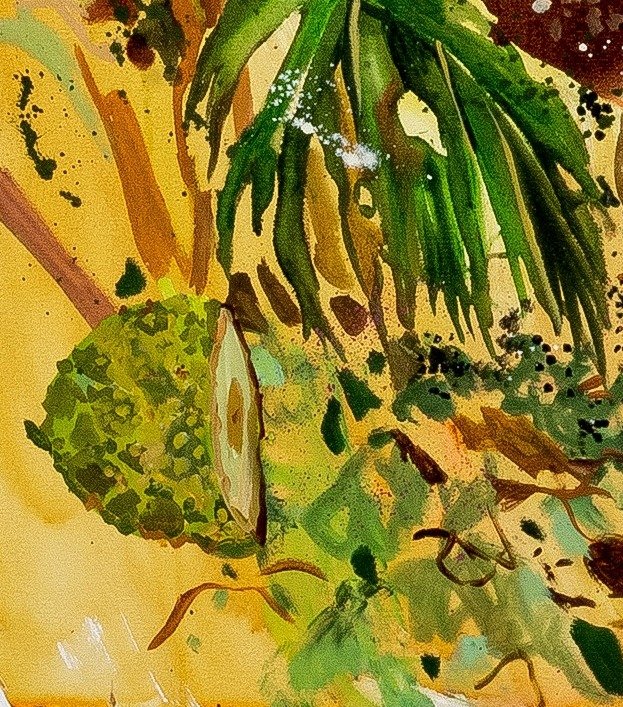
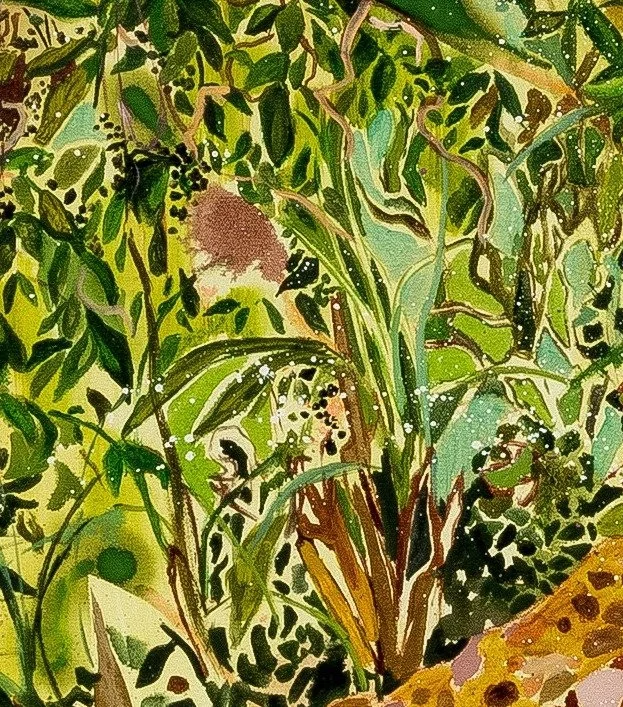
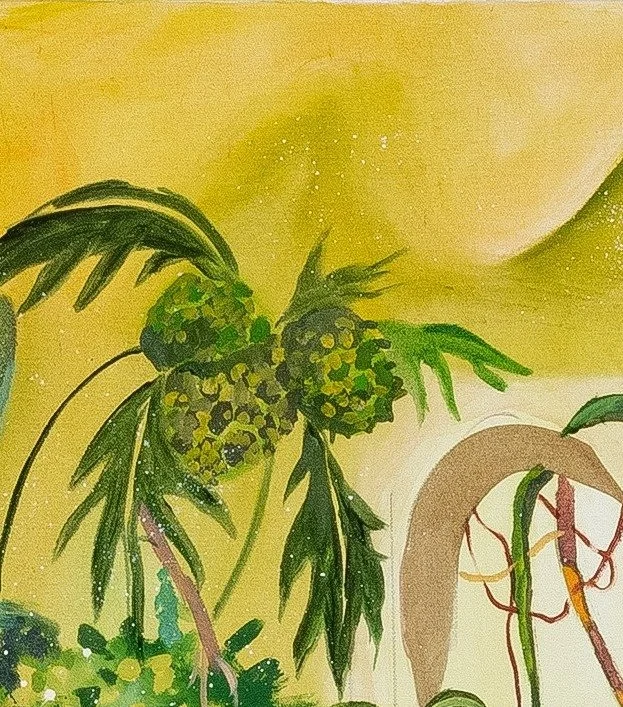
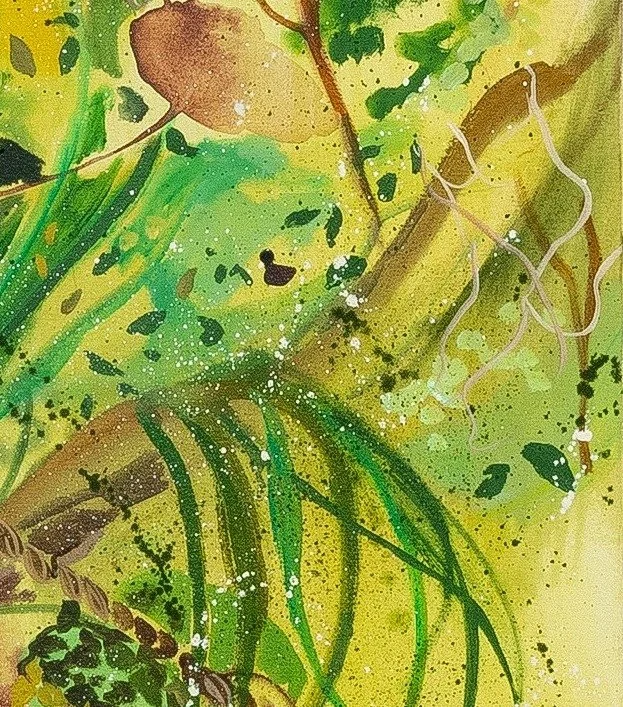
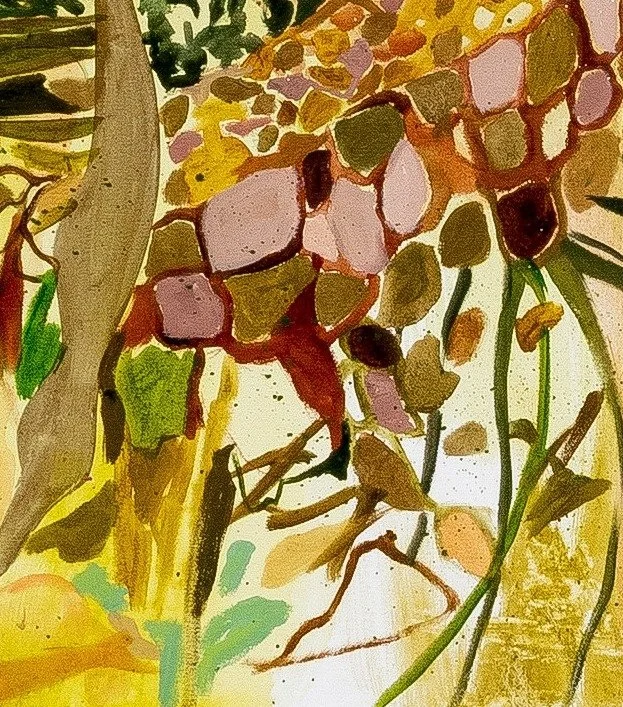
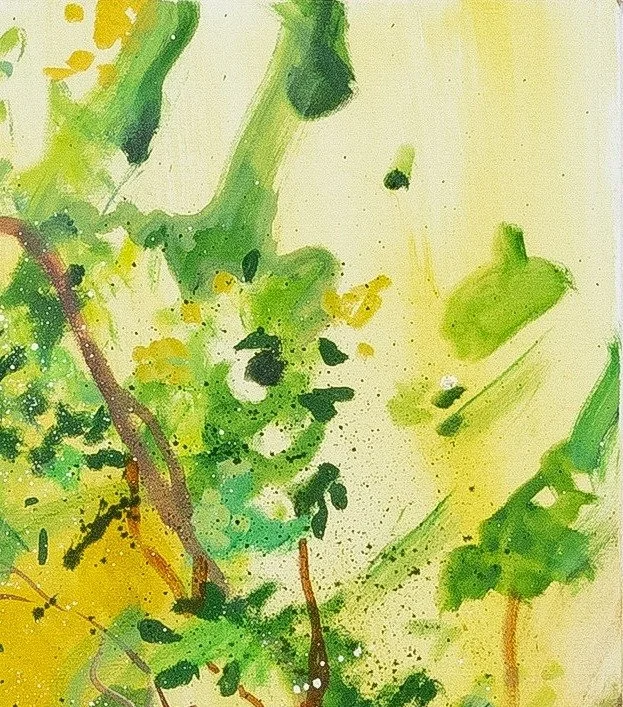
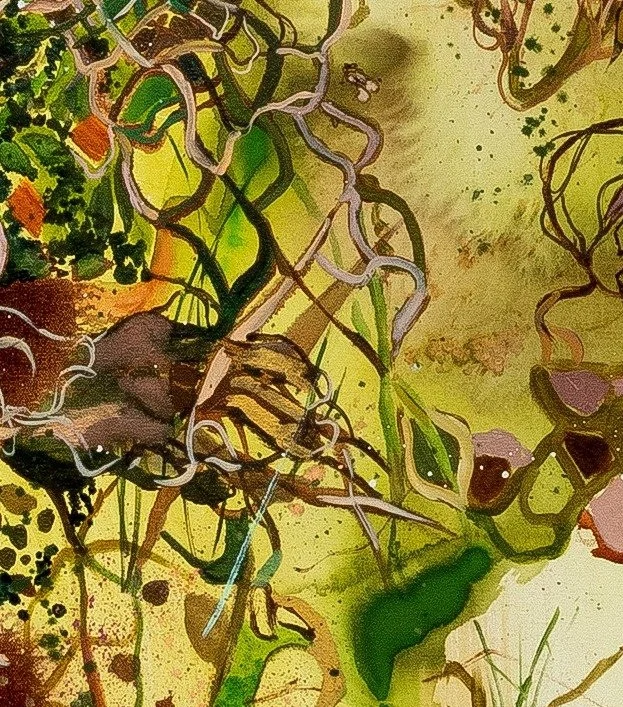
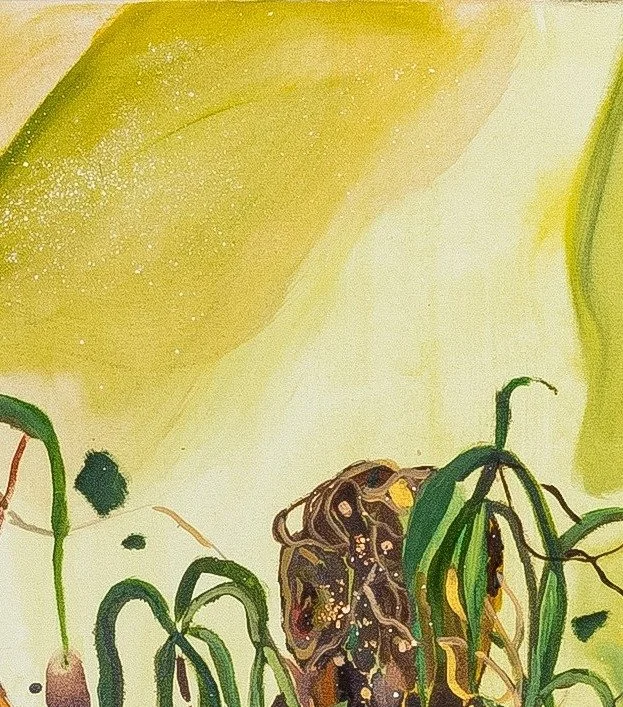
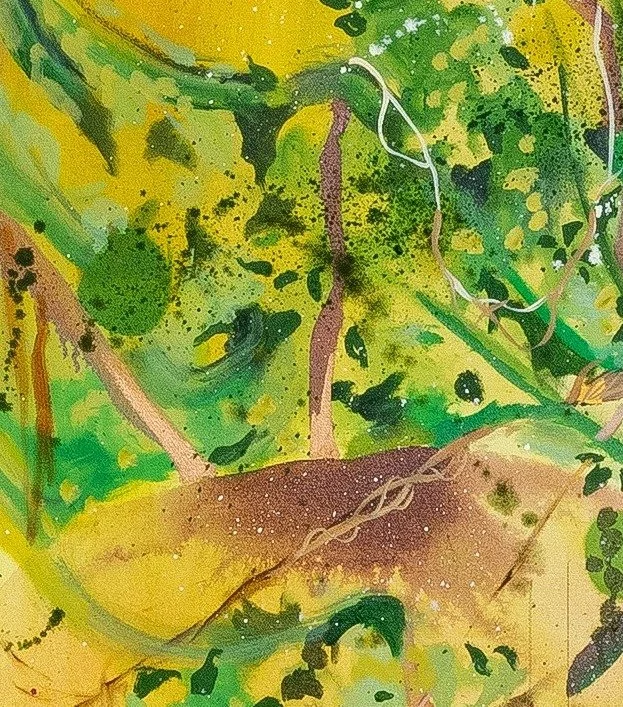
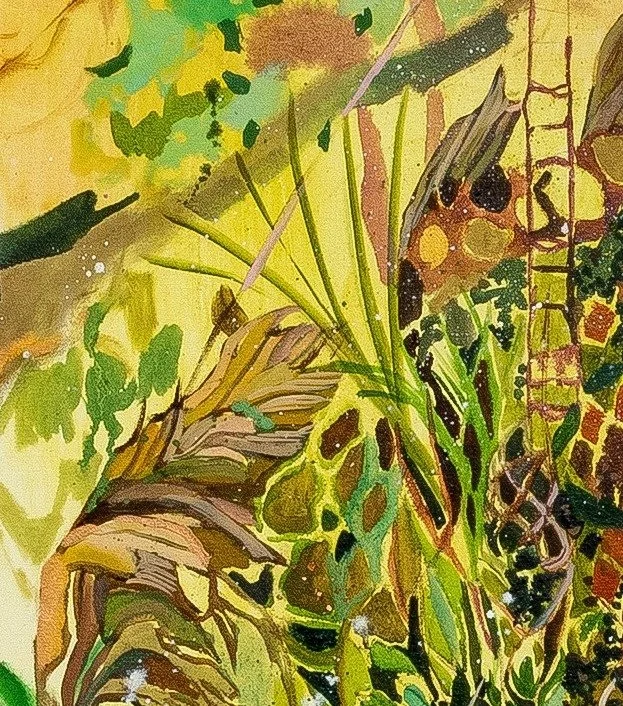
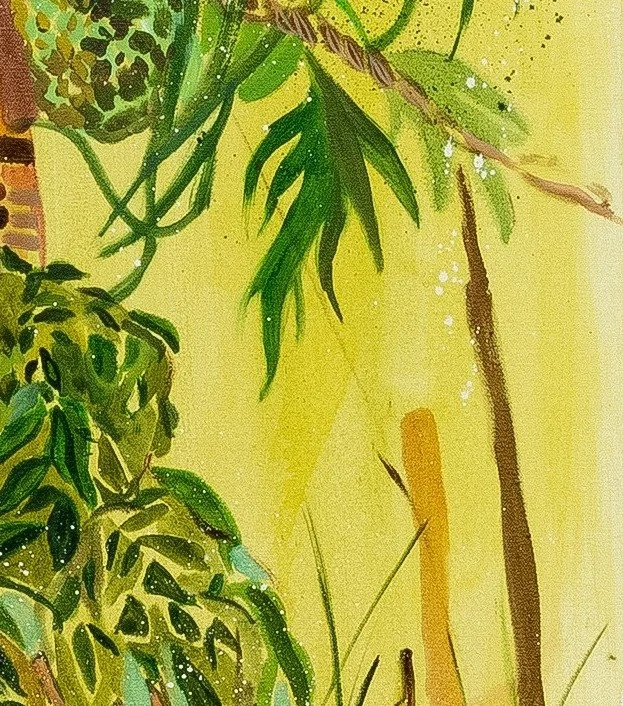
Cover art by Laurena Finéus
In “Jardin de Mackandal” (The Garden of Mackandal), the focus is the breadfruit tree, a hardy symbol of survival. Known for its role in Haiti's reforestation, the breadfruit tree thrives in poor soil and is a reliable source of sustenance, especially in times of crisis.