Morphology
by Suzanne Manizza Roszak
Lake-Swimming
Being transported into this forest requires that you first drive a string of streets too narrow for more than a single car, then take a stretch of highway that cuts not through hills but instead through improbably flattened and uniform terrain. The flatness is the land’s most uncomfortable quality: the way it leaves houses and their detritus exposed to the gaze of speeding observers and the implicit shadow of more distant threats. We have lived here for nearly a year, and we are determined to stay.
After a time and after its own fashion the open land is beautiful, and it appears confident in its aliveness, protected in the necessary spots by dams and dikes and locks. Studies of the country’s resilience in the face of the surrounding waters highlight the decisive role played by harrowing events, including a midcentury storm that killed thousands and spurred on the reinforcement of its defenses. In southwestern towns, people remember how the church bells designated as an early warning system failed the stranded residents as the floodwaters reached ten feet above the expectable high tide. Other branches of the conversation flow forward in fatalist directions, emphasizing the future possibility of mass migration across national borders and toward higher ground. Referred to as controlled withdrawal, the plan demands that German be established as a compulsory second language in Dutch high schools and suggests that Amsterdam and Den Haag will be underwater by sometime in the 2100s. Grandchildren and great-grandchildren are tremulously invoked and their fates agonized over. Among ourselves we remember hosing off the roof of our California house, the fire spreading through acres of untrimmed palms.
For now we make our way through the smoothed-over farmland and between the cultivated lines of trees that foreshadow the messy wood we’ve been hoping to find. In the trees’ method of swallowing the road there is a euphoric familiarity. Our son sits strapped into the seat in the back of the car, his head dipping in sleep.
Canopy Time
I am here to talk over literatures of protest with an international assemblage of teenagers. We speak in English, taking in the hegemonic irony of our shared language as we unspool the brokenness of my former country.
Outside my classrooms the prevailing syntax and diction are something else. Compare a Dutch sentence word for word with its English equivalent and you will find that the sentence’s familiar parts appear to have been tossed hopelessly out of joint. At the grocery story below the A-kerk,* the cashiers swap verbs with nouns or drop the verbs altogether, operating with what to outsiders seems to be a kind of reckless delight. They pronounce English the easier language and Dutch the more difficult, speaking with a definitive weight as they slide the milk and cheese and cartons of yogurt beverage beneath the red glow of the scanner. Een moeilijke taal, een moeilijke taal. I like talking to them, though it is faster and safer to check ourselves out at one of the clustered self-service stations, and mostly that’s what we do. The neighborhood tax office has a single fifteen-letter name that at first is as frightening to pronounce as it is to walk with a little boy above the forest floor on the suspended wire bridges of the Boomkroonpad,** whose poles sway with indelicate conviction in supporting the narrow catwalks.
A local mother swears I am not the only person petrified of this singular attraction, but this is also a place that makes a habit of dropping its twelve year olds in the forest at night, expecting them just to find their way back to where they’ve come from. US newspapers have been busy exposing this practice, while Dutch ones have enjoyed reporting on the stir the articles create, the sanctimoniousness of their foreign readers. The other mothers beside the sand pit sit back casually on their blankets, tell me they don’t believe in asking kids to share. My son is blubbering over a neon plastic claw.
I picture my mother’s father born with the name of an old man, his tears in the aftermath of a school day. I hear him lament the unrecognizable alienness of his classmates’ language. His family had crossed an ocean; his neighbors had come from the north. He was learning to pretend, to become complicit. Here was the spot where his daughter would arrange her death. I remember these things I know. Then I discover that the Dutch “v” is an English “f,” that the two languages’ words for injury are essentially the same.
Day Trip
In the New London Ledge lighthouse, at the opposite end of the state from the stolen land where I lived as a child, the fog horn has been supplanted with radio signals. The new technology requires less looking after and is fêted despite what it means for the low and resonant sounds that adorned our sleep on my nights shut in with my father’s people. The noise was satisfying and irreverent and was sometimes followed by the higher whistle of a train careening away.
It remains possible and even necessary to board the ferry if you want to reach the opposite shore, where I’ve never gone but which I’ve heard resembles the other small, water-hugging destinations my mother chose instead for day trips when I was with her, because Fishers Island harbored too many ghosts. All of them feature networks of houses with weathered fronts and deliberately white edging, herds of dining vacationers and sparsely distributed residents. One island boasted a wooden carousel. Years passed and we didn’t go there anymore, no longer crossed the water, only went to the beach.
Now an island called Schiermonnikoog punctuates our closest coast and we take the ferry there and then bicycle, hunched against the wind. The island features dunes and fences and flowers the same color as the ones on the beaches I remember from early childhood. We collect and return the rented cruisers in the shadow of a boat I feel I’ve seen before. Even the ice cream shops are familiar. The only problem is that I can’t stop myself from imagining awful possibilities: my son overboard, swept under the ferry’s wake. The next year we go to the coast but not the island. I fear thus becoming my mother.
Variant Forms
Everything shifts and stays the same and it is both relieving and terrible, and in this way I turn out to be no different from the landscape and what it holds. I contemplate the risks of another voyage, its looming and tenuous possibility. The border checkered with free grasses and tilled soil, its trees so distant as to be practically fictional, shining like miniature toys against the gray morning.
*A historic former church, now converted entirely to secular uses.
**Literally, “tree crown path.”
ABOUT THE CREATOR

Suzanne Manizza Roszak’s creative nonfiction has appeared in literary magazines including Bellingham Review, DIAGRAM, The Journal, The Pinch, and Tusculum Review. Her book of lyric essays and hybrid writing titled Brutal Noises is forthcoming from Veliz Books. When she isn't teaching creative writing at NYU Abu Dhabi, Suzanne lives in Groningen, the Netherlands. She is the managing editor of Seneca Review.
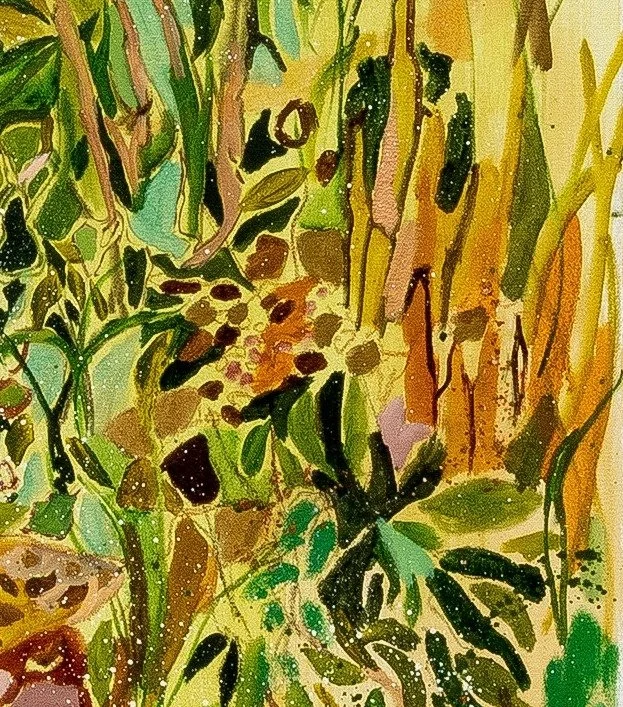
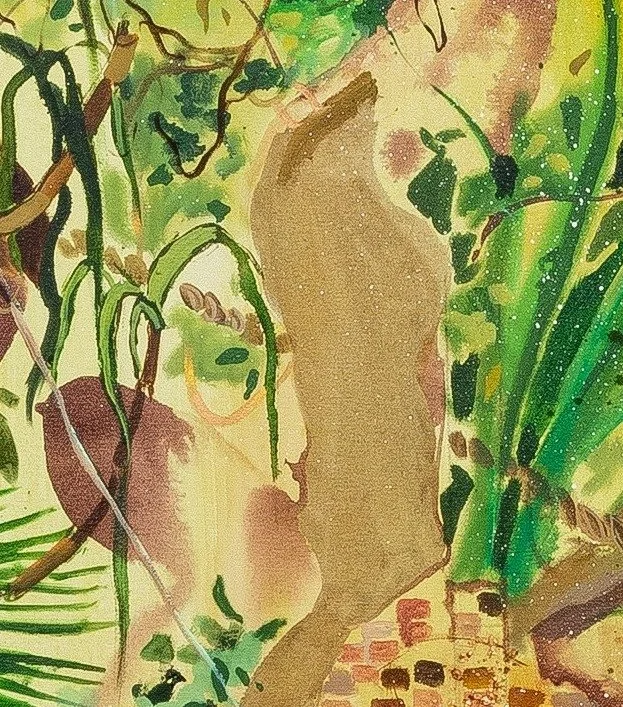
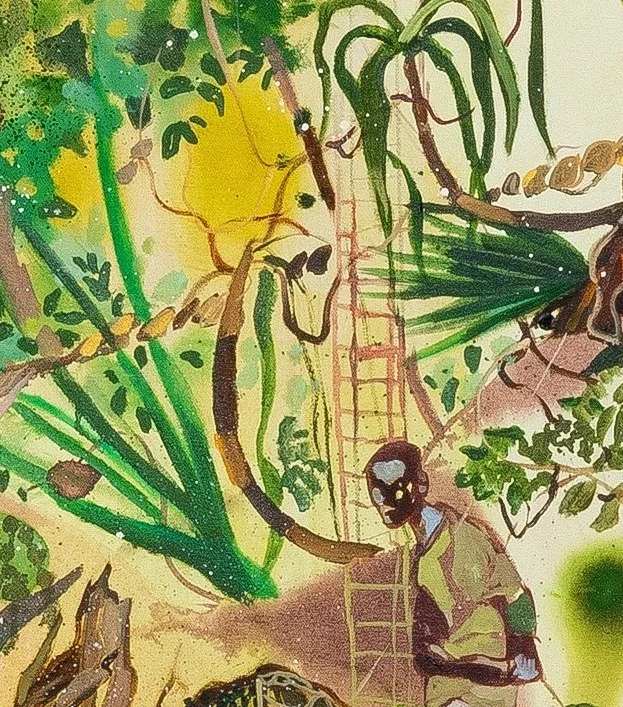
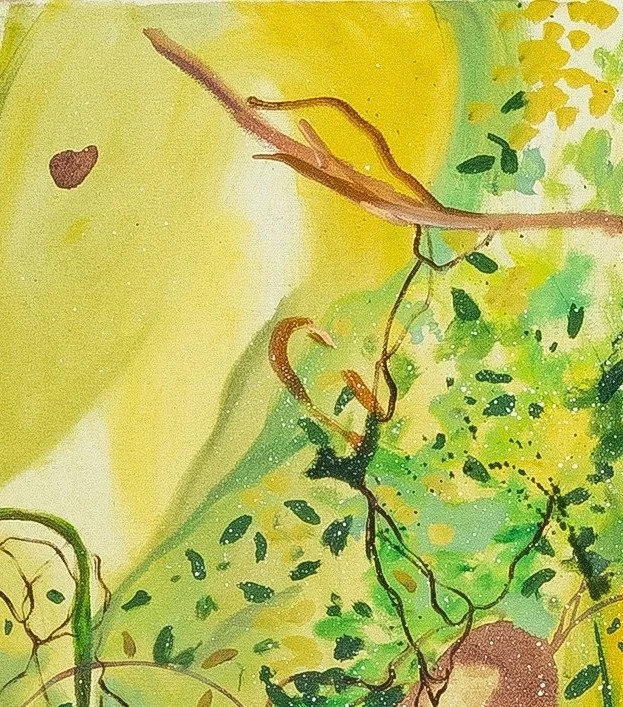
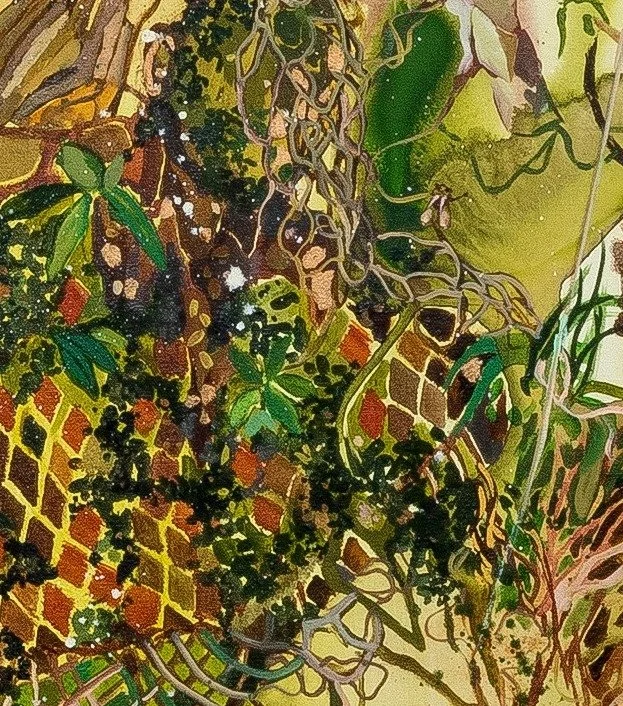
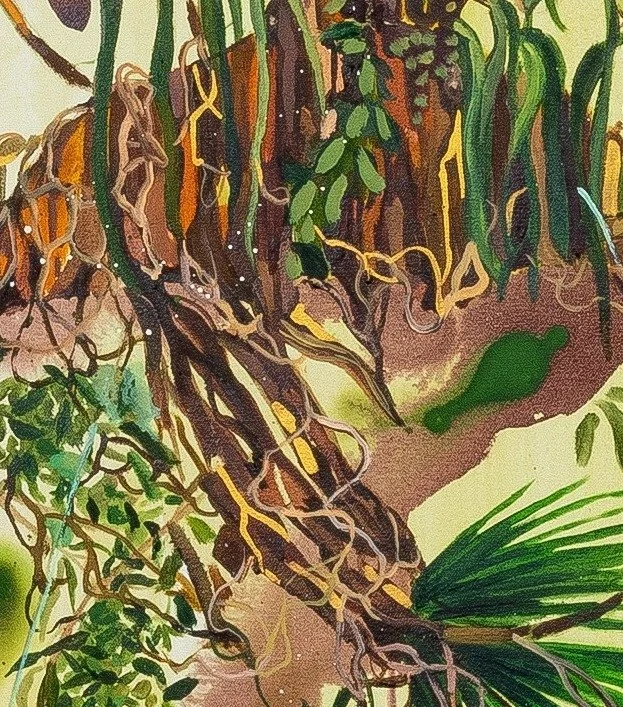
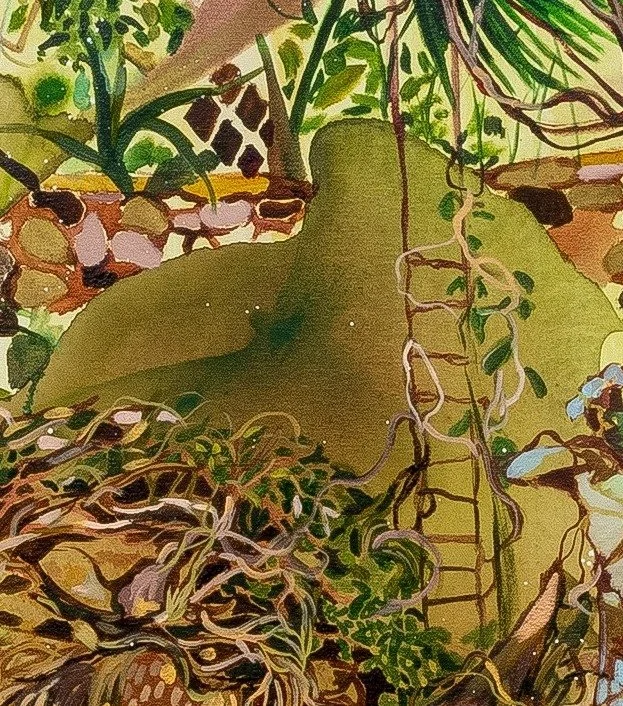
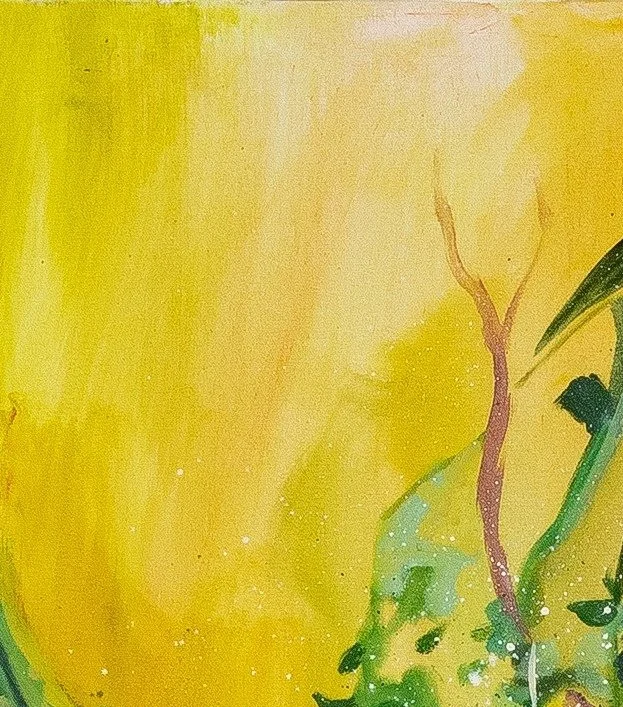
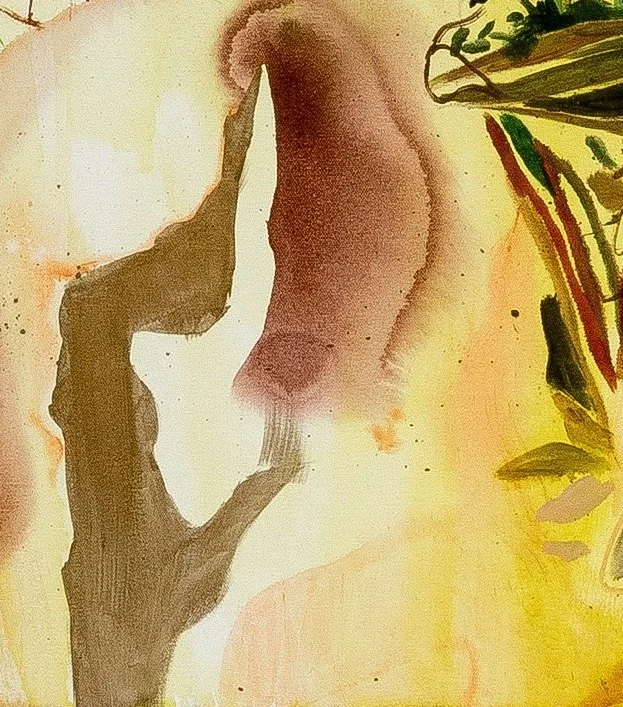
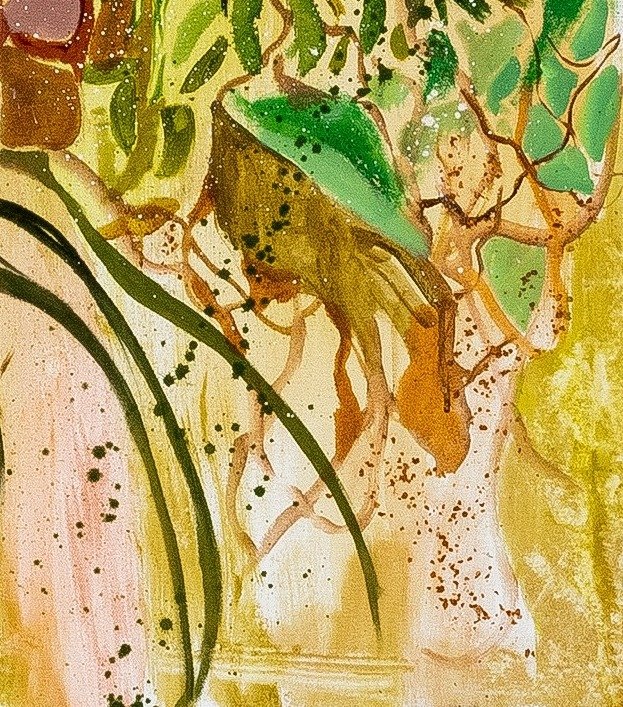
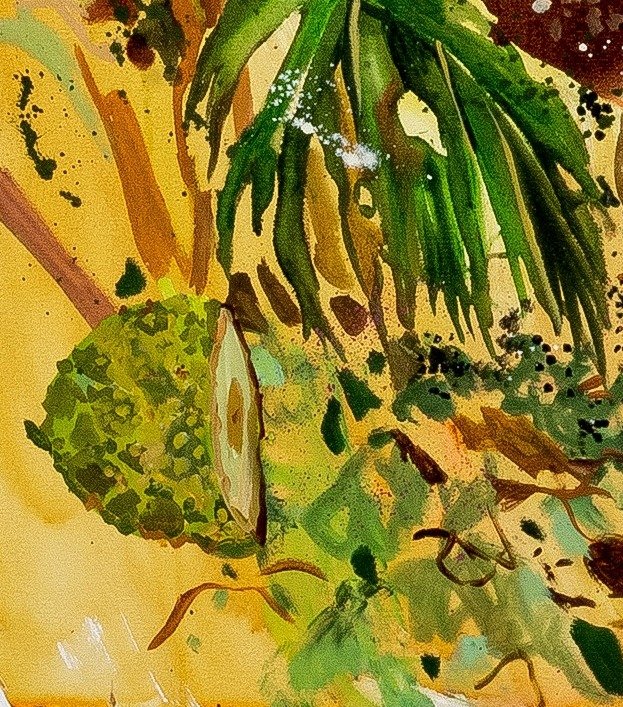
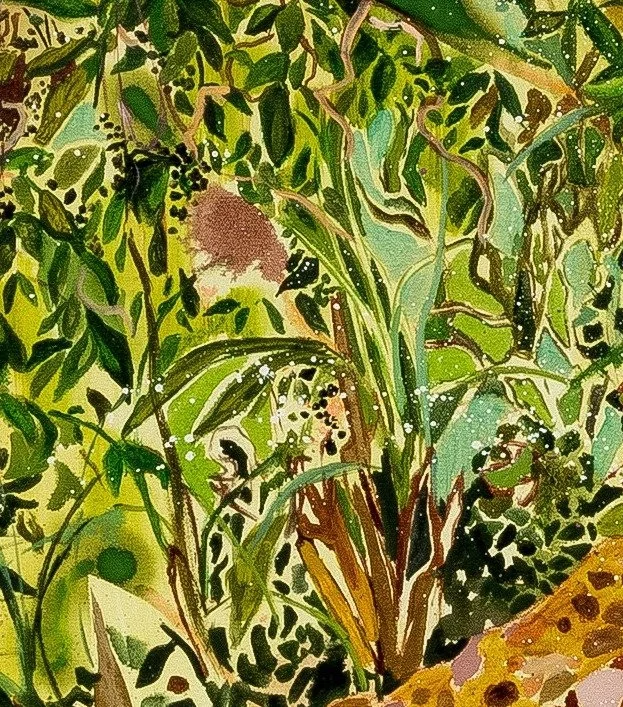
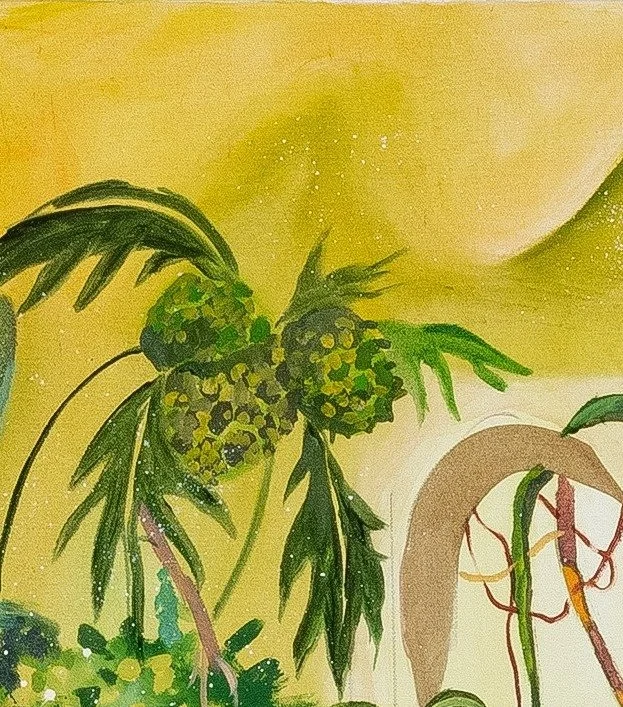
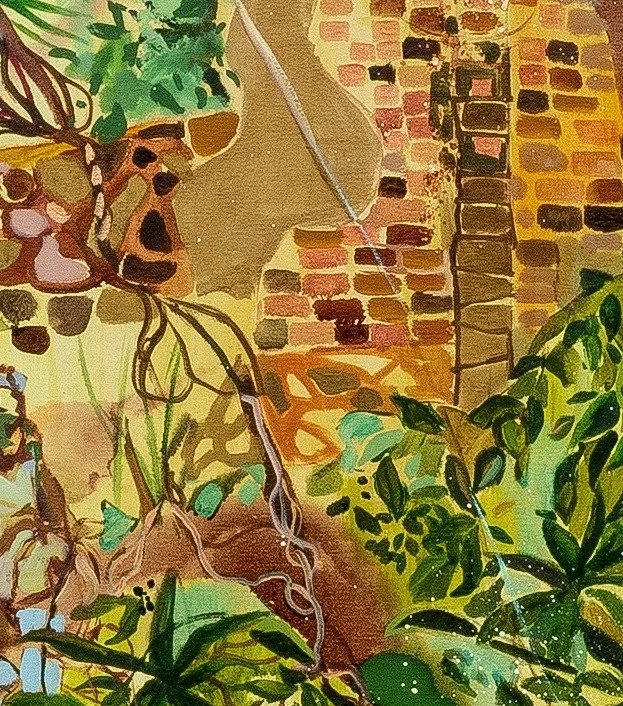
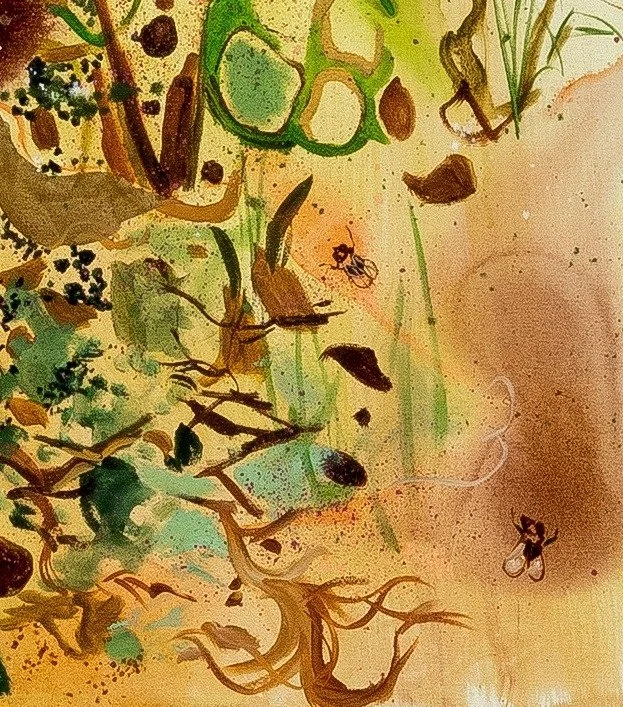
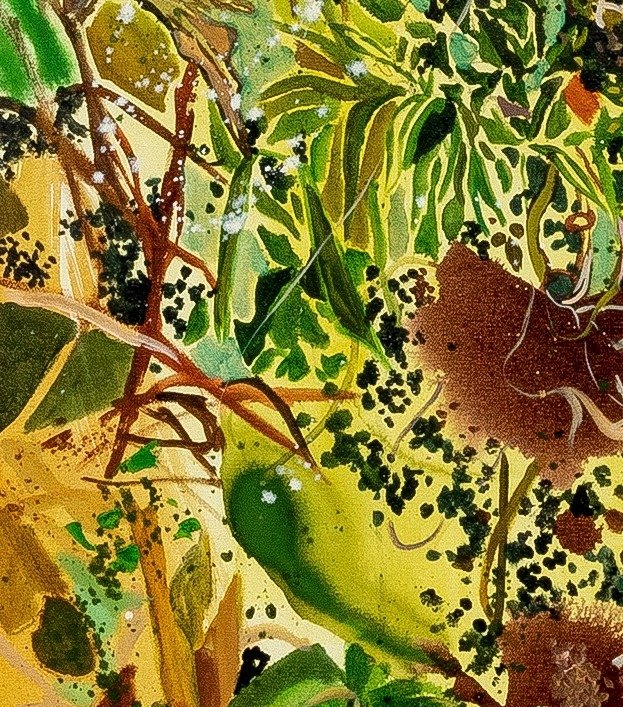
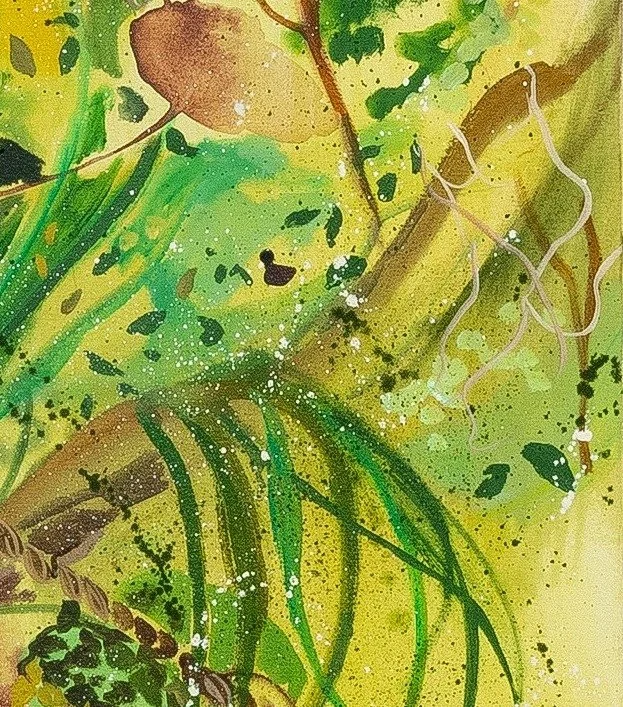
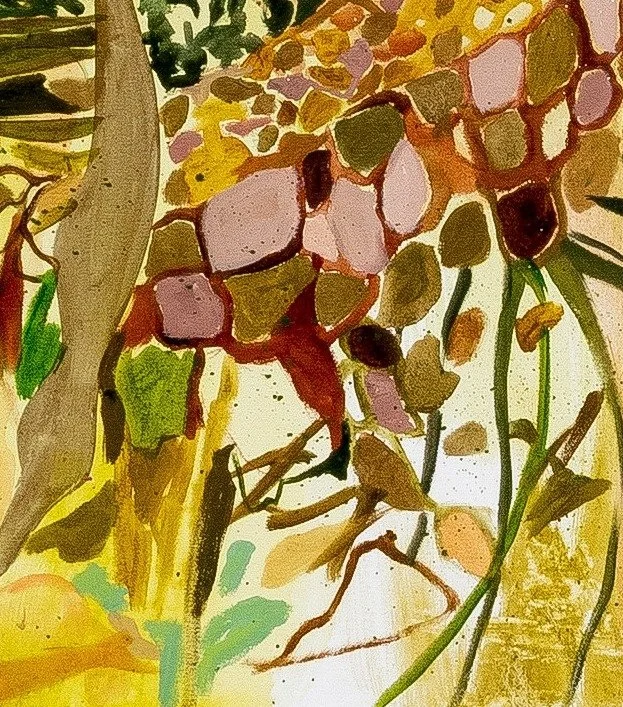
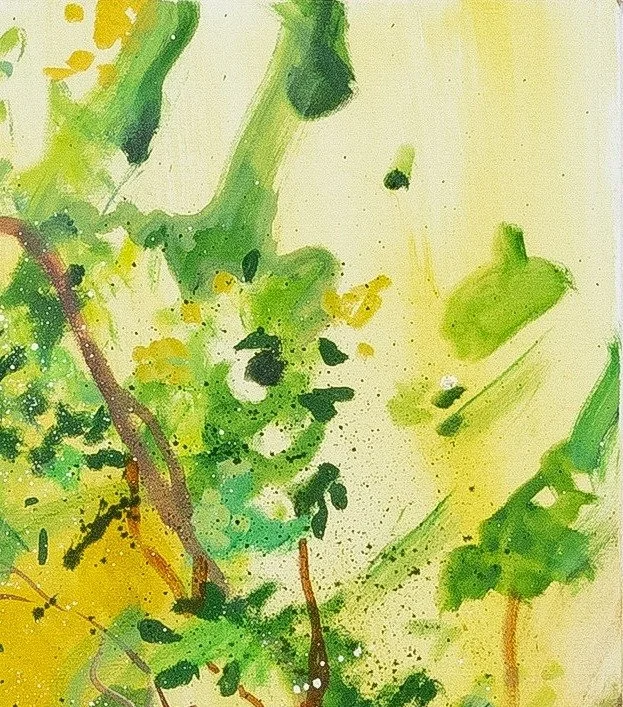
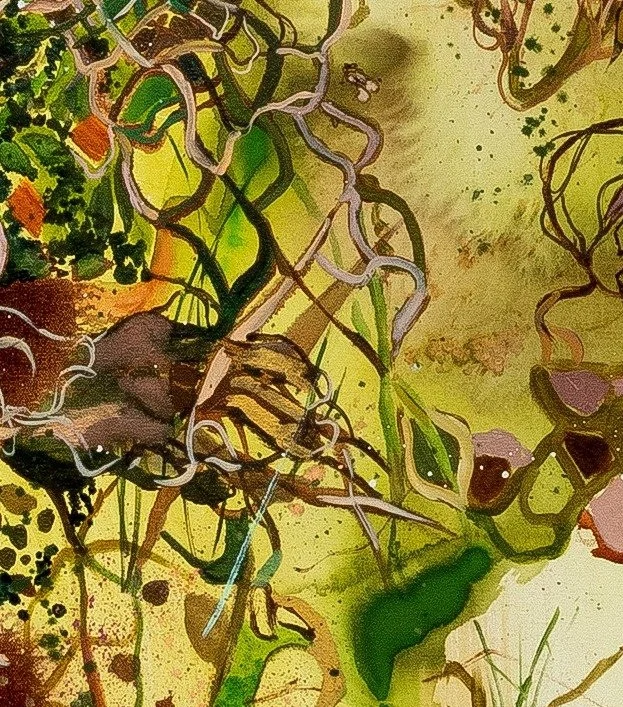
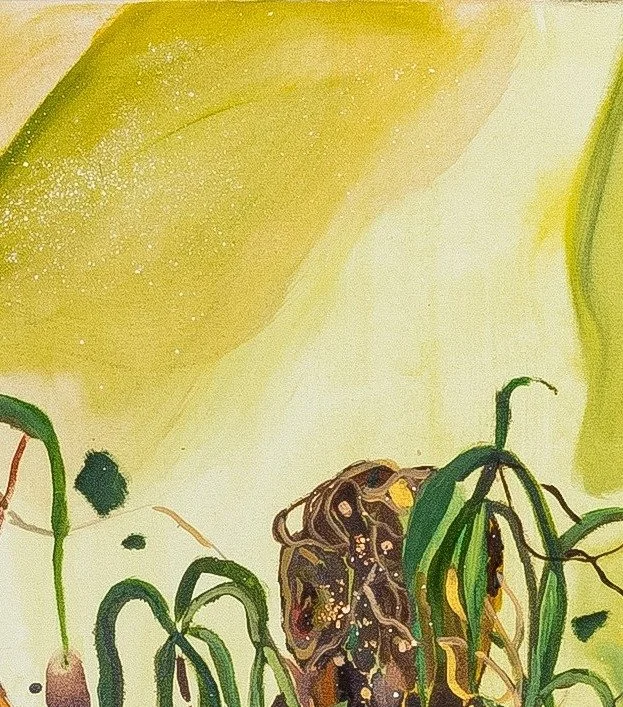
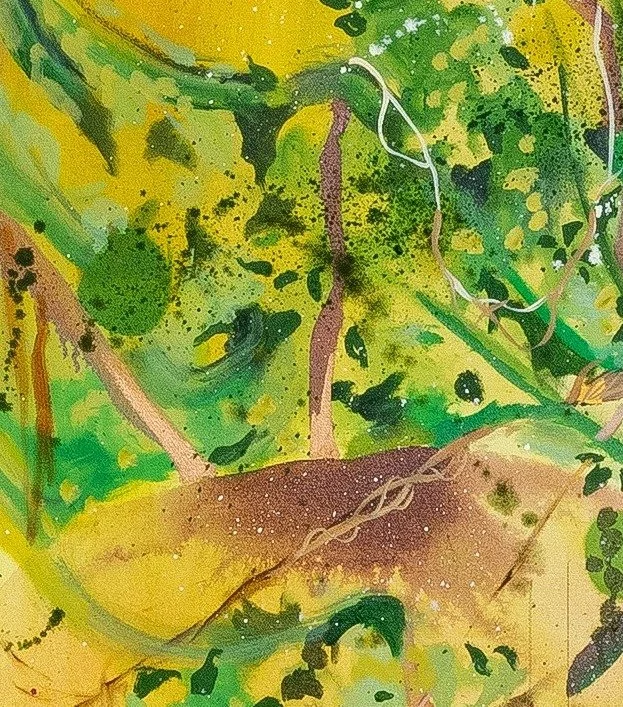
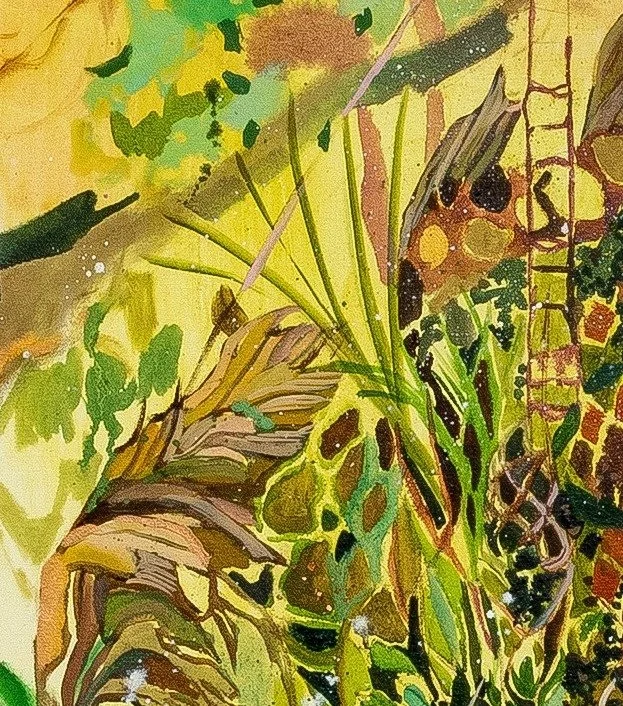
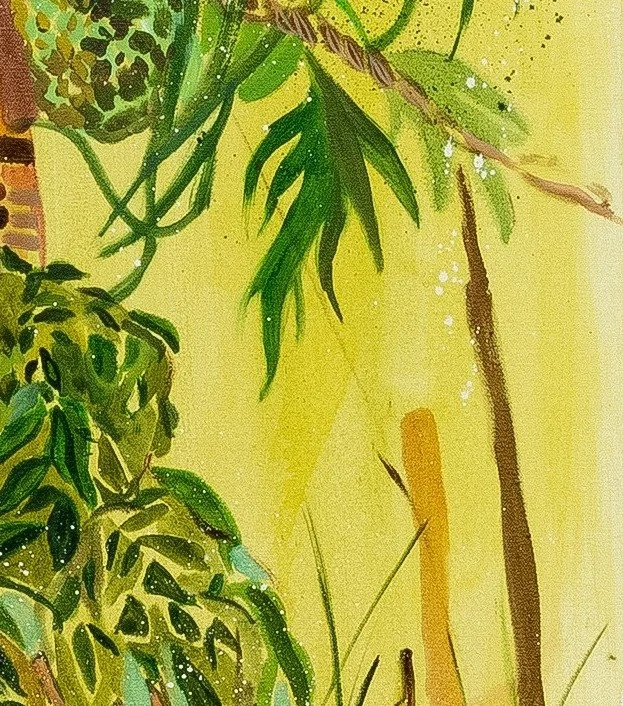
Cover art by Laurena Finéus
In “Jardin de Mackandal” (The Garden of Mackandal), the focus is the breadfruit tree, a hardy symbol of survival. Known for its role in Haiti's reforestation, the breadfruit tree thrives in poor soil and is a reliable source of sustenance, especially in times of crisis.