
Watering a Plastic Flower
by Lars Love Philipson
It’s a beautiful June afternoon, and I’m standing barefoot on the gravel driveway, watching Dad load bag after bag into our white BMW. He and Mom will be gone for a long, long time. They’ll be gone for a week, and they’re never coming home again.
The sunlight is a heavy weight on my head. Mom tries to hug me. I place a stiff hand on her shoulder blade and pat it gently a few times through her turquoise linen tunic. A strand of her frail, bleached hair brushes against my lips.
“Next time, you’ll come with us, won’t you? We can take the boat out to that island, you know, where we grilled hot dogs that one time, and you threw up all over that lady’s beach towel.”
“Sounds fun,” I say.
“Well, take care,” Dad says, as though addressing a coworker about to retire, someone he’s shared an office with for twenty-five years but wouldn’t recognize on the street tomorrow.
“Sure thing,” I reply.
They pull away, and I follow them to the street to watch the car disappear down the hill and around the bend. Straight ahead, beyond the low brick townhouses and the soccer field with its rusty goals and tall grass, lies the open horizon. As a kid, that sight filled me with dread on days like this. Only with perfect weather could a cloud, no matter how wispy, serve as an omen of looming threats. I imagined that threat as a black rim, growing larger and thicker as it thundered closer, shaking the ground and rattling the manhole covers like dinner plates in an earthquake, while the clouds massed and the sky darkened. I had an action plan ready: if the attack broke out on my way home from school (which seemed most likely, as I then had the horizon breathing down my neck), I would make a beeline for the shoebox-like Pentecostal church at the bottom of the hill and barricade myself inside. My faith was limited—I only believed in God on Friday afternoons, specifically during those two hours when I attended the church’s youth group—but I still hoped that some cosmic power would come to my rescue in a time of need.
Now, there’s a single, thin, drawn-out cloud in the sky, like cotton candy pulled apart.
Barbecue smoke, mixed with casual conversation and children’s laughter, drifts from behind the lilac hedge across the street. A lawnmower is running somewhere. The asphalt burns the soles of my feet. I take a sudden breath, and the air shoots through my body like a reverse sneeze. Then I walk back up the driveway, applying my full weight on each step across the Lego-sharp gravel.
I take a seat on the stump of the old apple tree in the backyard, where the sun filters through the tall pine. Dandelions sprout between the stone patio tiles, pinecones litter the ground, and a tennis ball has been lodged in the bush below the kitchen window since the dawn of time. And there’s that slanted wooden cross planted among the roses, honoring the life of a sparrow that once crashed into the back door. Burying a sparrow was supposed to ease a child into the realization that nothing—
Who are you? the garden asks. Do we know each other? The house, being turned the other way, doesn’t notice me at all.
Eavesdropping on the fountain’s endless chatter with itself has always been calming to me. Back in the day, I used to feel the need to join that conversation and dominate it by dipping a hand or foot into the water and splashing it around, but I don’t do that now.
The apple tree used to obscure the view from my bedroom window. One afternoon, when I was in middle school, I sat at my desk and took a break from my homework to momentarily lose myself in the tree’s foliage. It was late spring, and it had begun to blossom. I returned to my worksheet about some old king or other, I don’t remember, but at the time, I took it very seriously, as I lived under the assumption that school was the means of transportation to wherever I wanted life to take me.
When I looked up a while later, the tree had been replaced by a pale evening sky, the neighbor’s roof, and the street in the distance. I stood up and looked down. There it was, lying across the patio.
I stood next to the fallen tree when Dad came home and parked in front of the garage.
“It fell!” I yelled, as if dodging guilt.
Standing together, we shared a rare moment of connection.
“It’s rotten,” he finally announced.
I smelled the air, expecting something similar to the stench in Grandma’s hospital room before the amputation of her diabetic foot, but I noticed nothing except Dad’s lingering aftershave in the soft spring breeze.
Dad sawed the tree into sections, the back of his costume shirt darkening with sweat. I watched, mesmerized by the chainsaw’s brutality, thinking, Why today, now? And what about those blossoms?
Ants crawl around and under my toes. I raise one foot and set it down again, half an inch above the ground, listening to the fountain’s water as it moves in an endless cycle.
God, I’m thirsty.
My feet leave a trail of freshly cut grass and pine needles across the kitchen floor. I open the fridge. After a while, it starts beeping passive-aggressively, because it’s designed for people who know what they want. I slam it shut again.
Still thirsty and with a headache creeping in, I climb the stairs, pausing on each step under the watchful gaze of a series of framed school portraits, each showing a sun that, with age, gradually slips behind a cloud. Passing by my bedroom, I make my way to Mom and Dad’s, where I collapse onto their bed in a wild sprawl, sending the carefully arranged decorative pillows tumbling to the floor. One foot is on her side and the other on his. On the one hand, on the other—
A low hum, like static from some pent-up pressure, vibrates through the house. The sunlight paints bright rectangles on the hardwood floor. It feels like I’m missing something happening right in front of me, as though today’s an uncelebrated Christmas, or I’m on a sightseeing bus with my eyes shut, missing all the major landmarks.
After a while, the humming stops. I pull my phone out of my back pocket and call Mom.
“Which plants did you say don’t need much water?”
From the other end comes the roar of the highway, though I guess it could be any old back road since Dad is driving.
“The ones in the office and the big one by the window in the guest room,” she says. “Don’t water them more than once. And don’t water the plastic one on the bureau in our room at all. The wood got some ugly marks the last time. Oh, and make sure you turn the outdoor faucet off after watering the roses. We don’t want the hose to burst again.”
I won’t remember any of that.
“When will you get there?” I ask.
“When will we get there?” she asks.
“I don’t know,” Dad replies sourly.
“We’ll stop at Burger King soon,” Mom says. “I’ll call you tomorrow. Don’t forget the pasta in the fridge.”
“Kbye,” I mumble, in a single meaningless word.
The bed creaks as I turn to lie face down. The stuffy air settles on my back, slowly pressing me into familiar scents and weightlessness.
I wake to my phone ringing. The pillow is covered in drool. My mouth is a desert cave that, even after millions of years, still remembers the ocean. I turn on silent mode.
I brush away the remaining souvenirs from the garden at the foot of the bed and arrange the decorative pillows as best as I can. Outside, the day’s colors fade away, unspent. From here, I can’t see the horizon, but I can see the neighbor kids kicking a ball back and forth in the street, surrounded by a dusky haze. It has been their nightly routine this spring. They move as if their bodies don’t weigh them down. I hope they keep kicking that ball back and forth every night all summer and forever, without it ever leading to any of those feet deciding a World Cup final.
The bathroom window is slightly open. The bathtub is filled with plants. Mom has left a note. THIRSTY, it says, thrice underlined. I turn on the faucet, and the water rushes violently between the pots. I let the water run in the sink and the shower stall, too. The sound is not as soothing as the fountain’s, but it’s the sound of time passing, of the past being replaced, of nothing really mattering.
With my eyes closed, I undress and shuffle into the shower, arms out like a zombie. First, I turn the temperature knob as far away from me as it will go. Once my skin has adjusted to the numbing heat, I turn it the opposite direction until the water becomes heart-stoppingly cold. Then back to the heat. Back and forth. Steam rises and falls, then rises again, as my body endures the full spectrum of thermoception.
When I step out of the shower, leaving the cold water on, I’m still thirsty.
I open my eyes. The steam slowly dissipates from the mirror above the sink. The contours of my body wriggle like the black lane markings at the bottom of a swimming pool seen through a disturbed surface.
I fill my toothbrush cup from the sink faucet, toss the toothbrush into the trash, and drink until I feel like throwing up. The water is lukewarm with a faint taste of chlorine and peppermint.
My shorts start buzzing. With still-wet hands, I take my phone out of my pocket.
“I can’t find my pills,” Mom says, as zippers unzip and fabric rustles in the background. “I swear I remember packing them, but can you just check if they’re still in the cabinet above the microwave?”
“Hang on,” I say, not moving an inch.
“Where are you? What’s all that noise?”
“I’m here now.”
“The reception is awful. Must be all the mountains around here. Have you found them?”
I look out the window. It’s almost dark now.
“No,” I say.
“Guess I’ll have to search the car again, then,” she sighs and hangs up.
The clock on my phone shows 11:42, 11:43, 11:44. I close my eyes again, hold my breath, and initiate a game of hide-and-seek, counting the seconds irregularly to confuse and surprise. My mouth and nose form a two-part door through which millions of life’s little components have come and gone for good. This is just a stalled routine.
At the far end of one of my mind’s many winding hallways, I hear knocks on a door—dull yet persistent thuds. With a racing heart and pulsing temples, I reach out and open it just a crack. On the other side, there’s only more darkness. I start to close the door, but can’t; someone is pulling it from the other side. A tug of war ensues. I can’t resist for long, and the door flies open. I fall backward, and when I look up, there’s the shadow of a man, darker and more fluid than the surrounding darkness. At least it seems to be a man; he’s wide and tall enough to fill the entire doorway. He has no face.
“I can’t,” I tell him. “I have to water the flowers.”
Then the door shuts, and he’s gone. For now.
ABOUT THE CREATOR

Lars Love Philipson is a writer and translator based in Örebro, Sweden. He has previously been published in Tint Journal.
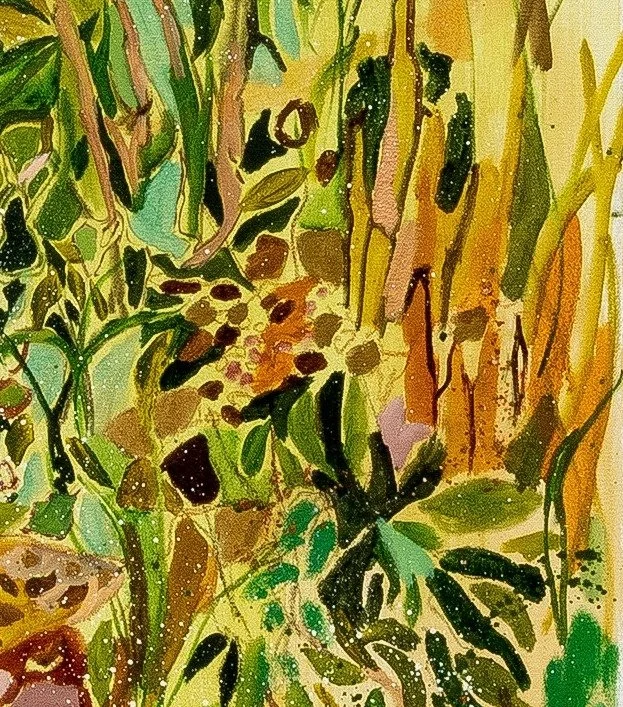
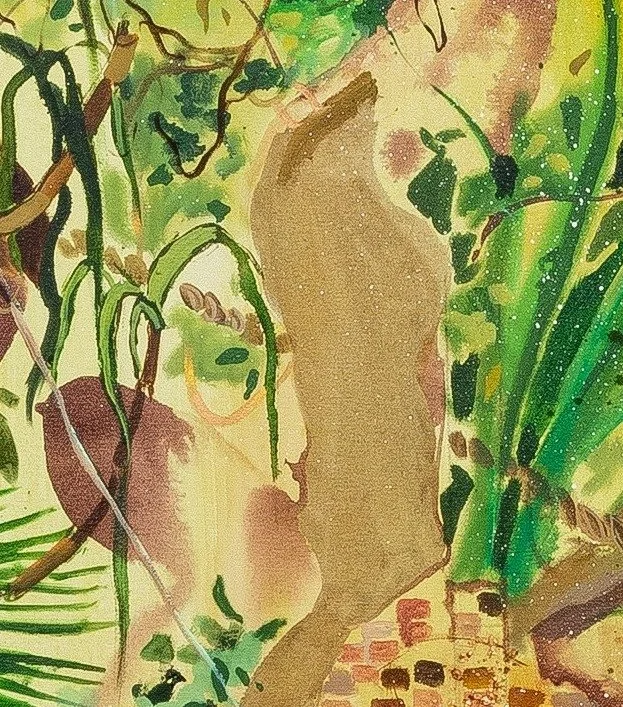
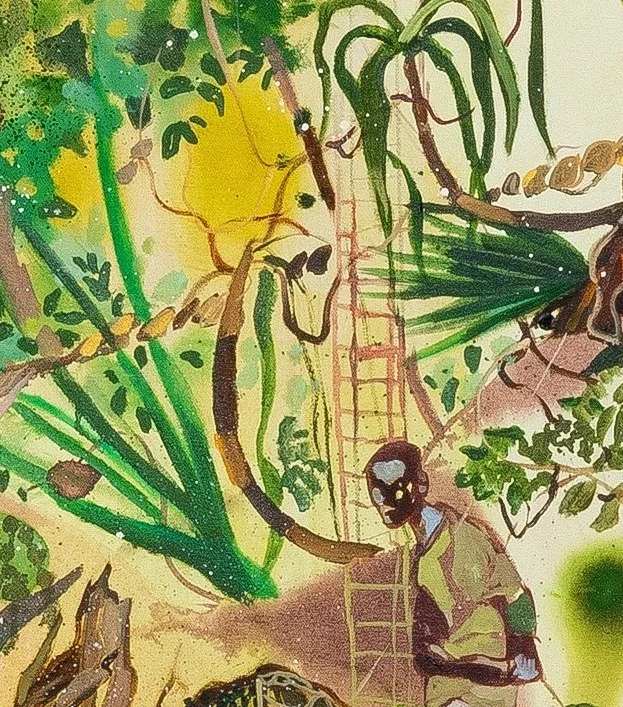
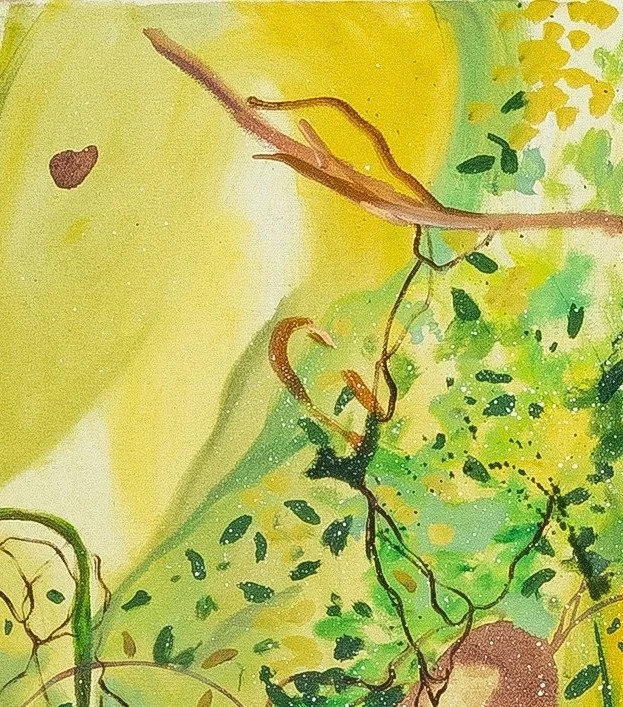
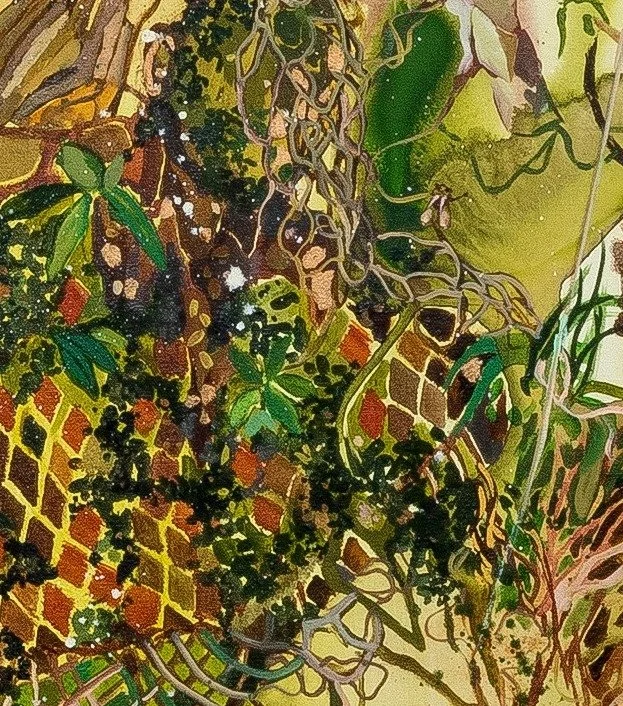
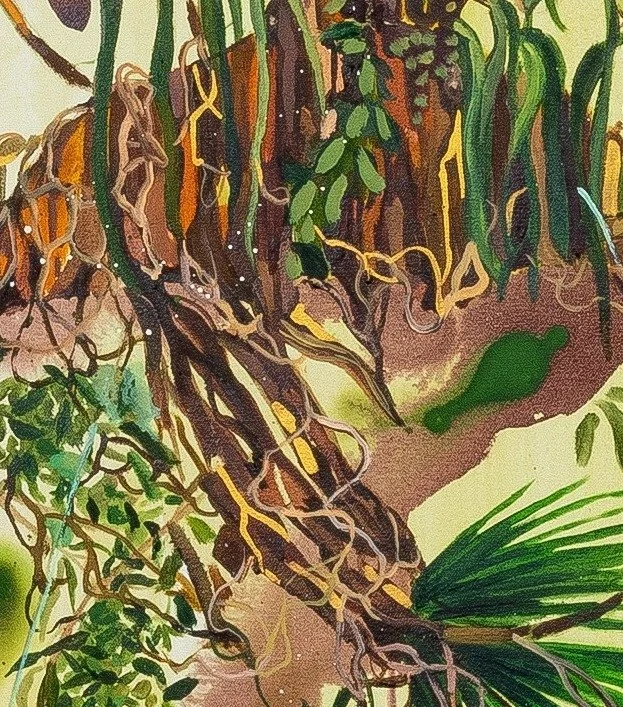
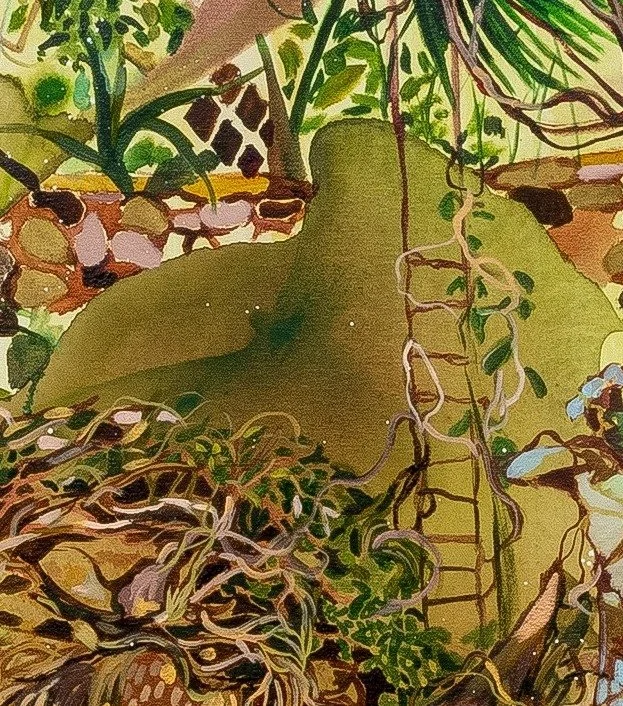
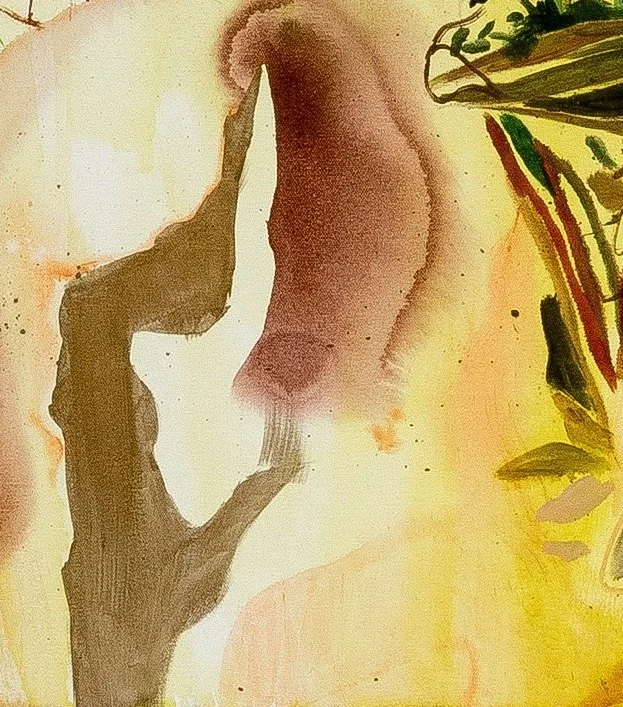
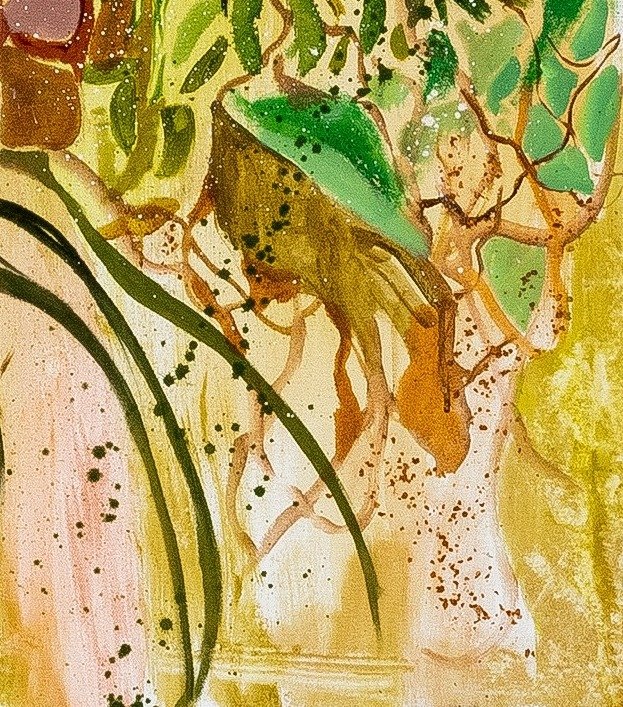
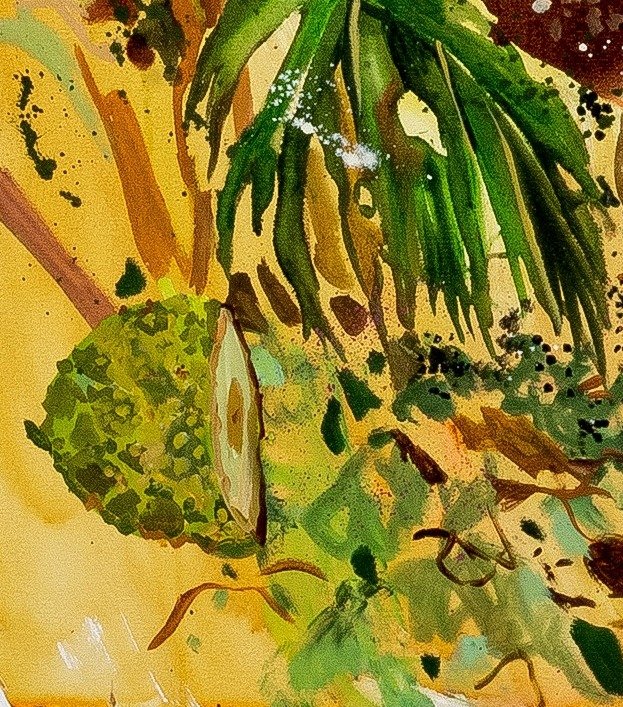
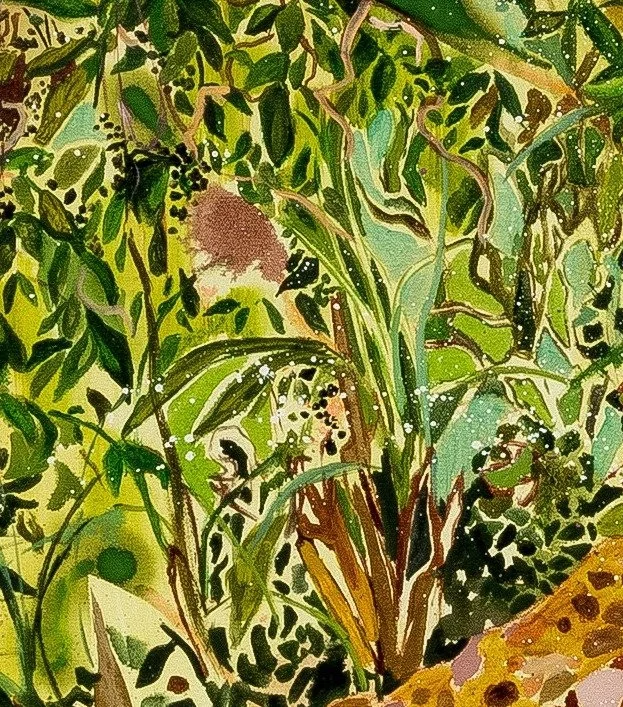
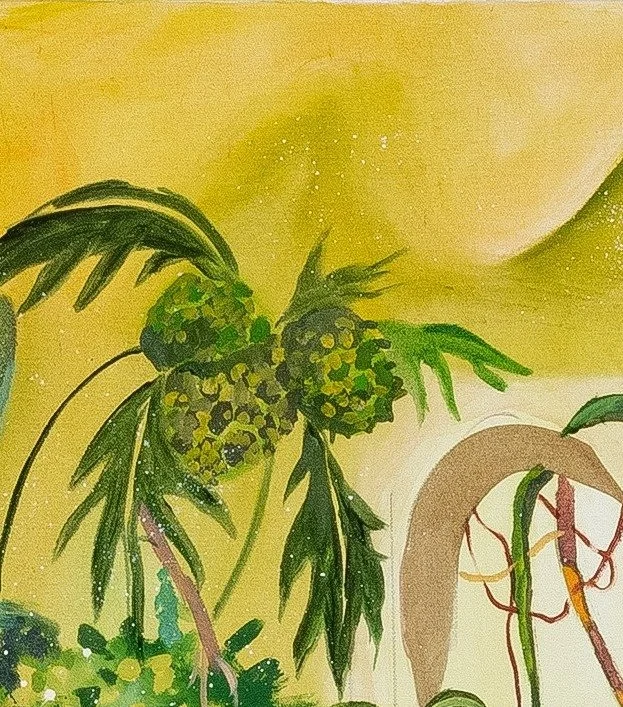
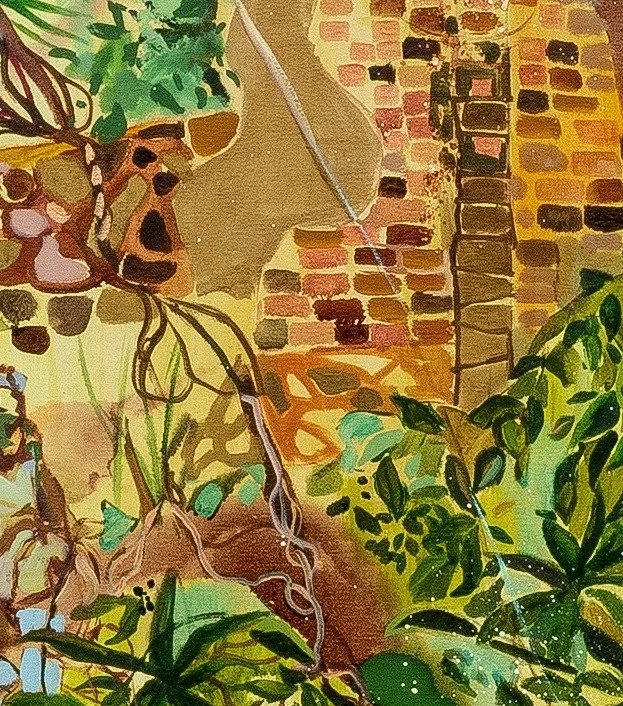
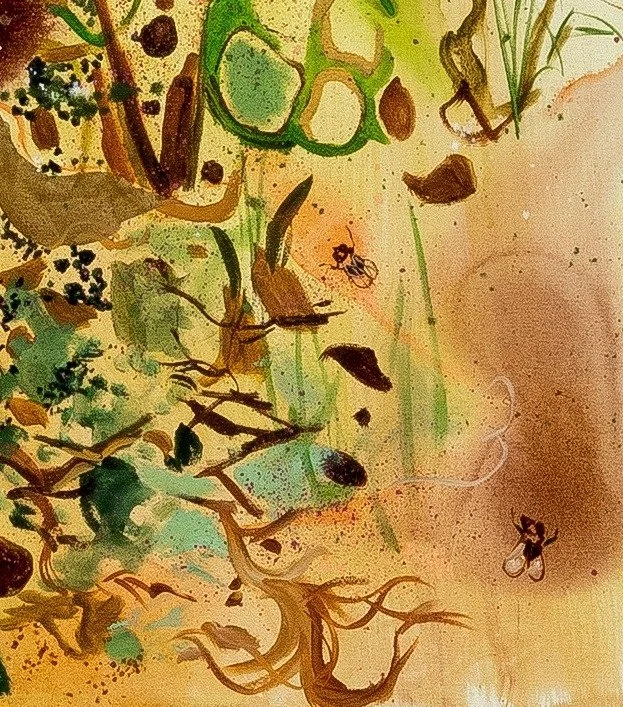
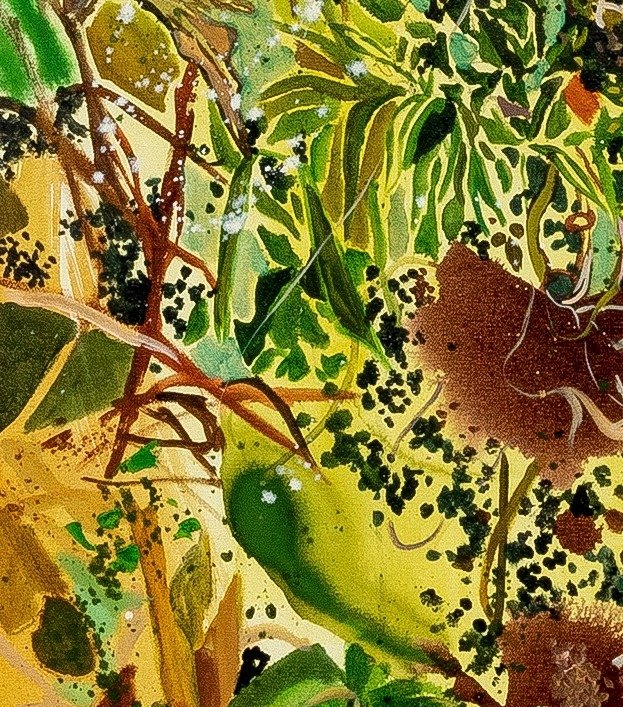
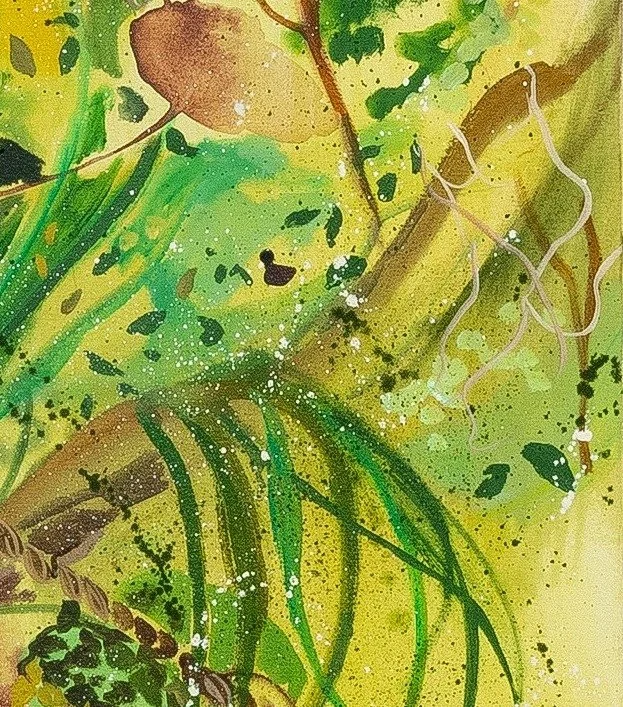
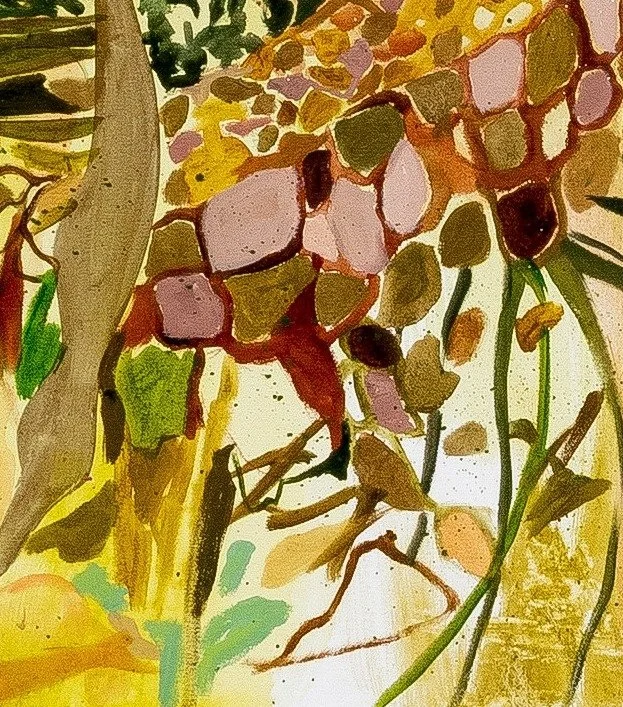
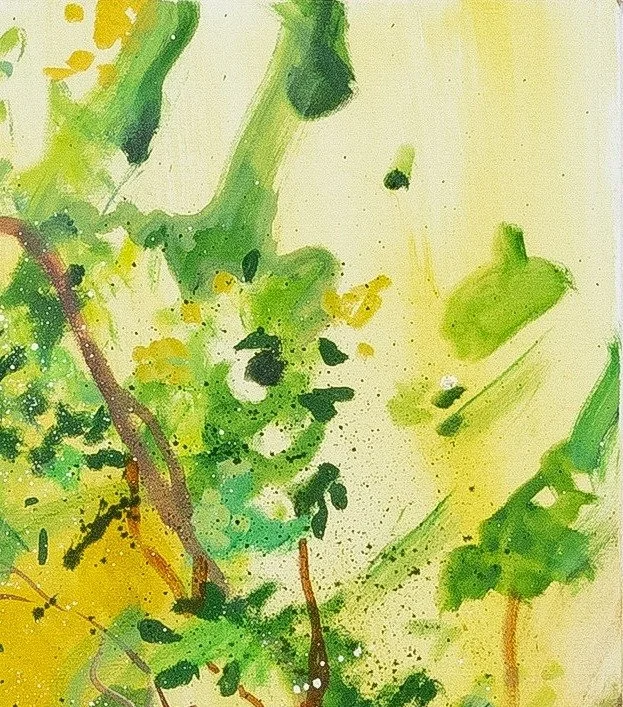
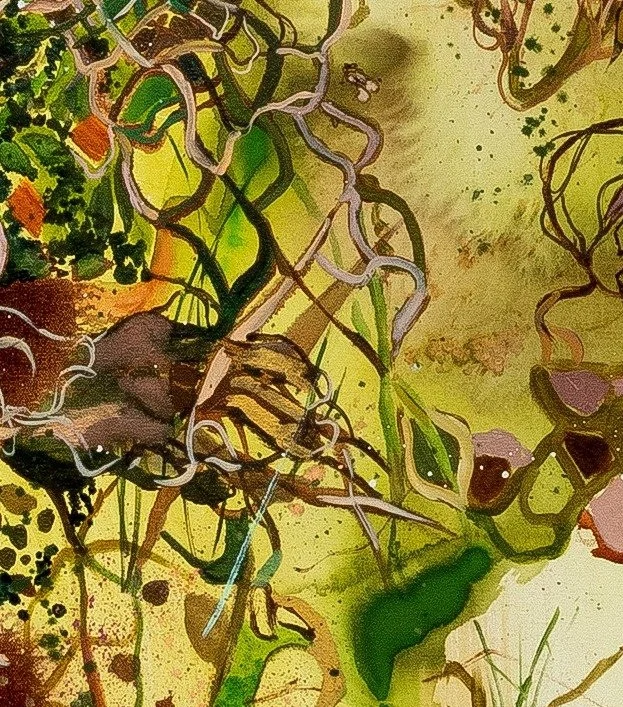
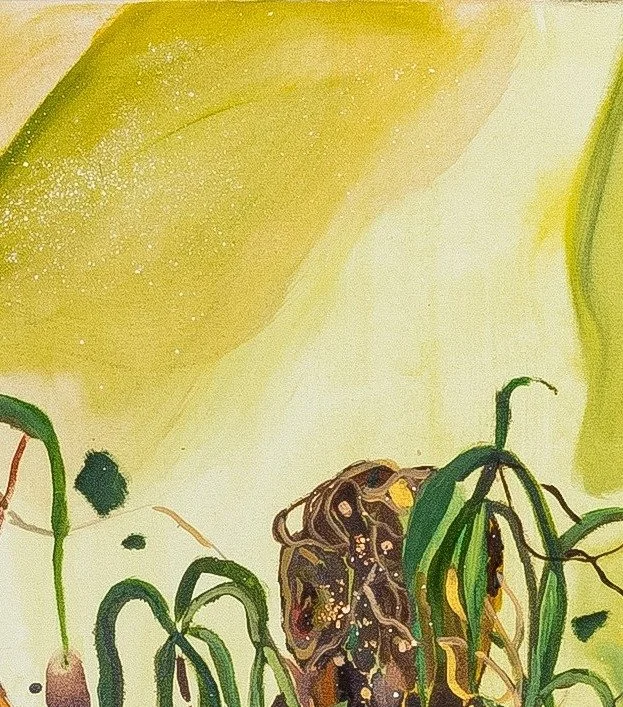
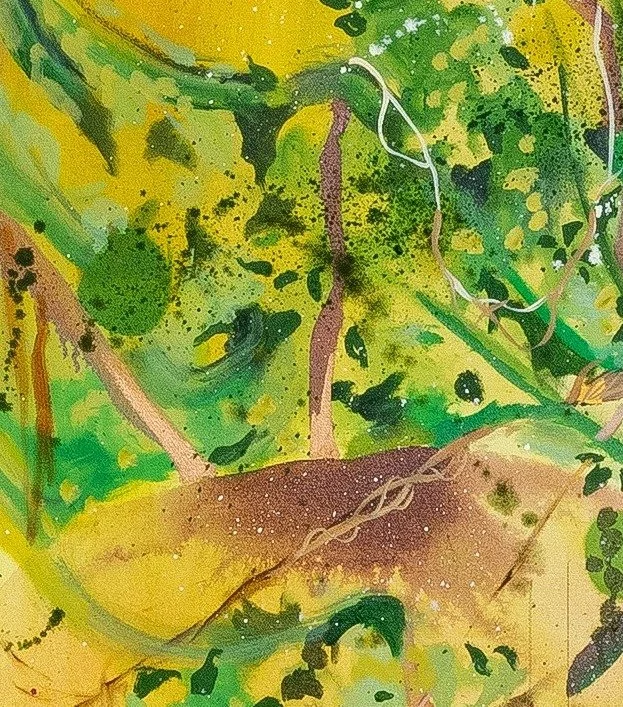
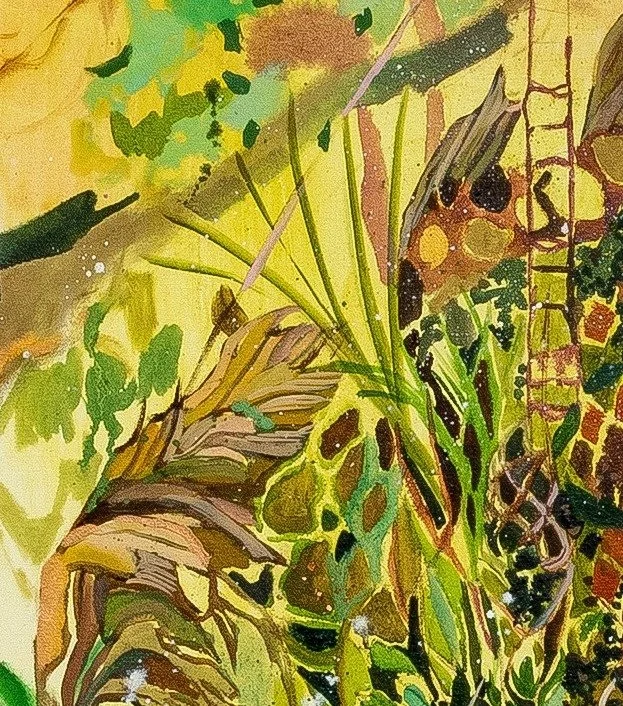
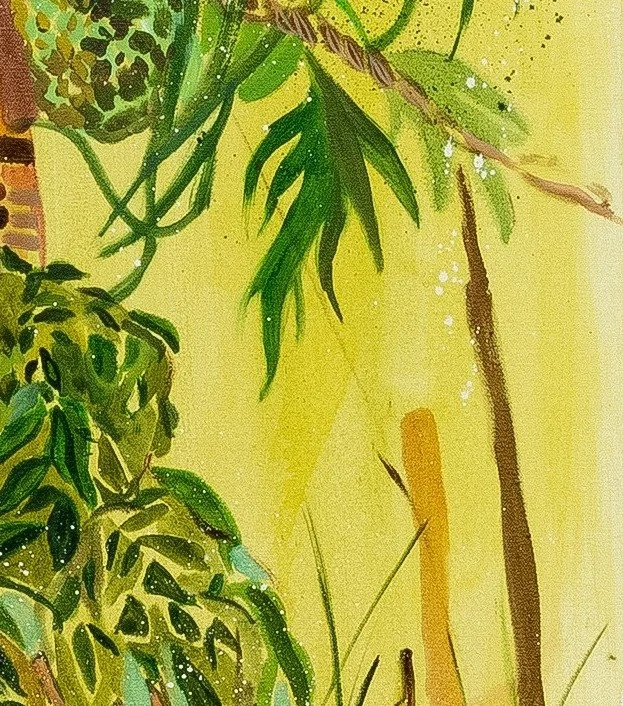
Cover art by Laurena Finéus
In “Jardin de Mackandal” (The Garden of Mackandal), the focus is the breadfruit tree, a hardy symbol of survival. Known for its role in Haiti's reforestation, the breadfruit tree thrives in poor soil and is a reliable source of sustenance, especially in times of crisis.