Closed Captioning
by Sharalyn Barg
In late spring the year the virus came, the company treated us to a mental wellness seminar. We joined the video call from separate soundproof booths. A sleek-bobbed woman read us a script about burnout and self-care. One tasteful pothos sprawled down the bookshelf behind her. Your jobs are stressful right now, she said. It’s important to connect with others, let off some steam.
What are you supposed to do, I thought, when connecting words start losing their meaning? When speaking off the clock feels like a waste of resources? In lieu of asking, I invented inane self-help titles for the books on her shelf, which were too far away to read.
After the seminar I cracked my door open. I watched my coworkers gather in the common area. Letting off steam, maybe, laughing about something the facilitator had said. One of them caught my eye and I turned back to my monitor. I was losing a game of solitaire.
***
Sometimes I thought of the captioning office as an artist collective, each of us thwarted to varying degrees. Miranda swept around in capacious witchy skirts and spent her off-hours conducting combat research for an in-progress fantasy novel. Beth, a former high school administrator, made ceramic animal figurines and sold them on Etsy. And I, if you’ll permit me the pretension, fancied myself a would-be flaneuse, though the only walking I did those days was from my apartment to the office in Sunalta. For nine hours a day, we all repeated news stories to ourselves in clipped monotone, using coded language that no longer registered as absurd.
Macros, they were called. Non-words that the voice recognition software translated into punctuation or unusual proper nouns. Peerk for a period, quee for a question mark, kak for a comma. We each had a voice model calibrated to our speech rhythms; we could create our own macros according to our whims. Most of us used dump-mac for Donald Trump. I had recently abbreviated the name of a wanted fugitive to smeg-mac.
The office manager once told me that, in his view, our profession was a technical trade. The voice was a muscle to exercise and deploy for predictable outcomes. I preferred to think of it as a dark art, a transmutation. I’d gotten this job straight out of a critical theory degree; the arbitrariness of signs kept me up at night. So did the news, to a lesser extent.
***
I checked my phone before the Global BC evening program. I had a message from a man claiming to be looking for love, the real one. Out of some fatalistic impulse, I’d asked him: what do you think the real one looks like? He replied that he was raised to value emotional expression and honesty.
He sent another message. Do u like roleplay?
***
Our office had contracts with all the major news outlets. Stations sent us story scripts in advance so we could prepare before broadcast; we knew what was happening half an hour before the public did.
The virus stories came in slowly at first. Occasional mentions of a nasty flu variant on the other side of the world. Countries started closing their borders, and it still felt far away. Then the NBA finals were cancelled, and the air in the office changed. We were jumpy, we sensed a threshold. Then we crossed it. Workers deemed non-essential were told to stay at home, and we stayed locked in our muggy booths. Repeating verbatim statements from infectious disease experts and confused politicians, staring at bar graphs of fatalities by region. Reluctantly watching our words, if you could call them ours, appear onscreen.
***
I worked permanent nights and spent most of my time between programs avoiding Matthew. I could never hear him coming. He’d sneak up on me in the break room, proffering childish snacks or personal information. There was something discordant about reciting hours of case counts and NASDAQ prices, then being wrenched into subjectivity by a coworker asking if I had any siblings.
The night after the wellness seminar, Matthew and I were alone in the office. He knocked on my cracked-open door after a News Channel block and stepped a respectful distance back. He looked like my youth pastor from back home, the cargo shorts and spiky hair. Someone who might inflict a board game on you at any moment.
Are you on break right now too? Want to hang out? he asked, holding out a Fruit-by-the-Foot like a shiny bribe. I had a book open on my desk; there was nowhere to hide. I nodded.
We sat at opposite ends of the table. I looked past him at the signs on the wall. Masks Required in Common Spaces. 2-person Maximum in the Kitchen. One corner of the paper flapped in the air-conditioning.
Matthew loosed a casual deluge and I tried to let it funnel out of me in macros. I wanted to be a reporter peerk. But it turns out traditional journalism is dead peerk. Laugh-mac. Now I just do the office newsletter peerk. What about you quee. A few seconds of quiet while I processed that it was my turn to say something.
***
If you weren’t careful, macros could seep into everything you heard. You’d start translating podcasts, social media reels, phone conversations with your family. The last time my mother called me, she asked if I was coming home for Christmas. She was going to make varenyky, she said, and I paused too long trying to think of a suitable code for the word. No, I said after a while, I’m working most of the weekend. I couldn’t remember the last time I’d eaten a cottage cheese pierogi. Someone’s birthday, maybe, before I moved away.
There were people, I used to think, who used language like machinery, and others who got lost in it. Occupational hazard had revealed a third option.
***
In the kitchen, Matthew was blinking pleasantly at me. I’m from the middle of nowhere, I said in lieu of an autobiographical statement.
He beamed. Really? What brought you here?
We talked about our degrees and hobbies and my god, probably the weather. He told me his parents had bunked down at his apartment when restrictions tightened. Their nearness was now unmanageable, for the usual reasons. I made noises approximating laughter and said I couldn’t imagine. I saw my family on major holidays at the best of times. But maybe it’s nice, I added, not living alone right now. I scooted my chair back and crumpled the candy wrapper to indicate the end of our conversation. I felt I’d debased myself, without knowing how.
***
My final program started with a virus update and a weather report. Stories I could recite in my sleep. The next was about salmon farming; the broadcast cut to a reporter walking down what looked like a dismal marina. Through the fog, I saw a series of circular fences poking out of the water. I’m live at an aquaculture facility kak which has recently faced criticism for its allegedly cruel conditions peerk.
The reporter said, and I repeated: overcrowding, unnatural confinement, damage to gills and fins. Disease and deformation. He shared an interview clip with a former facility employee. Young salmon are treated like garbage here, we said. The sentence rattled around my booth for the rest of the show.
***
It wasn’t entirely true, what I told Matthew. The last time I’d seen my mother we weren’t celebrating a major holiday or much of anything. She wanted to see the city, she said. I could show her around.
As our first act of sight-seeing, my mother insisted on a trip to Costco. She seemed thrilled at her own dexterity, maneuvering a shopping cart through the crowd and asking solicitous questions. Do you want any snacks for home? she asked. How about a rug?
I’m good, I kept saying, though I acquiesced on the rug. We stood in line for an oversized food court cookie. I told her it was delicious and it may have been. I followed her fuchsia blouse back to the car, rolled-up welcome mat in my arms, keeping my face neutral lest she look back and see me flagging. She was accustomed to enduring stoic silences. I felt guilty, I suppose, that she seemed to enjoy mine.
***
Matthew and I locked up together at the end of our shift. Did you get the salmon farm story, I heard myself ask.
Yeah. That one got to me, he said.
Me too.
We parted ways at the end of the block. I slipped on my headphones and listened, finally, to nothing.
***
It was my habit, on the way home, to wander through the downtown financial district. Tall glass towers stayed lit up all night, though I’d never seen a sign of human occupation. I liked to stand at the foot of those corporate monuments. Secular faith on life support.
Back at my place I leaned out from the balcony and looked at them again, smaller now. Smoke curling from their rooftops and merging with the livid sky. On the ground, Matthew scurried into the apartment building across from mine.
***
I lasted another year at the captioning office. After the vaccine was released, my coworkers started going on vacations they’d been forced to postpone. They’d come back sunflushed and dumb, ask if they had missed anything important. The answer was always no. The news moved on.
Matthew brought in a homemade cherry pie on my birthday. My mom helped me, he clarified. She says happy birthday too!
I’d never met Matthew’s mother, but I said thanks to both of you and cut us two small slivers. That night I carted the foil-wrapped pie home and stuck it on the top shelf of my refrigerator, where it languished for months. He couldn’t have known I didn’t like cherries.
The morning before my last shift, I scraped out the pie tin and scrubbed it clean. Chunks of liberated filling dropped into the trash. Later I put the tin in Matthew’s locker with a note that read See you on CBC.
ABOUT THE CREATOR
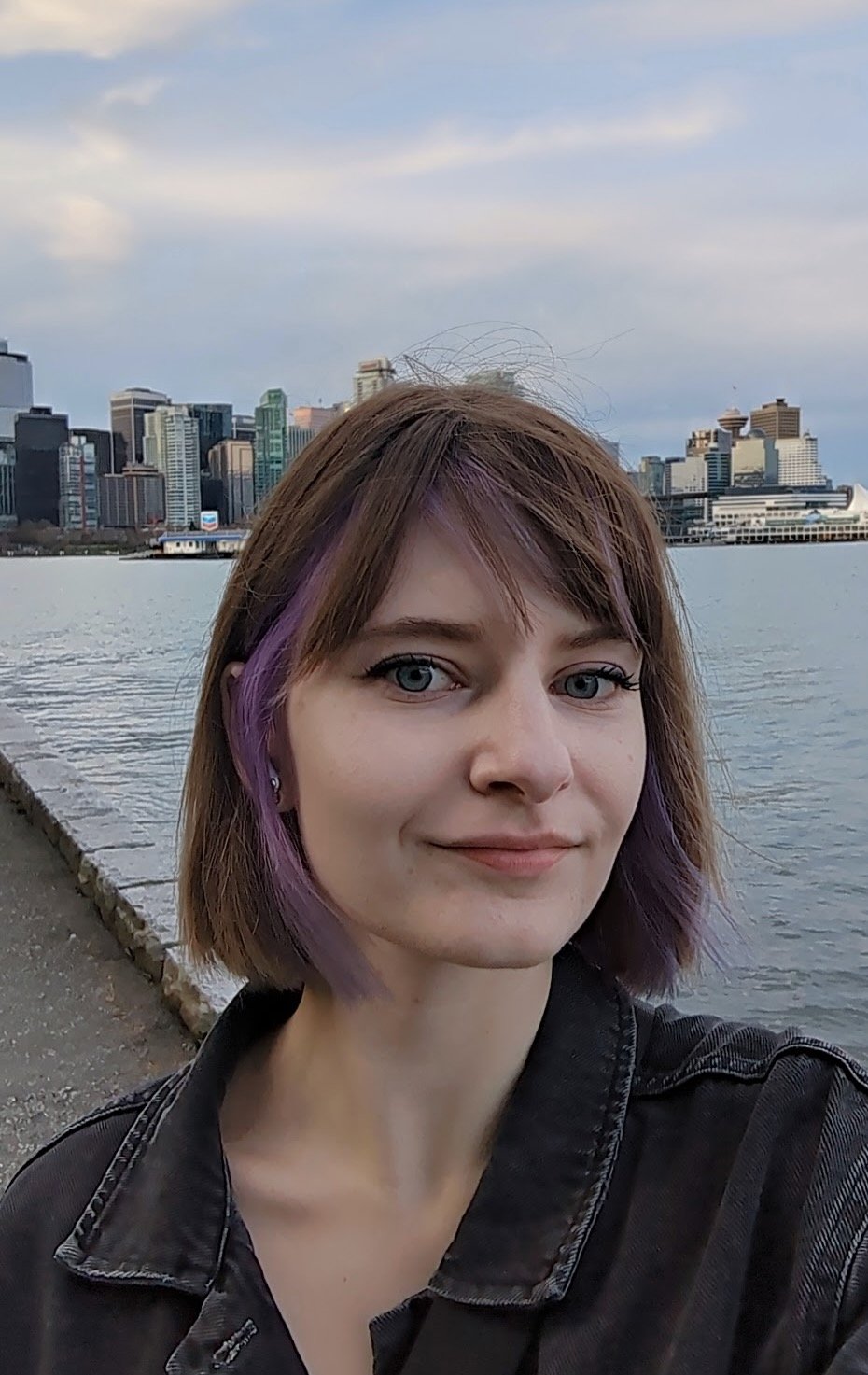
Sharalyn Barg is a writer based in Vancouver, Canada. Her work has appeared in Bending Genres, January House Literary, Big Whoopie Deal, and others.
Instagram: @sharzlyn
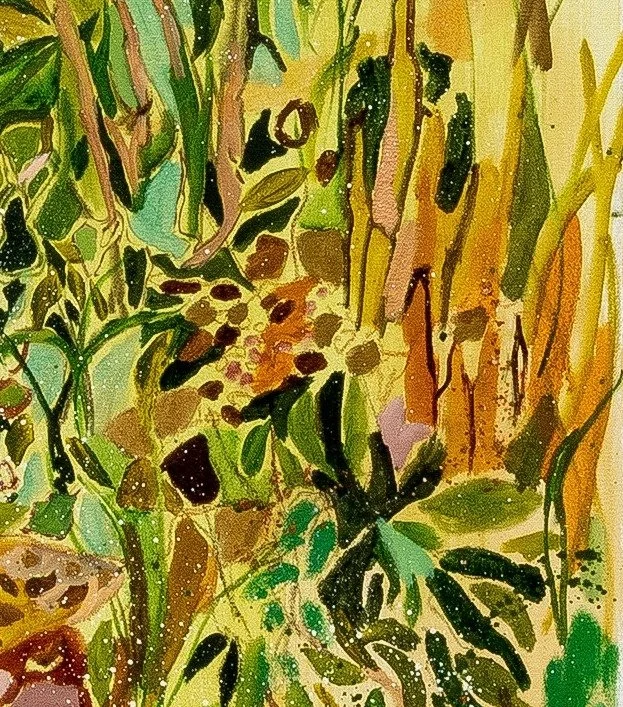
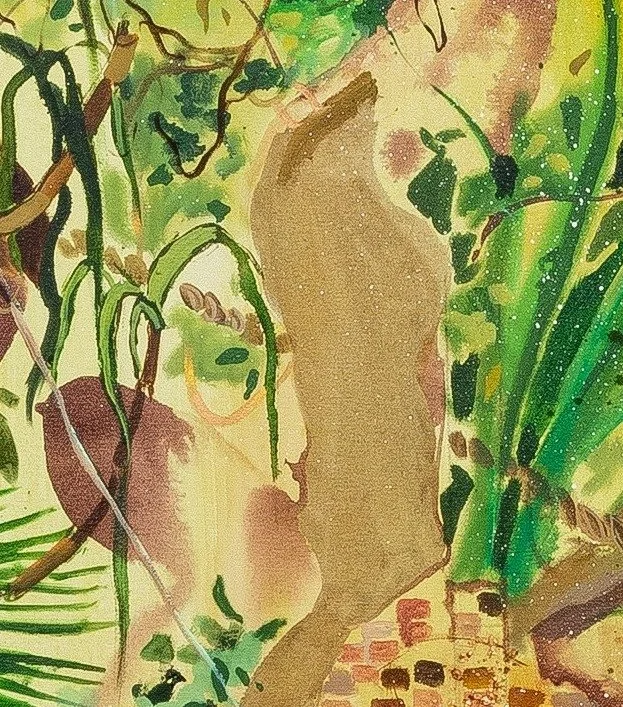
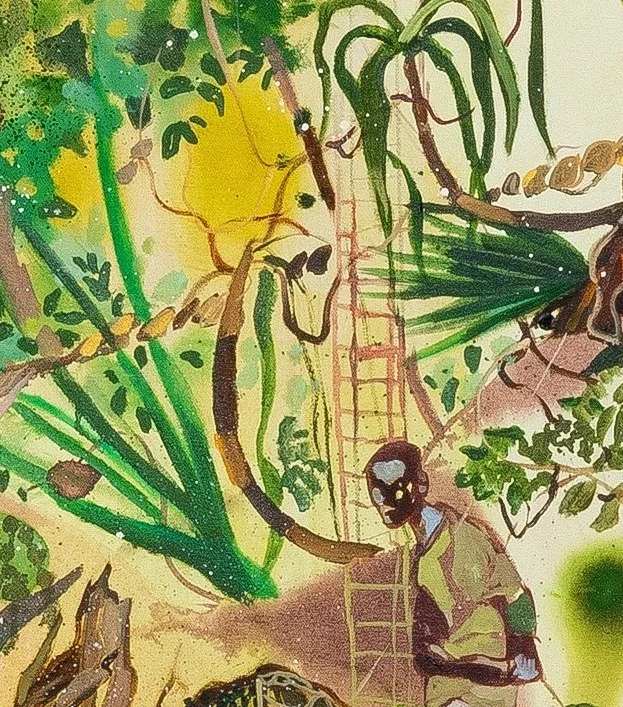
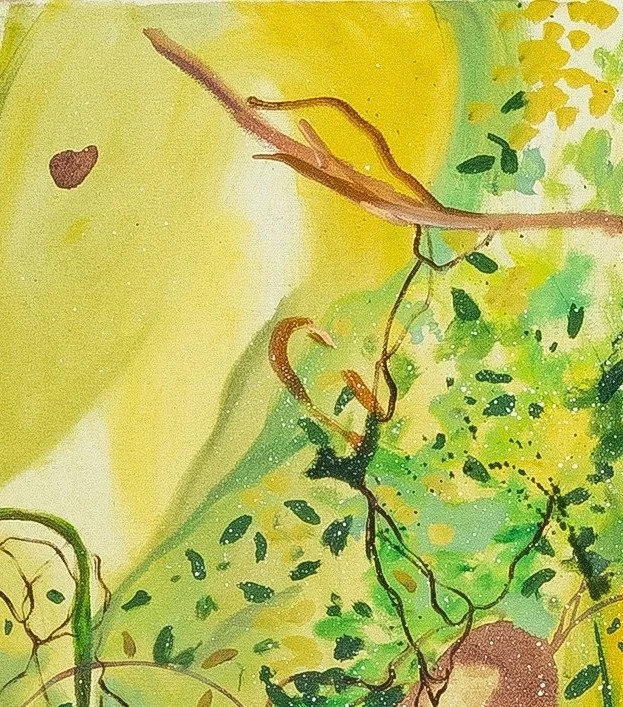
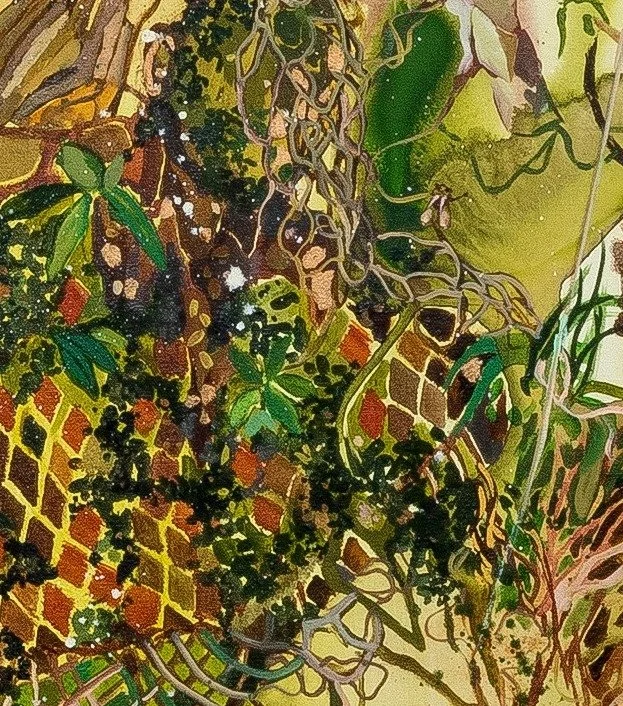
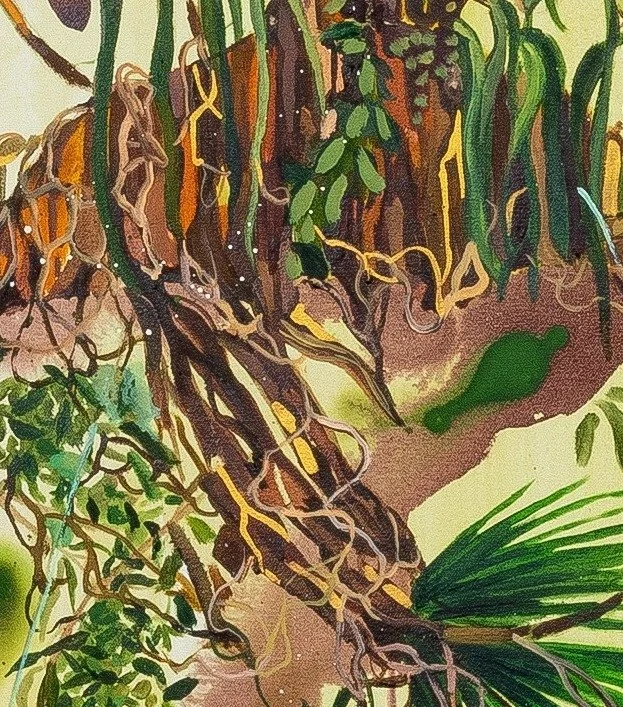
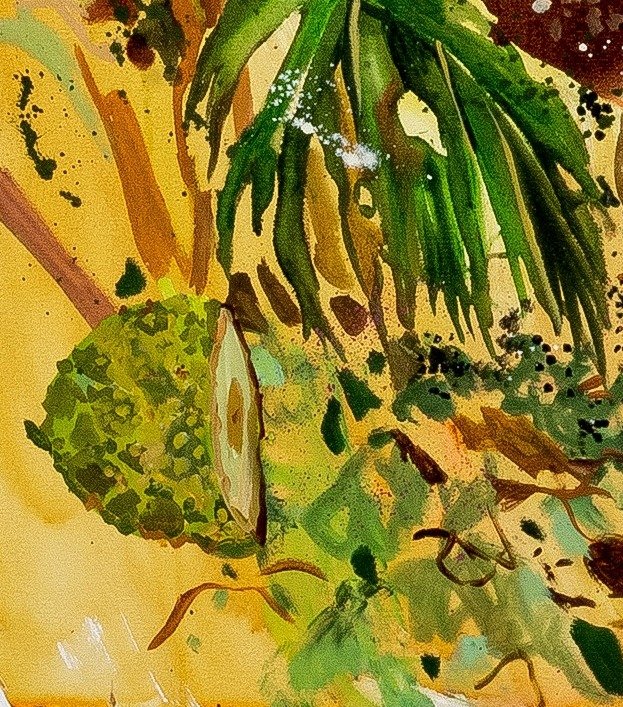
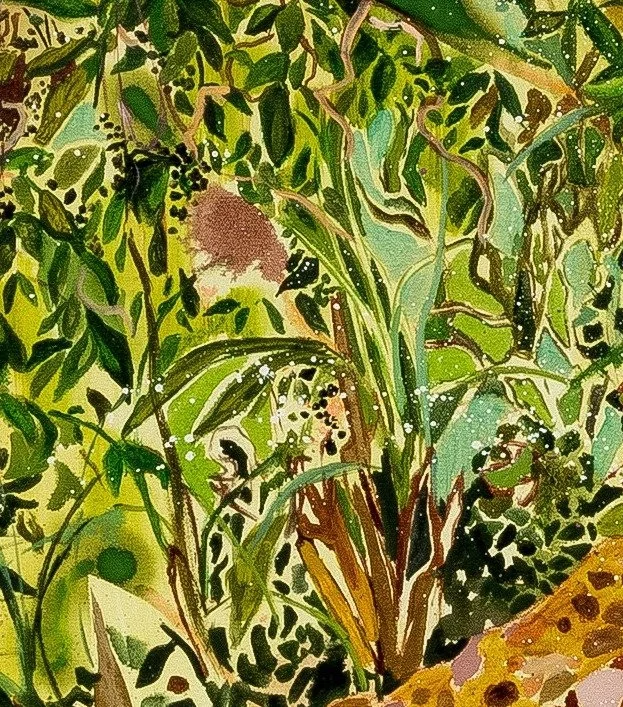
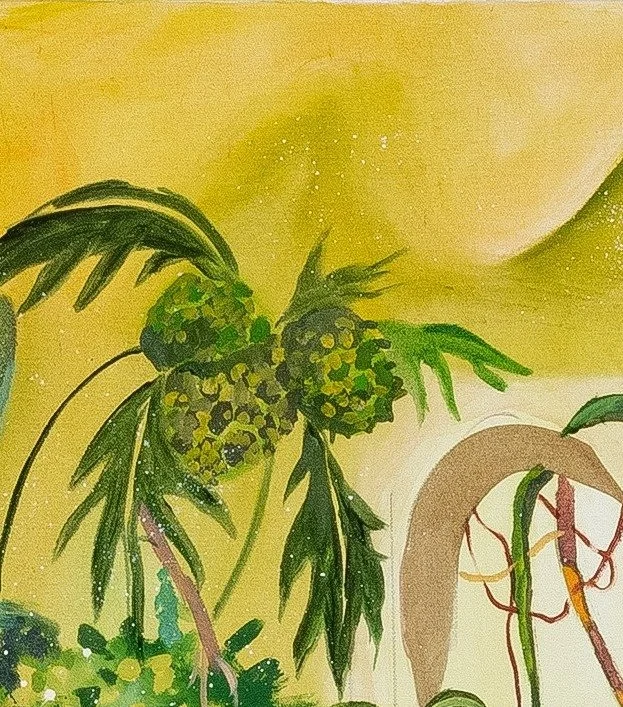
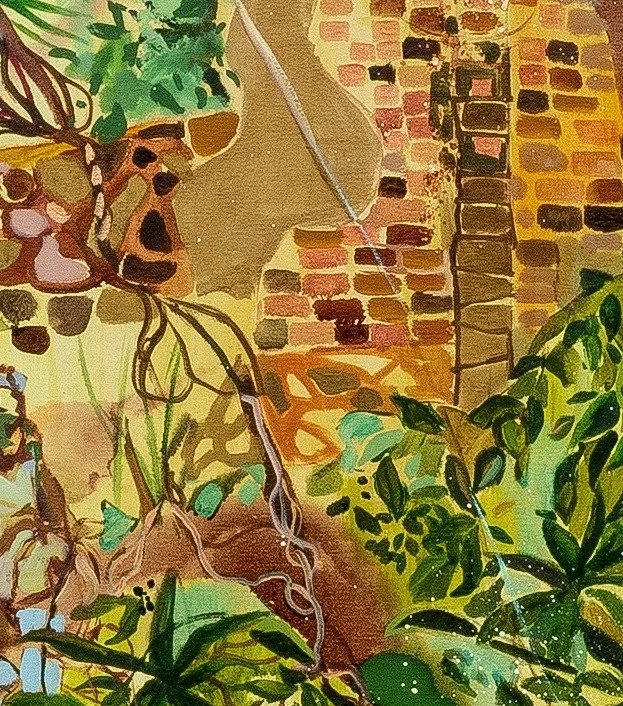
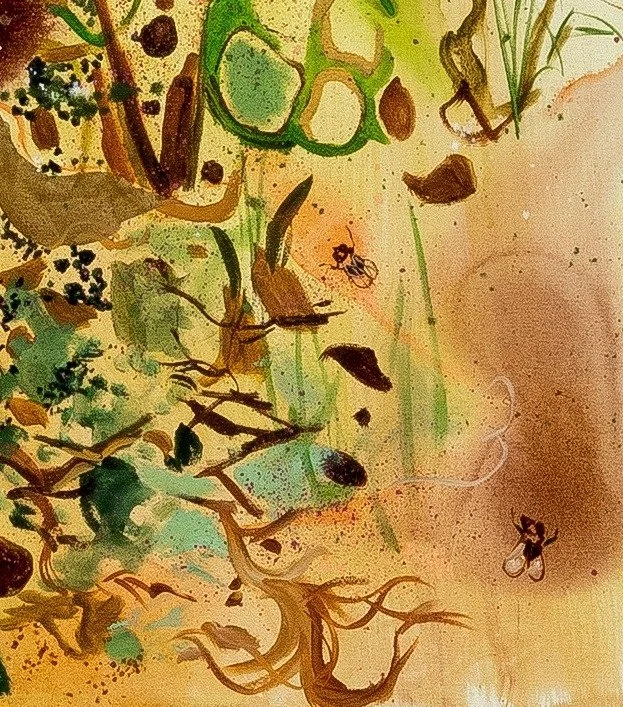
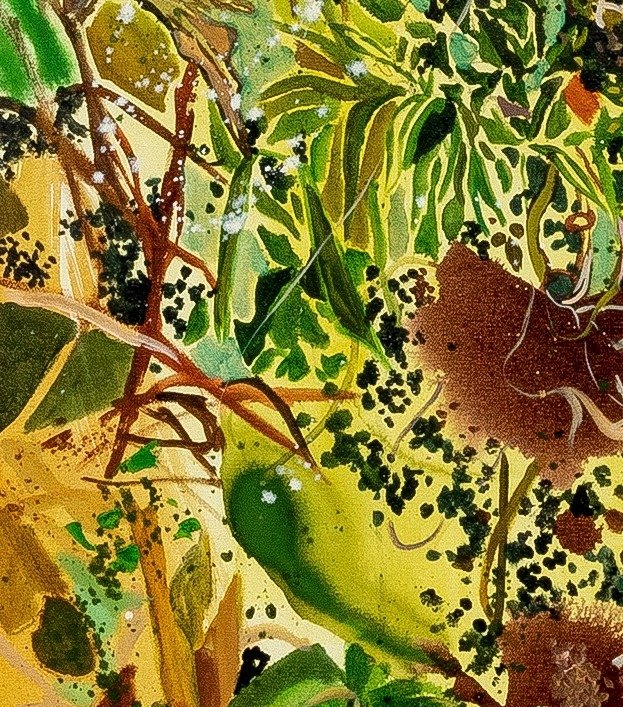
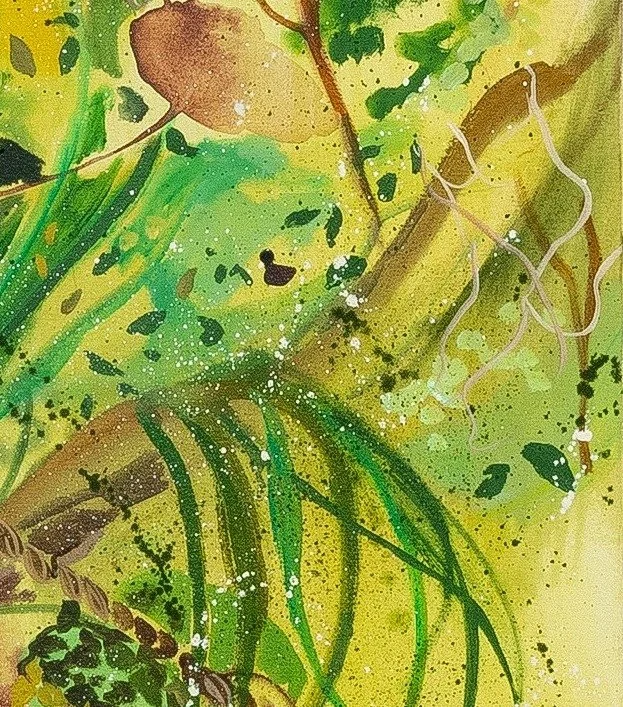
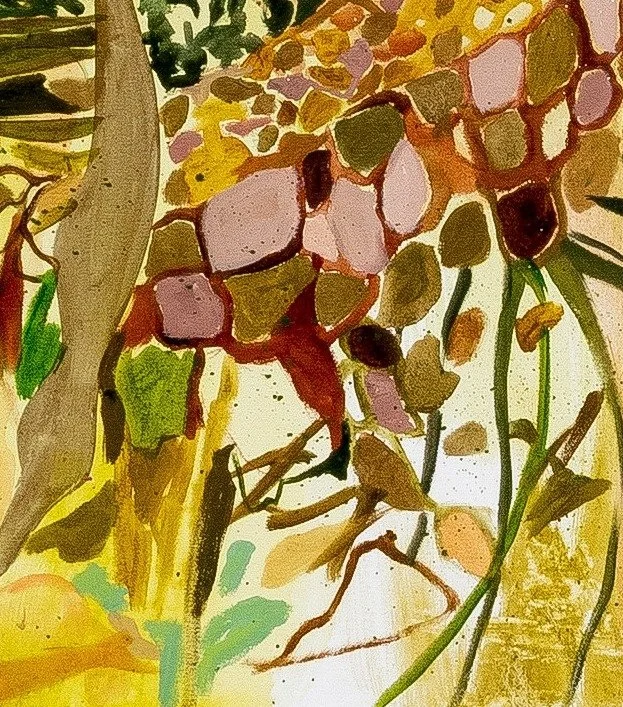
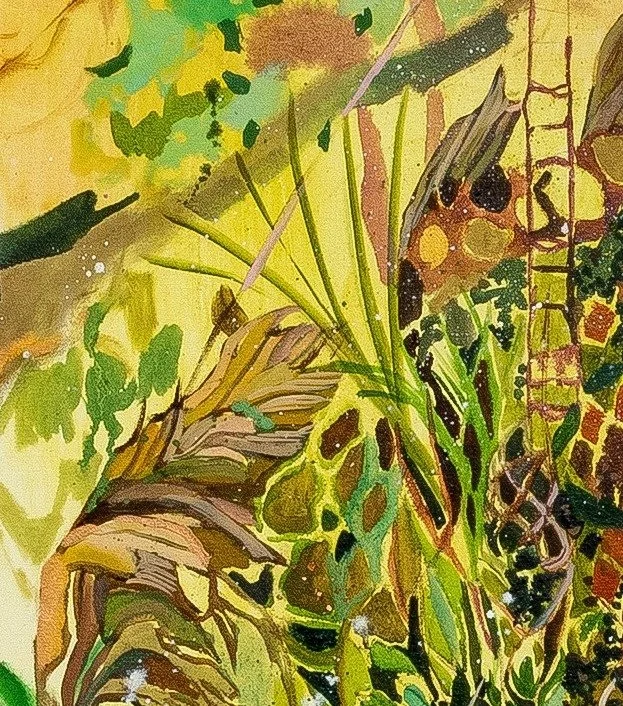
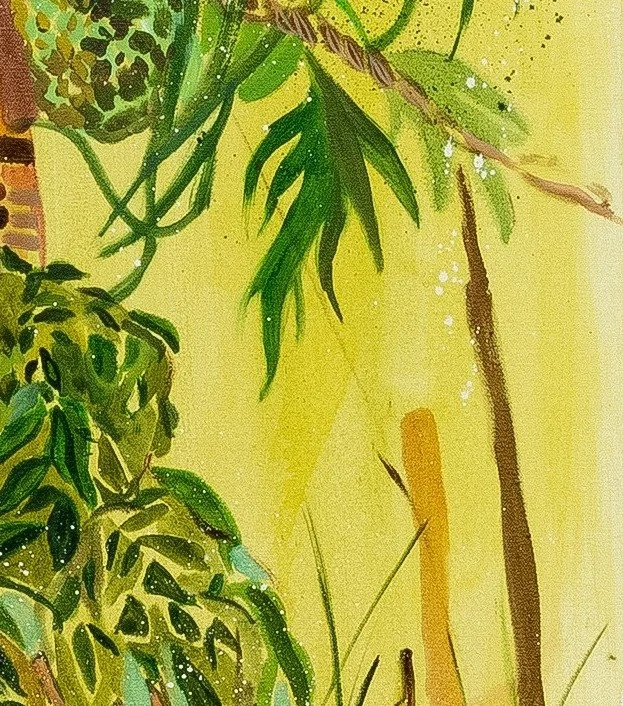
Cover art by Laurena Finéus
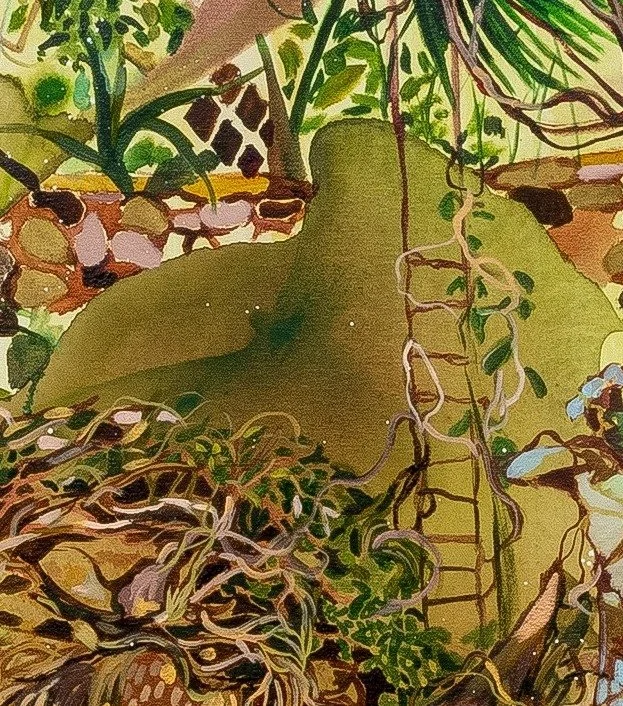
In “Jardin de Mackandal” (The Garden of Mackandal), the focus is the breadfruit tree, a hardy symbol of survival. Known for its role in Haiti's reforestation, the breadfruit tree thrives in poor soil and is a reliable source of sustenance, especially in times of crisis.