JETTY
by Kirby Michael Wright
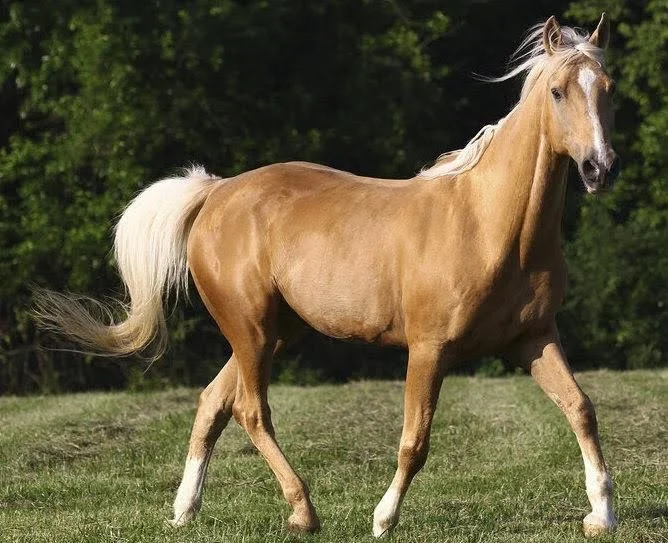
Photo credit: Julia Gilman
Jetty was our palomino quarter horse, the daughter of Ol’ Sissy and a mystery stallion who’d mounted her between lines of wire in the fence line. Barry, my big brother, had never had a filly and was next in line. He named her after the New York Jets, the upset winner of the Super Bowl. Barry wasn’t allowed to ride her until she was a yearling and had been properly trained Western style. Her mane and tail were the same color as the hair of Debbie Curley, my blonde crush at Punahou School in Honolulu.
My grandmother was no-nonsense. Gramma was a smidge over five feet tall and had a husky voice from decades of smoking. Hard work had bent her back. She hunched around her Moloka’i ranch checking the horses and spying on her mountain for poachers through WWII binoculars. Her property was called Hale Kawaikapu, Home of the Sacred Waters. It was an ahupua’a, an ancient land division beginning at the ocean and ending at the sky. Barry and I stayed with her every summer.
Jetty’s training took place in a small lot adjacent to Gramma’s bungalow. I could see Kimo Kanahele putting Jetty through her paces from the kitchen window. Groundwork included getting her to track in a circle, to back up, and to control her feet. Jetty’s lot was far enough away from the other horses to provide Kanahele with no distractions. Despite being separated, I could still hear our mares calling her from the big lot. Barry kept an eye on his filly. I could tell he wasn’t a fan of the trainer by the way he criticized him. “Kanahele’s a momona pig,” he said.
“Maybe he can diet,” I suggested.
“Punk yanks her bridle too hard,” he continued.
There was a twenty-foot rope attached to Jetty’s bridle. Kanahele wasn’t opposed to jerking the rope to gain control. It turned out Barry was right about being rough. I spotted an abrasion from the bit inside Jetty’s mouth. It wasn’t bleeding but looked raw.
* * *
The Moloka’i Fair was held on the grounds of Moloka’i High. Mr. Crane, the postmaster, was in charge. The fair began with a Fourth of July parade in the wild west town of Kaunakakai, wrapped around a kiawe forest, and ended at the school. It was a small campus but big enough for the fair. I had never seen so many people in one place on the island. Gramma, Barry, and I stood beside the malasada booth watching the paniolos approach on horseback. The star pines fronting the school swayed in the onshore breeze. Jetty led the parade over the big green lawn of the high school. Alvin Kamake’aina, my father’s calabash cousin, was her rider. A garland of interwoven tube rose, plumeria, and pikake made Jetty seem like our version of National Velvet. Puanani, a local girl my age, had braided her mane. The intricate braid work, combined with Jetty’s prancing and the garland, gave her the aura of royalty. A shiver of pride sailed through my body. Jetty made me feel as though my family had contributed something magical to the festivities. Anna Goodhue, an east end kupuna, told us Jetty had mana. Hercules Mendoza, the builder of lava walls, said our filly was no ka oi. Oshiro, the gas station owner, congratulated Gramma. Pearl Friel, a heavyset Portuguese rancher, offered two thousand for Jetty. Gramma said, “She’s not for sale.”
The fair blended the aromas of popcorn popping, the perfumy scent of pink cotton candy, and ginger huli huli chicken grilling over kiawe coals. One grill was reserved for teriyaki meat sticks. It was an olfactory symphony that made me hungry. Smoke from the grills drifted like fog over the football field.
“Ya boys hungry fo’ lunch?” Gramma asked.
“I’m starving,” Barry answered.
“I could eat a marlin,” I quipped.
We waited in line for huli huli chicken. The garlic-scented smoke off the grills made my stomach rumble. Gramma unclamped her pocket purse and paid with a roll of dollar bills. The meals came quick because we knew Narakiro, our carpenter-turned- cook. The paper plates were piled high with barbecue, scoops of macaroni salad, and plastic cups of poi. The poi was purple, which meant it was fresh. We hunkered down on a bench shaded by a hau tree. The chicken was moist and juicy. The ginger gave it an exotic tang, like Chinese food. I guzzled a Purple Passion soda while Barry gulped a Coke. Gramma sipped coffee from a Styrofoam cup.
“Barry’s horse is the big star,” Gramma said.
“Jetty should run the Kentucky Derby,” my brother boasted.
Gramma shook her head. “That race’s fo’ thoroughbreds.”
“Can’t a quarter horse win?” I asked.
“Jetty might be ahead after the first turn,” Gramma replied, “but the thoroughbreds would catch her on the back stretch.”
* * *
There were rides on the midway such as the Tilt-A-Whirl, the Octopus, the Salt-N-Pepper Shaker, and a Ferris Wheel. Games featured balloon pop with darts, football toss using a suspended tire as a target, and the fish cup game where you tossed ping pong balls at cups of swimming goldfish. If you landed a ball, you won the fish. I tried but lost. There were Shetland pony rides for kids in a circle ring, where ponies had their bridles chained to bars and were forced to follow one another while the rotating bars pulled them clockwise.
The local 4-H Club had live animal displays in the auditorium. There were caged rabbits, chickens, and pigeons. A trio of piglets oinked from a fenced-in enclosure. A calf was roped to a cinder block. Baby goats maah-maahed inside a chicken wire compound. Girls and boys in green vests hustled in food and buckets of water.
“These keeds love their animals,” Gramma said.
“Doubt it,” Barry mumbled.
I elbowed his shoulder. “Why do you doubt it?”
“You can’t love something keeping it caged or roped,” he replied.
* * *
A wrestling ring with a canvas mat had been set up beside the coconut grove bordering Kamehameha Highway. It was surrounded by mini bleachers. Boys and girls tested the strength of the canvas by bouncing up and down, until Mr. Crane climbed up on the apron and chased them out. 50th State Big Time wrestlers were flying over from Honolulu to compete. My brother and I were addicted to pro wrestling on TV. It aired after the Lippy Espinda Show and featured a host of wrestlers of every ethnic persuasion. My favorite was the Masked Executioner. I’d never seen his face because he wouldn’t give interviews, but once I heard him grunt when Professor Tanaka karate-chopped his throat.
Gramma was excited for live action. I’d watch the televised matches and locker room interviews with her every Saturday afternoon. She’d root on the good guys such as Nick Bockwinkel and Handsome Johnny Barend. She would snap insults at the bad guys whenever they battled her favorites. Placards at the fair promised a grudge match between Ripper Collins and Handsome Johnny. I knew Gramma wanted Handsome Johnny because she hated his opponent. It galled her that Ripper insulted the islands by mispronouncing local words with an exaggerated twang.
The lobby of the administration building had been converted into a makeshift country store, complete with jars of honey, mango chutney, and poha jam. Gramma fingered bottles of kimchi, guava and lilikoi jellies, and mango chutney. She bought two bags of poi. Barry found jars of opihi and pickled pig’s feet. A dessert table featured haupia cakes, custard pies, and oatmeal cookies. There was an exhibition of tapestries, quilts, and paintings. Gramma checked out the seascapes. Flower arrangements featured hibiscus, orchids, and mountain ferns. A Filipina in a red dress caught my eye. She was perusing the quilts and returned my gaze with a wink. We bumped into Marveli, a family friend, who showed us her rare tiger-striped orchid and a blue first-place ribbon. Yellow jackets buzzed the outside screen of an open window, dancing around a slumbering swallowtail moth. Barry and I were armed with five-dollar bills, thanks to Gramma. My brother bought a box of gum that was marked too low. His purchase inspired me to buy oatmeal cookies.
* * *
We stayed until dusk waiting for the wrestlers to arrive. I shared my cookies. A galaxy of spotlights ignited the ring. Gramma smoked like a chimney in the front row of the mauka bleachers. She wanted to be close to the action. I suspected she wanted to blow off steam by yelling at the bad guys. Raymond the mahu, bedecked in a black blouse with silver sequins and black leather pants, sat behind us. He wore rouge and eyeliner. Barry chewed gum and blew a monster bubble. The aroma of barbecued chicken lingered in the air. Two boys with candy apples on sticks sat above us. They took turns slugging each other’s shoulders in-between bites. A trumpet sounded. The wrestlers arrived—they circled the ring waving at fans. I spotted regulars such as the Missing Link and Lord “Tally Ho” Blears, but I was disappointed the Masked Executioner hadn’t made the trip. The wrestlers congregated in a tent beneath the coconut trees. Blears entered the ring with a mike. “Welcome to 50th State Wrestling,” he announced, “Moloka’i style!” Everyone clapped and cheered.
The first match was billed as a grudge match between Handsome Johnny and Ripper Collins. I knew Gramma had a secret crush on Johnny because she usually adjusted her bifocals whenever he flexed his biceps on TV. She squashed her half-smoked cigarette under her cowboy boot and lit a fresh one. Barry was making goo-goo eyes at a Hawaiian girl two rows back.
Ripper and Johnny entered the ring to a symphony of cheers and boos. Johnny had a weightlifter’s body and big biceps. He kept his distance from Ripper until Blears signaled the fighters to the middle of the ring. Ripper was a chubby blond who’d honed a reputation as a dirty wrestler. Sometimes he bit his opponent. He called himself “King” after winning the heavyweight title, an honor that changed hands almost weekly. Ripper leaned over the top rope and teased the fans with a barrage of mispronounced Hawaiian words, including the name of our island. Everyone booed.
“Fuckin’ haole!” a local boy said.
Ripper glared pointing down at the boy. “Get you after the fight,” he promised.
The crowd hurled projectiles at Ripper, pelting him with everything from bottle caps to ice to malasadas. Barry hurled a pack of gum.
The fighters wore trunks and black boxing shoes laced up high. Johnny’s bottoms were more like hot pants because they were cut short and revealed his muscular legs. Ripper’s trunks rode high to hide his belly. Raymond wolfed down a jumbo hotdog and wiped mustard off the corners of his mouth. A breeze rustled the coconut fronds above us. Moths circled the floodlights.
“The time has come for a reckoning!” Blears announced. He beckoned the fighters to the middle of the ring.
Cheers from the bleachers went up.
Ripper and Johnny faced off. Johnny held out his hand to shake but Ripper slapped it away. Johnny raised his fist as if he was going to belt him. They had a skirmish that carried them over to the ropes. The Japanese ref separated them.
Johnny slugged Ripper in the gut. Ripper doubled over, but I knew he was faking it. Ripper countered with a right that found his rival’s jaw. Johnny wobbled back into the ropes like a drunk. Ripper pressed the attack, grabbing Johnny’s head and smashing it against a turnbuckle. The fans booed. Someone threw a crumpled cup. Groggy, Johnny stumbled to the middle of the ring, with Ripper in hot pursuit. Ripper pulled something out of his trunks and ground it against his opponent’s eye.
Gramma stood and pointed. “Ripper’s cheatin’,” she alerted the ref. “Pokin’ Johnny’s eye out with a bottle cap!”
I stood too. “Disqualify ‘im!” I demanded.
Johnny covered his eye and fled to the far corner. Red marks from Ripper’s pelting surfaced on his chest and shoulders. The ref checked the bum eye and signaled for the fight to continue. The break gave Johnny time to recover. He circled his opponent doing a war dance while Ripper begged for mercy. Johnny was in a rage. He picked up Ripper, balanced him on his shoulders like a sack of barley, and body-slammed him on the canvas. The crowd cheered. Johnny pinned Ripper and their fight was over.
The Missing Link battled Nick Bockwinkel in the second match and gained the advantage by delivering a pile driver that smashed Bockwinkel’s face into the canvas. But Bockwinkel fought back and got his rival in his signature Abdominal Stretch. The Missing Link howled in pain—he waved his hands in submission. The ref raised Bockwinkel’s hand in victory while the fans roared their approval.
The third and final fight pitted two sub-par fighters, a bald haole and Rocky, a skinny Samoan. They chased one another all over the ring without registering too many blows. The haole fake-kicked Rocky and he rolled around the canvas in apparent agony. Some of the fans began filing down the stairs.
“I’ve seen enough,” Gramma said. “Time to head home.”
* * *
The bad news hit during midterms at Punahou. Kanahele phoned my father to report Jetty was missing from his lot on the west end. He’d trailered her to his place, claiming he needed more time for proper training. Despite him issuing an alert on the coconut wireless, nobody came forward with a lead.
“Jesus Christ,” my father cussed into the phone, “don’t you keep your goddamn gate locked?”
My father concluded that Kanahele had shipped Jetty by barge to a Maui rancher “for a pretty penny.” But there were hundreds of ranches. I wanted to bring guns to Maui and track Jetty down. I was good at coming up with bravado schemes since idolizing the hero in Shane. I figured Gramma would loan me her .219 rifle, one that shot a small bullet but packed a big payload. I imagined tracking down Barry’s filly at an upcountry ranch and having a blazing gunfight with a gang of thieves. Part of me was willing to die to get her back home to Hale Kawaikapu. My father was against the expedition, despite Barry and me trying to sway him. He said the chances of finding Jetty were “slim to none” and that I was suggesting “a sure-fire way for us to get shot.” But, despite him poo-pooing my plan, I still wanted to try. If anything, I knew it would bring me closer to my brother. Barry had always seen me as the favorite and hated me for it. I wanted our mutual love for Jetty to unite us, if only for a few days. The weeks dragged on. When Thanksgiving rolled around, I felt bitter not knowing who the enemy was and being denied a chance to rescue our filly.
“I’m sorry, Barry,” I told my brother.
“I’ll find the thief someday,” he replied, “and kill ‘im.”
“You’ll go to jail.”
“It’d be worth it.”
I’d witnessed his thirst for vengeance. He’d hiked Gramma’s mountain in pursuit of poachers, snuck up on a hunter, and jammed his rifle barrel against the poacher’s neck. But Barry lacked the mana and the money to fly to Maui alone.
I remembered filling the water trough and seeing Jetty trot over with Ol’ Sissy from the fence line that skirted the public road. Her blonde mane and tail dazzled in the sun. A blue feeling crept through me, one filling me with loss and the fear of losing people and creatures I loved. Everyone in my family would vanish. Then it would be my turn. I realized that, except for my memories, I would never see Jetty again.
Notes:
ahupua’a: ancient land division
haole: Caucasian
kupuna: elder
mahu: gay
mana: spiritual power
mauka: mountainside
momona: fat
no ka oi: the best
opihi: edible shellfish
ABOUT THE CREATOR
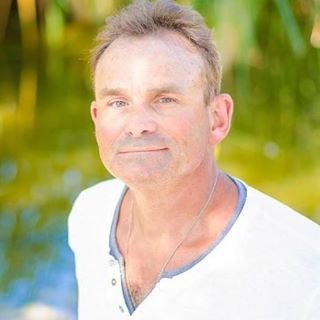
Kirby Michael Wright was born and raised in Hawaii. He is the Feature Writer for the Office of Hawaiian Affairs. His family land on Moloka'i served as the breadbasket for Kamehameha's warriors while training for their assault on Oahu.
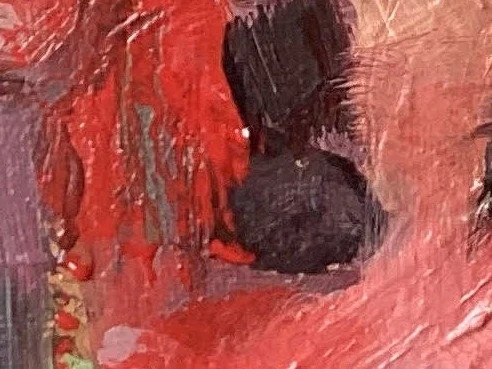
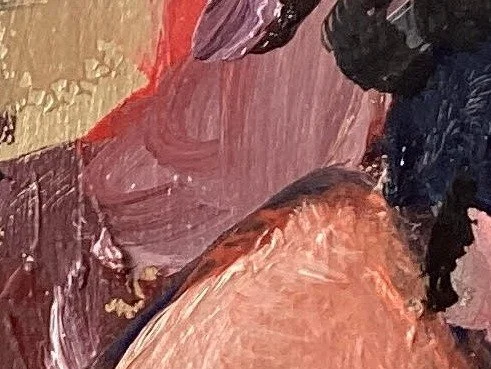
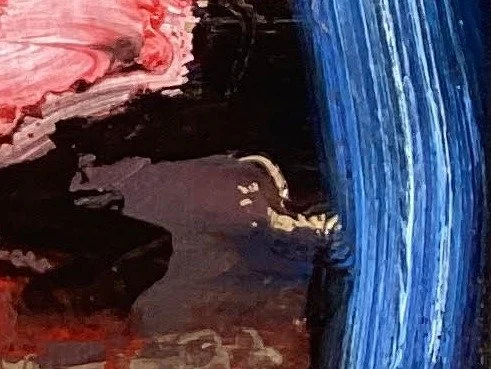
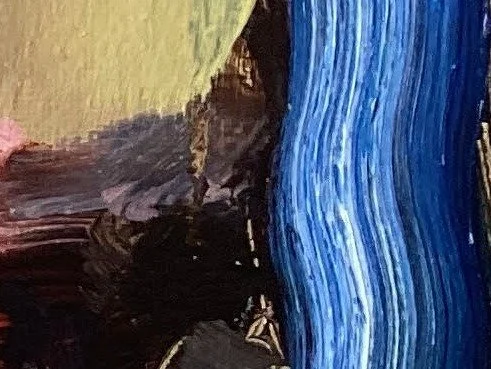
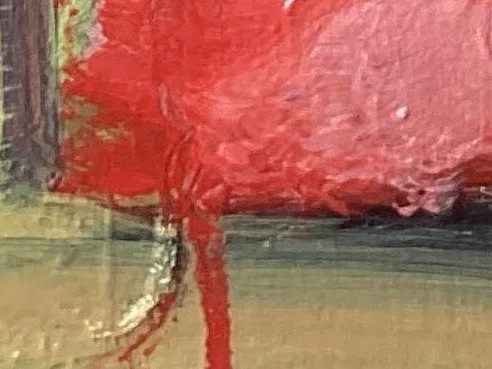
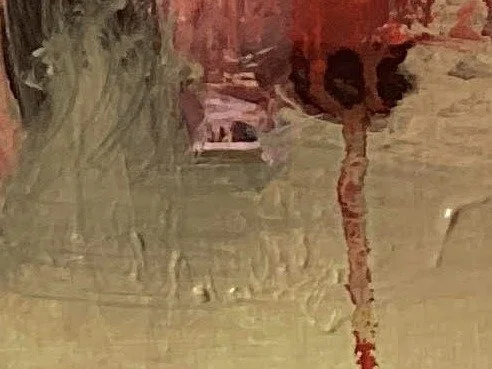
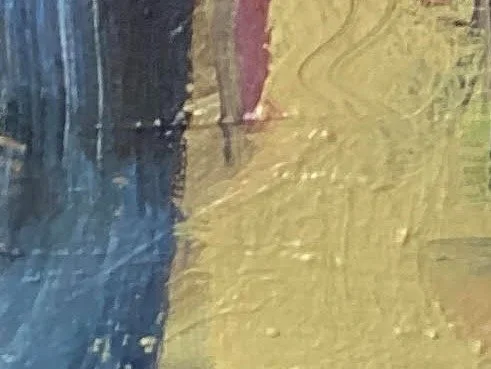
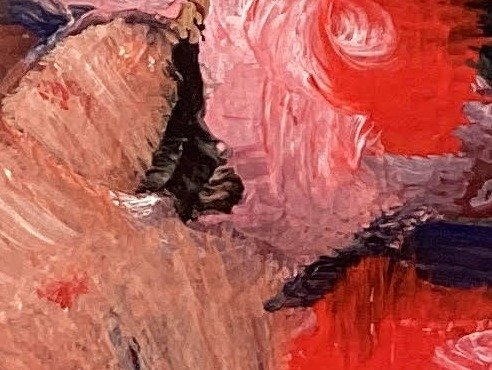
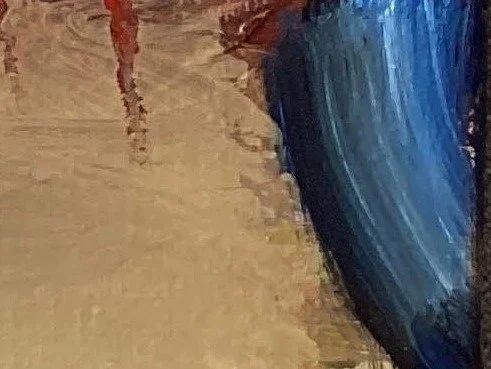
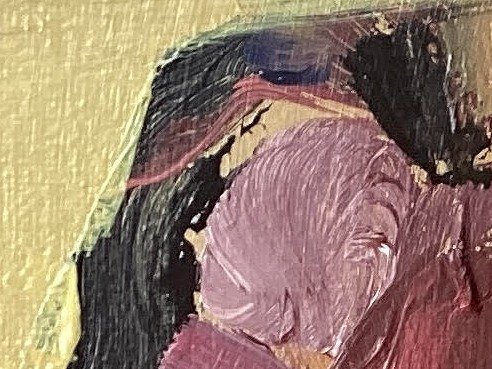
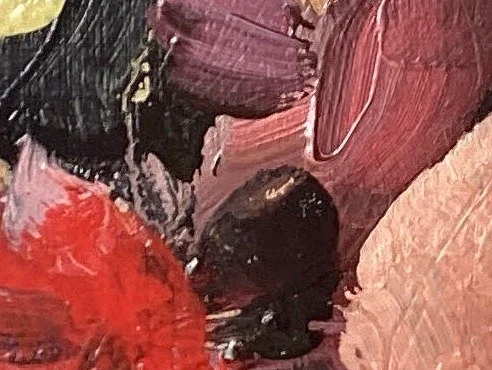
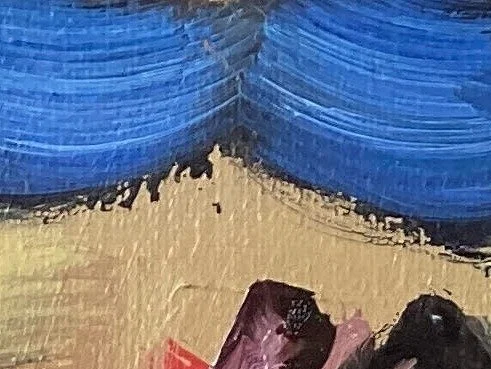
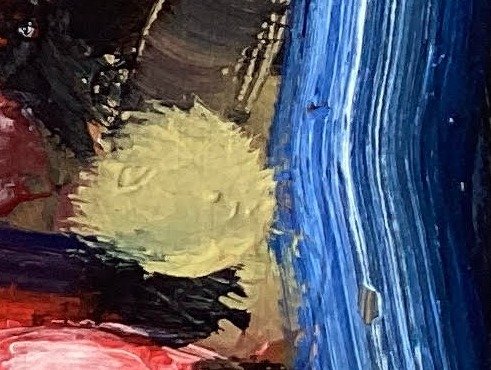
Cover art by Angie Quick
The oil painting “The actress (study)” is a work that explores the performance of sexuality. The painting borrows from imagery of the stage and asks the viewer what production are they witnessing.