Bells Without Wires
by Ersun Augustinus Kayra
The bell on the dépanneur door isn’t a bell—just a thin metal strip screwed to the frame, flexing when the door opens and making a high, stubborn sound. In winter the sound is sharper. Cold teaches everything its edges: curb, snowbank, hour.
The first ring of the morning is Nadine’s. She stomps the salt out of her boots, and the mat accepts the insult. The owner looks up from his ledger—the owner everyone calls Samir, though his permit says Samer—and smiles with the tired welcome of a man who has learned a city by its receipts.
“Bon matin,” he says, then, “Good morning,” not because he must but because friendliness prefers more than one door.
“Ice melts faster than we do,” Nadine says, breathing into her hands. “You still have the window-seal kits? The clear kind with the hair dryer?”
“Aisle trois,” he nods. “And ginger tea. Mme Baptiste likes it.”
“She’ll say it tastes like medicine,” Nadine grins. “Then she’ll drink two cups.”
She buys two kits, ginger tea, a sleeve of Maria biscuits for a ritual she could do asleep: the old woman will eat one and a half, scold sugar, then hunt for the second half in her own palm.
Outside, blue recycling bins stand like plastic sentries. A plow goes by and crowns a parked car in clean white. A kid’s toque lifts, makes a brief escape, and the wind nails it to a fence. The bell rings once behind Nadine—small, brave. Some doors announce you so you don’t have to find your voice right away.
Mme Baptiste lives on the third floor off Décarie, in a walk-up where the radiator either bangs or sulks. Today it sulks. Nadine knocks her usual three. The old woman answers with her usual complaint about the slowness of keys and then smiles like she invented bienvenue and forgot to trademark it.
“You are late,” she says, “which is good. I dreamed you came too early and missed the story.”
“The city dreamed me a snow fort,” Nadine says, unwinding her scarf.
“You brought the tea? The one that tastes like medicine? My mother made it. She called it gingembre, like it was a person who owed her money.”
In the kitchen, the window leaks cold like a rumor. Nadine sets the kettle on, measures the plastic a little too big—old buildings prefer generosity—and runs the hair dryer along the edges until the film tightens to a drum. She taps it. The window answers with a sound you can believe in.
“Bon. Now my bones will argue more quietly,” Mme B says.
They do the pills. Nadine counts with the careful boredom of someone who has learned that faithfulness is small patience repeated. Mme B tells a story about Port-au-Prince that wants to be about her husband and keeps becoming about her mother. Nadine lets it be both.
“Tomorrow,” Mme B says, “bring me a little plant. Something that remembers light when there is none.”
“A spider plant,” Nadine says. “They remember everything.”
On the stairs, the superintendent carries a shovel like it insulted his father.
“Cold finds the weak doors,” he says, as if she’s responsible for meteorology.
“Then the strong doors should lend them a sweater,” she answers. He snorts—his word for laugh.
Her phone buzzes: Hydro-Québec warns of possible outages if the wind picks up. The wind has already picked up. She texts Samir a joke about candles. He replies with a photo of a shelf stacked like a tiny army, then one of his younger boy skidding across the kitchen in socks. ‘We are ready for everything except homework.’
Nadine pockets the phone. She thinks of the dep’s bell—how it doesn’t need power to announce a person—and heads to her third visit.
Samir watches her leave; the bell’s faint shiver is the only trace. For a moment the shop is quiet, as if the shelves are listening. Pasta, canned beans, scratch tickets dreaming bigger lives. This isn’t the business he pictured when he left his father’s cramped counter in Ville-Émard, but it’s the one that chose him: a ledger of tiny reliabilities. Mme Lavoie’s Journal de Montréal before noon. The Girouard crew’s Pepsis at 10:30 pile. Nadine’s days measured in the small purchases of care. He runs a hand over the scarred laminate. Not much in profit, plenty in purpose. It will do. It is enough.
By three o’clock Sherbrooke is a tunnel full of bad confetti. The lights blink, then feel shy about returning. In her client’s apartment, the fridge gives up being a person. Somewhere in the hall, someone says “Euh?” the way only a Montréaler can.
Nadine finishes the sandwiches by the window. On her way out, the stairwell becomes a committee—one with a flashlight, one with an opinion about the mayor, one with a baby in a fruit-shaped hat. This building can organize itself in five minutes; it can’t help it.
Everyone goes to the dépanneur when the power goes. Need simplifies: bread, batteries, the sentence “Vous avez…?” and the answer “On en avait ce matin.”
Inside, it’s dim but organized. Samir has set three emergency candles in jars as though expecting romance. A mail carrier buys propane and Oreos and says she will spend the evening delivering apologies. An old man asks if his lotto ticket remains a promise in the dark. A teenager in a Habs hoodie places five dollars by the outlet and says “merci” like he’s trying the word on for size.
“You good?” Samir asks Nadine. She nods too quickly. The bell keeps time like a high metronome. When the door closes, the wind behaves like a wall.
“Hydro says three hours,” he shrugs at his phone. “Hydro is a man who says three hours to everything.”
Nadine helps without being asked; this place is already a neighbourhood and her hands like being useful. She restacks the bread the way people take it—from second to front while pretending not to. She tapes a sign over the charger: 15 minutes par personne; votre voisin doit appeler sa mère. Translated to English, it becomes slightly less polite.
In the corner, Samir’s younger son does math by candle—areas of irregular shapes. He glances at the flame like he hopes it will give him the correct answer. Catching Nadine’s eye, he straightens like an adult.
“I’m practicing for the examens,” he says with nine-year-old ferocity.
“Good,” Nadine says. “The city always asks for math when there’s no light.”
Nathalie from the CLSC blows in, big laugh, bigger tote. She doesn’t sit; she circulates, her bag producing a spare pair of socks for the mail carrier, a granola bar for the Habs kid, hand sanitizer for a couple debating germs. She reports: buses detouring, the community centre on Girouard has sockets, the pharmacy is open if you talk to it nicely. “If you want, I’ll bring a power bar,” she says.
“Bring six,” Samir answers. Their plan starts by pretending it already existed.
Nadine’s phone vibrates: routine visits canceled; safety calls only. She texts ça va? to Mme B. No reply. Silence is permission and risk at once.
Samir sees the change in her face. “Ça va?”
“My last client—third floor, older. Window seals are new, but… If Hydro’s ‘three hours’ stretches—” She stops. The rule is clear: during outages, aides don’t travel unless dispatched. You stay; you call. You live by paper that isn’t warm.
Samir pours hot water from a camping kettle. “Prends le thermos. I’ll keep an eye here.”
“I’m not supposed to go.”
“You’re supposed to take care of people,” he says simply. Then, softer: “Va, Nadine.”
She hesitates. Company policy on one shoulder, a face she knows on the other. The bell rings—thin metal, no wires, declaring a person present. Nadine zips her coat.
“Fifteen minutes,” she tells herself. “There and back.”
The Habs teenager—Félix—watches her zip up, his own errand forgotten. He comes most days after school, not always to buy anything, but to feel the hum of a place that isn’t home or class. Samir never shoos him, only asks sometimes to mind the cooler if it sticks. Offering the power bank feels like paying rent—the only kind that matters. He holds it out with an adult’s nod. “For her phone,” he mutters.
“Merci,” Nadine says, and means it.
The stairwell to Mme B’s smells like candles lit in a hurry. The landing light is out. Nadine knocks once, twice, then with the back of her knuckles. The door opens slowly, then surely. Mme B wears two sweaters and a hat whose pom-pom has outlived better hats. She smiles, but her hands shake in a way that isn’t only from age.
“The heat,” she says, “is making a joke I do not understand.”
The apartment has cooled the way a person cools. Nadine touches her wrist, then forehead. Cool is a story; this one is getting loud. She sets the little camping stove to boil gingembre. The window film holds like a good idea, but the air bites. The oximeter sulks at 92—not a number she enjoys.
“Do you want me to call the CLSC?” she asks.
“They will bring paper,” Mme B says, breath shallow. “Paper will explain the cold to me.”
The stove stutters. The canister is nearly out. If the temperature keeps sliding, tea won’t keep up. Nadine looks at the neat stack of blankets, at the small frame she could carry, at the hall she could cross with help.
“Mme B,” she says, using the name as a bridge, “Samir’s dep is lit. Warm. On y va? Only a block.”
“I walk like a cloud with a complaint,” Mme B says.
“Then I’ll be the wind that apologizes,” Nadine smiles, because the other option is fear. The CLSC text sits warm in her pocket: calls only. She thinks of checkboxes that will never boil water. She thinks of the dep’s bell—how it declares arrivals without asking permission.
“Rules are for when the hallway is kind,” she says to herself. “Tonight the hallway needs help.”
Two blankets, scarf, Nadine’s spare mitts. “On y va, tout doucement.” At the door, the superintendent appears with a space heater like a sacrament. “Two minutes per apartment,” he recites, then sees Mme B’s face and stops counting.
“Je vais vous aider,” he says softly. He carries the heater like a lantern to the stairs, makes light of the first flight. “Down and right,” he tells Nadine. “Wind’s worse by the alley.”
A neighbour opens at the first knock, sees blankets, steps aside without needing language. “Bonne chance,” he offers, holding the door the way you hold the weather back.
Outside, Nadine bears most of the weight; it feels like carrying a future she didn’t expect to deliver. Mme B breathes the way people talk on bad phone lines. The wind has opinions. Nadine leans into them. A bus throws a comic spray of slush across an argument. Nadine laughs once, hard, to prove to her body this is still a city where humour pays rent.
At the dep’s door, the bell does its high, thin duty. Inside, warmth and voices take shape around them like a committee becoming a hug.
Samir is there first. “Venez, madame, venez.” He builds a throne from milk crates and a folded coat. Nathalie arrives with a power bar and a plastic bag full of good intentions. Félix guards the outlet like a bouncer hired by kindness. The mail carrier produces a thermos as though tea is a public utility. The younger boy carries over a spider plant from the emphatic shelf labeled forêt intérieure and sets it where the light is polite.
“Plants don’t need Hydro to remember light,” he announces, satisfied.
Nathalie moves like a node in a nervous system; outages are diagnostic tests. “The Tremblays on de Maisonneuve—oxygen machine is battery-backed, but they’re scared. I called the son,” she says. Samir nods, logs it without paper. Their system isn’t top-down; it spreads by sidewalk conversations and counter confidences.
Mme B sips. Colour returns like rumor becoming news. Ninety-four. Nadine doesn’t trust the number yet, but she trusts the room. The dep becomes what it was already trying to be: a small cathedral of anyone welcome. Someone starts a list of apartments to check with the stubborn optimism of clipboards.
Nadine’s phone buzzes: ‘Are you sheltering clients during the outage?’ She looks at Mme B’s hands around the mug, at Félix counting minutes, at the spider plant leaning toward nothing and everything. She texts back: ‘Yes.’ Then adds—because she has learned to offer proof before asked—'Third floor; client stable; returning when safe.’
She expects a reprimand. Fear arrives first, then the reply: ‘Acknowledged. Thank you for using your judgment.’
The sentence lands like a small, warm weight in her chest. For a year she has been proving things: skills, languages, hours, empathy that fits a form. She didn’t know approval could arrive without scolding’s shadow. Rules on one shoulder, a face on the other; tonight the face won and the rule thanked her for it. She exhales, a breath she didn’t realize she was borrowing.
“Tu vois?” Samir says, reading her face like a receipt. “Sometimes paper learns warmth.”
The Habs kid slides over a juice box without ceremony. “For your client,” he mutters, then, to the younger boy, “Guard the bell.”
“The bell guards us,” the little one says, inventing theology.
The power returns at eight, not because Hydro said so but because a man two neighbourhoods away shoved a transformer’s stubbornness into a different shape. Windows flare on with the sudden shame of rooms seen too plainly. A cheer rises because people like to practice joy on something that won’t mind if they’re off-key.
“Ready?” Nadine asks.
“I am a woman who knows when to say yes,” Mme B replies.
They take the slow flight home. The superintendent—Bernard—meets them on the second landing with the space heater, now silent, the element ticking as it cools. He feels a pride he won’t describe to his brother in Repentigny. His job is ninety percent complaints and ten percent this—work you can’t itemize. It’s the building’s quiet contract: he keeps pipes from freezing and locks engaging. In return he may, in crisis, be more than the man who unclogs toilets. For a step or two he walks alongside and it feels like belonging.
“Vous me devez une blague,” he tells Nadine—you owe me a joke.
“Demain,” she promises. “Une bonne.”
Back in the apartment, Nadine plays the détective méfiante, checking the thermostat. Heat returns—thin, honest, a line beneath the window film. Mme B’s pulse sits where a pulse should.
“Tu m’as apporté une plante?” the old woman asks, a thought surfacing.
“Demain,” Nadine says, voice soft with the day’s weight. “Une araignée. Elle aura trop d’enfants.”
“Bien,” Mme B smiles, eyes closing. “On l’appellera Montréal. Cette ville n’arrête pas d’avoir des enfants et de faire semblant d’être surprise.”
On the way out, the hallway has the acoustics of relief. Someone hums victory and someone else corrects the key. A cooler labeled frigo partagé holds milk and a note: ‘help yourself’—two languages, a third handwriting.
Outside, the city remembers how to be a room. Snowbanks lean into themselves. A bus announces its number like a song title. Across the street, the dep’s bell rings for someone else and for her at the same time. She doesn’t go in; she lets the sound be a gift she isn’t always the one opening.
She thinks of Samir’s boys counting minutes like cash, of Nathalie’s tote producing exactly the thing, of Félix guarding a charger like a door, of Bernard lending heat and not calculating what it cost him to be kind. She thinks of Mme B’s hands around the mug and the colour walking back into them. She thinks of her own apartment—quiet, uninsistent—and feels a small twist: not loneliness exactly, more like a bell that knows its note but waits for the right door.
Tomorrow she will bring the plant and set it on the dresser by the window. She will stand a minute longer at the dep just to hear the bell write people into the day. She will mark the window kits done on her sheet and forget to mention the part where she carried a person through weather because the form has no box for that. She will send a text that says merci without a period, letting gratitude trail off into more of itself.
For now she tucks her scarf, sets her shoulders, and walks. The wind is still there, less certain of its argument. Behind her, the bell does its thin, holy work. Ahead, on a dresser she hasn’t seen yet, a plant will learn where the light is. Between these—where cities live—people keep opening doors for one another, with or without wires.
ABOUT THE CREATOR

Photo courtesy of the author
Ersun Augustinus Kayra is an Istanbul-based writer whose essays and fiction explore everyday hospitality, moral attention, and the fragile infrastructures of trust in city life. His work has appeared in Plough Quarterly, Stimmen der Zeit, Le Devoir, and Le Verbe. He writes across English, French, and German, bridging Turkish and North American contexts, and is developing work on liturgical memory and contemporary ethics.
LinkedIn: @ErsunAugustinusKayra
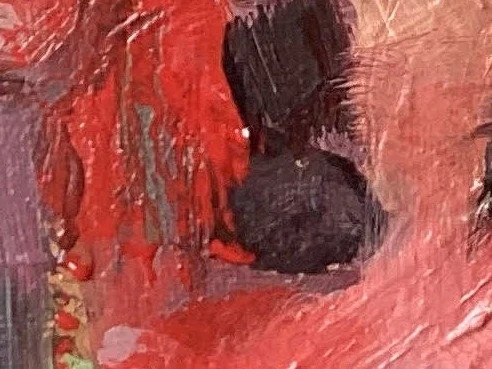
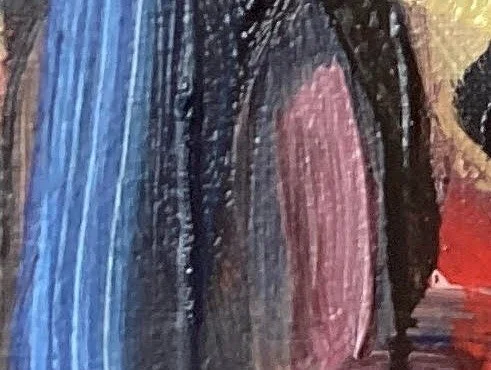
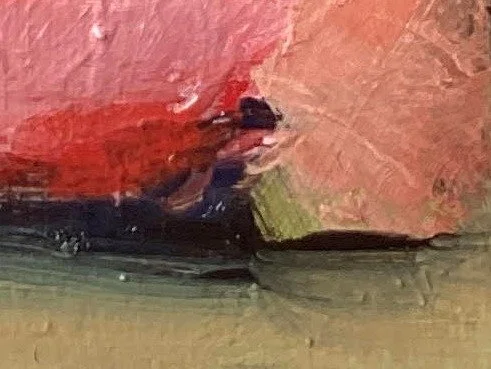






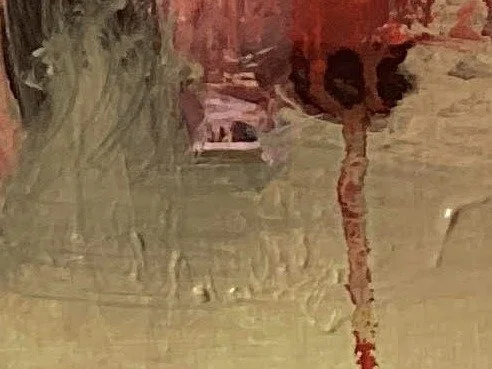

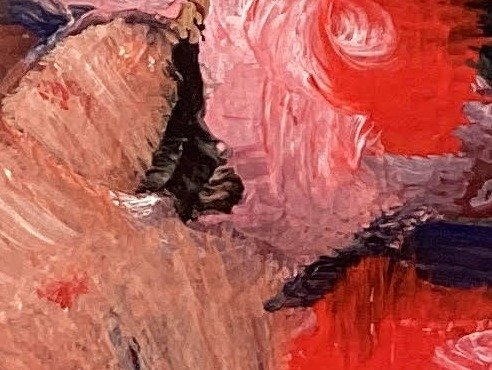

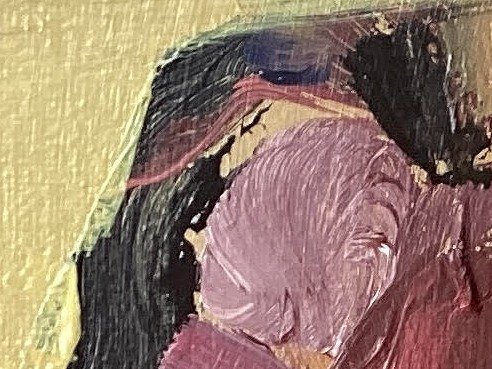
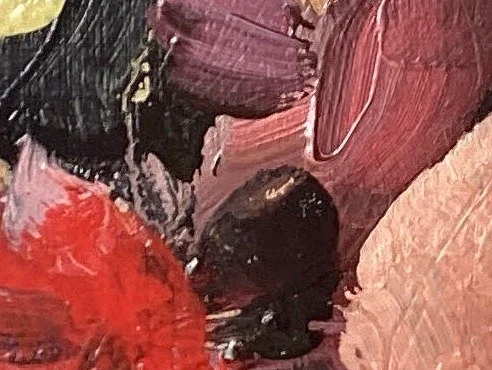
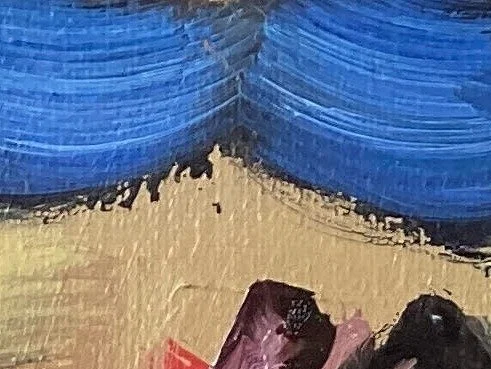

Cover art by Angie Quick
The oil painting “The actress (study)” is a work that explores the performance of sexuality. The painting borrows from imagery of the stage and asks the viewer what production are they witnessing.