Ultimi Habitores Mundi—Inhabitants of the World’s Edge
by Tanya Bellehumeur-Allatt
July 1983
Montreal, Quebec
I was twelve when we came home from Beirut to Canada. My dad sat in the front of the taxi at the Montreal airport, while I squeezed into the backseat between Maman and my fourteen-year-old brother, Etienne.
We were ultimi habitores mundi—inhabitants of the world’s edge—following my father’s nomadic lead. His last military posting—a one-year United Nations peacekeeping mission—had taken us from Yellowknife, Northwest Territories to Israel’s Golan Heights and from there to war-torn Beirut.
The taxi driver made no attempt at conversation. He had no idea where we’d come from, the war we’d endured, how narrowly we’d escaped the airport siege. To him, we were just four weary travelers in crumpled clothes.
I felt deflated and disoriented. After our long, interminable year overseas, where I’d counted the days until our return to Canada—our Promised Land—there was no one to meet us at the airport, no warm words of welcome. A woman in a red coat ran into the arms of a bearded man; a child held a bouquet of helium balloons and shouted, “Papa!” to the tall man in khakis ahead of us. But we quietly gathered our luggage and went outside to hail our cab. Maman said it was because our grandparents’ car wasn’t big enough. We had too much baggage.
The ugly, unfamiliar highway from the airport felt like a no-man’s land. It was Canada, but it wasn’t home. We were halfway through the hour-long drive when a loud crack and a swoosh of wind filled the car. Maman, Etienne and I hurled ourselves onto the cab floor, arms covering our heads, faces pressed against the seat backs. Above us, the membrane material of the car roof flapped and filled like a parachute. The car swerved but the driver kept going. Blood hammered in my ears.
Woven through the howl of the wind was my father’s voice, talking to the cab driver in French. He was shouting to be heard over the racket, but his voice didn’t carry the urgent, strident tone of an emergency. It took a few minutes for me to realize we hadn’t been bombed. The hardtop part of the car roof—defective or perhaps damaged from a previous car wreck—had succumbed to the pressure of the drive and blown off.
The driver shrugged. “Ce sont des choses qui arrivent.” It happens. He didn’t pull over to look for the lost roof or to see if it might have caused collateral damage.
We drove the rest of the way along the TransCanada, at least another half hour, with the wind roaring as if we were in the middle of a Mediterranean winter gale. When we finally reached 5972 12th Avenue in Rosemont—our one fixed compass point— I tumbled out of the taxi into Grandmaman’s arms. I could barely hear her voice, my ears still storming.
I wasn’t the same girl Grandmaman hugged goodbye the year before. My childhood ended when the war began.
Our family moved to the city of Sherbrooke, an hour and a half southeast of Montreal. Now we were back in the safety of Canada, living in peace: no more threat of kidnapping, random blackouts, sewage spewing from faucets. But resuming everyday life, a semblance of normalcy, was hard. I struggled to express myself in French, the language of our new city. It was my mother tongue, but I spoke a domestic, pidgin version that left me feeling embarrassed and deficient. I shoved all my memories and phobias from Beirut to the back of my soul’s closet and locked the door tight. How could other kids my age ever understand what I’d experienced in the past year? I jumped at loud, unexpected sounds, had a fear of crowds, felt increasingly isolated and weird. But I kept my paranoias to myself. In 1983, there was no psychological support for soldiers coming out of theatres of war, let alone for their families. The Canadian government expected us to integrate our new community and carry on.
After a year of patchwork schooling in the Middle East—five months of homeschooling in Israel and seven months in an American school in Beirut, interrupted by frequent ‘holidays’ when the war escalated—Etienne and I attended a regional English high school in the countryside near Sherbrooke. My outgoing, athletic brother made the senior football team, earning instant popularity and the season’s coveted title of MVP. But I retreated to the library for lunch and recess. I felt awkwardly different from the other kids at school, who’d lived in rural Quebec all their lives. As anglophones, they were part of a tight-knit minority. I didn’t fit in with them any more than I fit in with the francophone kids in my suburban neighbourhood. The impenetrable adolescent social scene and my overwhelm of emotions made for an unbearable combination. I had academic success, but I hated school.
At home, I blamed my parents’ life choices for my loneliness and social isolation. We rarely talked about what we’d left behind or where we’d come from, except to mythologize what had been the peak of my father’s military career.
Two years after our return to Canada I asked my parents to enroll me in the city’s elite all girls’ school for Grade Ten: a much-needed academic and personal challenge. For the first time since kindergarten, I would study in French, as a way of apprehending and fully inhabiting my cradle language. I hoped that in doing so, I might find (or reclaim or excavate) my identity, a stronger sense of self.
The new school was highly structured and academically rigorous; Collège Mont Notre-Dame was ambitious for its students. The full schedule appealed to me, and I started to make friends. In late January of that year—1986—I was huddled around a television screen with the other girls in my homeroom class watching Christa McAuliffe, the lucky teacher chosen for NASA’s Teacher in Space project. She was going to inspire and educate us from the great frontier of space.
As high-achieving students in an all-girls’ school, we felt part of her journey, as if we were riding on her bicycle handlebars, like E.T. cycling to the spaceship that would take him home to his faraway planet. My mother, brother and I had watched E.T. the summer it came out in cinemas, just a few weeks before we left for the Middle East. In moments of intense homesickness during our year away, I’d often thought back to E.T.’s urgent desire and effort to return to his planet after being accidentally stranded on Earth. Maman, Etienne, and I mimicked his raspy E.T. phone home and his iconic raised finger during Beirut’s frequent blackouts and dead phone lines.
But Christa McAuliffe was doing the opposite. She hadn’t been strong-armed into exploring a new frontier or left behind by mistake. She’d been selected from among ten thousand candidates. “I don’t know why they chose me,” she said in an interview with People magazine. “I’m still floating. I don’t know when I’ll come down to Earth.” She almost apologized for winning, saying to the other candidates, “When I go on the Shuttle, there will be one body, but I’ll be taking ten souls with me.”
At blast off, my class cheered with the crowd on the ground in Florida that included Christa McAuliffe’s husband and two children aged six and nine, as well as her proud parents. A family of four plus beloved grandparents, like mine.
But one minute and thirteen seconds after takeoff, our cheers turned to silence as we watched the Space Shuttle Challenger explode.
Some girls started to cry. Others drifted out to the hallway. I stood frozen in place in front of the T.V. feeling numb, shocked, triggered.
That night, at supper, Maman commented on my puffy face and red eyes. “What’s wrong?”
“The Shuttle splintered into a million pieces. With Christa McAuliffe inside. We watched it happen.”
“C’est horrible.” Maman expertly sliced an avocado and scooped its pit with a spoon. “Une tragédie, surtout pour la famille.”
“They had no business sending civilians into space,” my father said from his spot at the head of the table.
I had a lot to say about casting blame if that was the conversation he wanted to have. But lately every family meal ended in a fight, with me leaving the table to take refuge in my room. I felt too exhausted to argue, so I stayed quiet and slipped away as soon as I could.
I craved solidity, rootedness, belonging. I’d heard of cats walking huge distances to return to their former home after their owners had moved—a preposterous undertaking for such small creatures, especially if they had to cross highways and densely populated urban areas. But I understood the instinct, the longing, the need.
After four years in Sherbrooke, when my parents retired to a mountain village an hour and a half away, I didn’t follow them. It was a relief to enter the agency of adulthood, where I could make my own choices about the kind of life and environment I wanted for myself.
At eighteen, when I met Brian, he and his parents lived in a lakeside cottage on a piece of property that had belonged to his family for over eighty years. Brian, born in Sherbrooke like his parents and grandparents before him, had lived in Quebec’s Eastern Townships all his life. I was as attracted to his geography as I was to his mismatched mittens and gentle kindness.
I embraced marriage, a teaching profession, motherhood. Brian and I bought a small house a five-minute canoe ride from his parents’ home. We’d been living there for a year with our baby son, Jacob, when the owner of the village general store offered to keep track of our bill on an old-fashioned yellow card with my name and Brian’s handwritten on top. We could pay her at the end of each month. It was something she offered to all the locals.
Misty-eyed, I nodded my agreement from across the counter. After twenty-nine years on the move, I finally had an easy answer to the innocent but fraught question ‘where are you from?’ It was something I’d been looking for all my life: a stable, safe haven; a place to make my nest and remain.
The ancient beauty of the lake and mountains, the silence and tranquility of the village ministered to me at a visceral level. With each passing season, I drew healing from the familiar trees, my adopted landscape.
But there were inherent risks there as well. In 1999, when Jacob was two years old, the ice-cold lake almost claimed me in a mid-May canoe accident. After twenty minutes in the freezing water, I was rescued by Brian’s mother and a neighbour in the family motorboat, one of the only boats in the water so early in the season.
In the days and weeks after the accident I felt as though my life had been twice saved—first as a child in war-ravaged Beirut, where escaping car bombs, snipers and kidnappings could be a question of split-second timing— and then in early adulthood, from a freak near-drowning.
My love for the lake was tempered with this new, experiential knowledge of its nature—what Nietzsche characterized in Beyond Good and Evil as “boundlessly extravagant and boundlessly indifferent, without pity or justice.”¹ Nevertheless, I had a deepening sense of my life having a meaning beyond just myself. I felt a sense of allegiance to the lake, perhaps because I’d wrestled with it and survived.
Thirteen years after the accident, my parents—both in their seventies— came to live on our property, in a house on the beach. It was a satisfying full circle for me: I was now the family compass point, with my parents following my lead, rather than the other way around. When my brother came to visit from his home overseas, we had a place to gather, a maison paternelle like my grandparents’ home at 5972 12th Avenue, Rosemont had been.
Like me, my parents loved living near the water. They bought fifty-pound bags of black sunflower seeds at the local farmer’s coop to feed the birds, recording their seasonal arrivals and departures in a logbook next to the picture window. The lake reminded my father of his childhood in Témiskaming, northwestern Quebec. He planted trees around his house and mine—spruce, pine, walnut, birch—something he had learned to do from his father. “These trees will be here long after we’re gone,” he said to me more than once as I helped him pour bonemeal into the hole he’d dug. “They’ll outlive us both.”
By then, our family had grown. On a given Sunday, our four children could walk over and spend time with both my parents and Brian’s, who still lived a few streets over.
When it was time for university, all four children chose to leave the province and study in B.C. Unlike me at that age, they were keen to see what it was like to live elsewhere in Canada. But one by one, after graduation, they came back. Jacob and his wife bought a house in the village, near the elementary school Jacob first attended.
In that same season, when he had just crossed the threshold into his eightieth winter, my father was diagnosed with oesophageal cancer. He announced that he wanted to die at home, by the lake, with Maman, Etienne and me at his side.
My brother flew back to Canada from his home in France. When my father could no longer climb the stairs to his bedroom, Etienne and Brian moved my parents’ bed into the living room. That way, my father could look out at the frozen lake; my mother could sleep beside him, as she had done for fifty years.
Our children came to say goodbye to their beloved Opa.
Etienne, Maman and I held vigil with my father until he crossed over into death—arguably the hardest journey he had asked of us over our long history together.
We buried him in a family plot in our village cemetery, on a hill overlooking the lake, as he had requested. I go there each year with Maman, on the anniversary of his death, to lay flowers on my father’s grave, grateful that he—an inhabitant of the world’s edge— chose my village as his final resting place, the last stop on the long and circuitous journey of his life. When the time comes, I plan to follow his lead.
“Aphorism 9.” Beyond Good and Evil, translated by Helen Zimmern, 1906, reprinted in Courier Dover Publications, New York, 1997.
ABOUT THE CREATOR
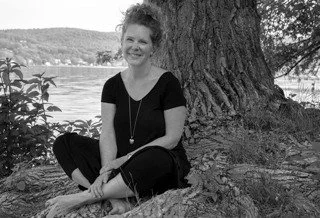
Photo credit: Louise Abbott
Tanya Bellehumeur-Allatt is the author of the critically acclaimed Peacekeeper’s Daughter: A Middle East Memoir (Thistledown, 2021) and two poetry collections: Chaos Theories of Goodness (Shoreline Press, 2022) and The Hospitality of Trees (Shoreline, 2025). Tanya holds an MA in English Literature from McGill and an MFA in Creative Writing from UBC. Her latest memoir, Carrying War, will be published by Dundurn Press in August 2026.
Website: tanyaallattbellehumeur.com
Facebook: @TanyaBellehumeurAllatt
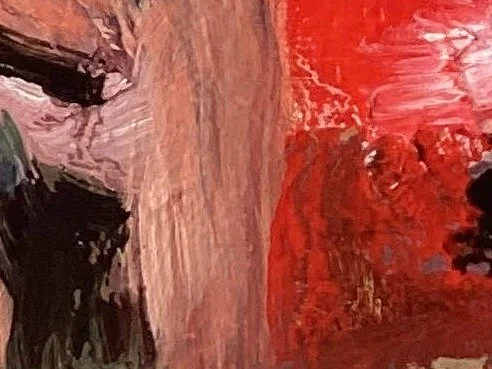
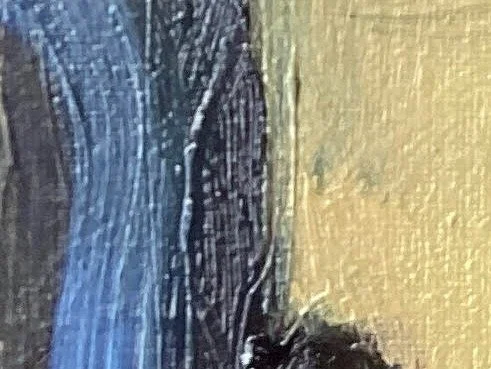
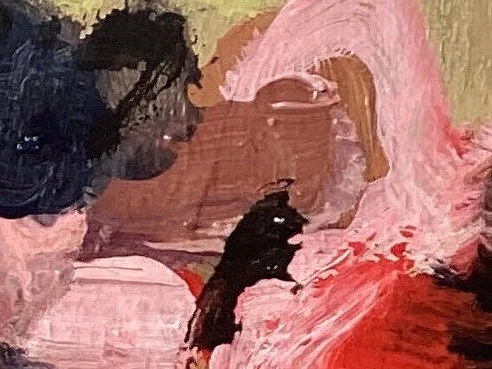
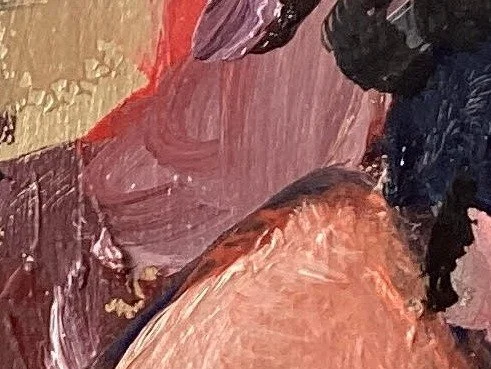
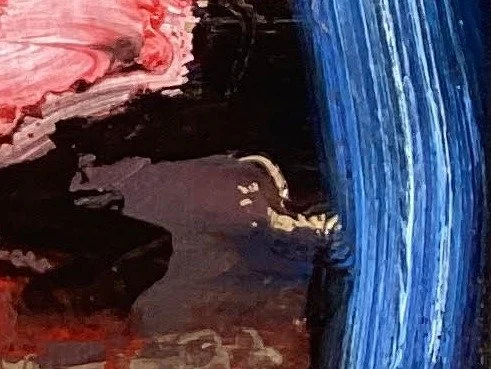
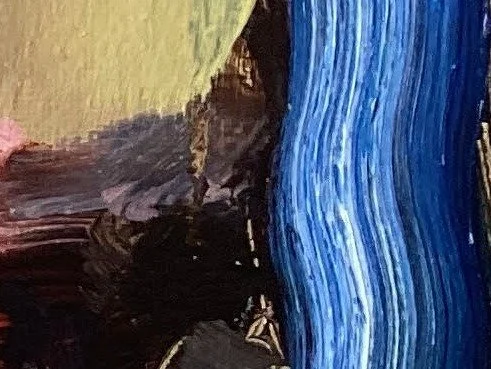
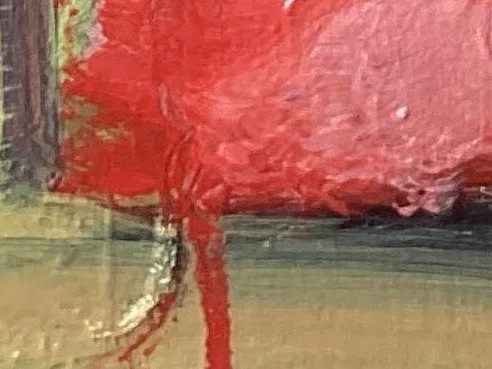
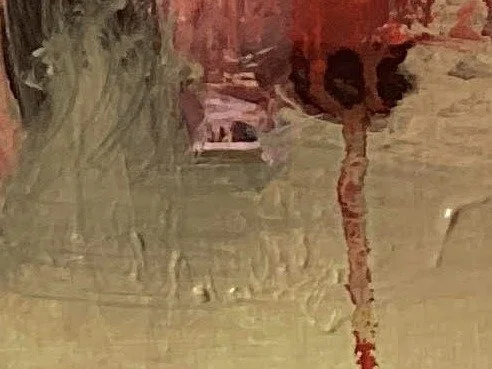
Cover art by Angie Quick
The oil painting “The actress (study)” is a work that explores the performance of sexuality. The painting borrows from imagery of the stage and asks the viewer what production are they witnessing.