
Earth's Curve
by Grace Schwenk
A great lookout once told me that September is the best month at the tower. I’ve spent the last week trying to understand why. The mountain is hot and dry. A minor heatwave has the temperatures hovering somewhere between eighty to ninety degrees. The air is choked with smoke from the surrounding fires. Haze hangs heavy around the peak, stagnant and ominous, taunting the wind to blow. Granite is silent, as if all the animals have fled. Pika don’t squeak from the talus slopes, birds save their songs for clearer days, and the resident mountain goat, Neetaka, hasn’t made an appearance yet this week. The wildflowers have begun their seasonal wither, leaving behind piles of red branch bones where the spotted poke knotweed once grew. My eyes are bloodshot, my throat burns every time I swallow, and my mind is snared somewhere in the thick daze.
The fire danger bumped to extreme, which means we’re on from eight to eight without days off. The overtime feels like a sick joke when I can’t even see a half mile into my viewshed. The flying ants, having returned with the heat, buzz in occasionally to break up the silence, and this time they’ve brought bigger friends—the damned wasps. Without any screens, I have to keep the doors and windows shut to keep the bugs out. Forty windows, high elevation, and no ventilation. I’m baked alive from sunrise until sunset. I sit in the same chair all day long, moving it from window to window to escape the direct sunlight. Every few hours, I muster up the courage to crack the door open. Hundreds of yellow jackets and white hornets seize the opportunity to invade the space. I swat them with my flip flop, run away shrieking when I miss, and close the door again. I suspect my karma is tanked with all the stinging creatures I’ve killed. I tried to coexist with them at first, but Selway kept trying to catch them. I guess keeping him safe is worth coming back as a fat, slimy leech in the next life.
It’s only been seven days, and I never thought I would say this, but I’m just about towered out.
↟
The morning weather predicts the heatwave will be interrupted by two days of severe thunderstorms. I laugh out loud from my chair as I copy the information down onto a clipboard. The cackle wakes Selway up from his nap. He hops down from the bed and mozies over to investigate.
“I’ll believe it when I see it,” I say, scratching him behind the ears.
The eighth day of September is just like the others. Hot, smokey, and buggy. My sanity is about as worn through as the linoleum peeling up from the floorboards. I try to remind myself that my time here is running short. That each day passed is one notch closer to my climb down. I want to be as mindful and present as I was in the final days of August, but nothing seems to help, not even the promise of a thunderstorm.
I copy the weather and return the clipboard to its nail. Not knowing what else to do with myself, I stagger over to the bed and flop down. Selway jumps up behind. Tears of boredom want to flow, but my eyes are even too dry for that. I turn my head and stare out the window into the smoke. I look into the blight of nothingness until the still heat and silence lull me to sleep.
A persistent knock wakes me some hours later. I bolt into an upright position, thinking it at first to be a visitor clambering up the stairs. I peer out the window to see I’m still the only person on the peak. The sound is just from the gate thwacking against the catwalk railing. It always does that when the wind blows strong, often a telltale sign about the ferocity of an incoming storm.
“Wait, there’s wind,” I say, rubbing my eyes. I jump off the bed and rush out to the catwalk. My eyes glass the viewshed, convinced the nap transported me to a different place in time. I can see everything. To the north lay the Grass Mountains jagged beneath a graying sky. The crowned point of Hard Butte, the teardrop of Hershey Point, and the brokeback top of Bruin Mountain reach high. The curve of North Loon and the pinnacle of South Loon standing tallest among the Salmon River Mountains to my east, with the gray bulk of Slab Butte just before them. Farmfields and roads sectioned off into a geometric pattern of squares in the New Meadows Valley stretch south. The Oregon flatlands lie gilded and golden just a mountain hop beyond. The sky is nearly gun metal gray over my sunset mountains. Dark cumulonimbus clouds hover above the Seven Devils on the western horizon. The wind pushes the clouds closer and closer to Granite. They become darker and thicker as they near, angrier and angrier as they are beaten and battered against one another. Their frustration brings grumblings of thunder that shake the tower beneath my feet. I hurry inside and bolt the door tight. The windows rattle and the gate flaps harder in the wind. I grab my binoculars and climb on top of my lightning stool. Awake and aware of my beating heart for the first time in days, as if the electricity carried by these clouds brought me back to life like some lookout Frankenstein. The clouds fight for room as they near Granite, pushing harder and harder to knock each other out of the sky. Cloud-to-cloud lightning fizzles every time they touch, creating a flash of purple light in the ever-darkening sky. Tingles spread throughout my body as the storm engulfs Granite. I use my hand to smooth the floating hair on top of my head back into place. That’s when the clouds decide they’ve had enough. A flash erupts from the mass of gray, striking the earth with such suddenness that it nearly knocks me off the stool. The sky is quiet and calm following the first strike, but only for an instant. Soon, an ear-splitting bolt smites down, illuminating the sky and torching some unlucky point of the earth. I track the strikes as the pattern repeats itself. Moments where the entire world is condensed in the electricity of a single strike and the stillness that separates those flashes.
I used to crave strikes. I spent the early summer storms with my nose pressed against the glass, tacking sticky notes where each one hit. Frantic, wild, and determined to spot a smoke. To prove myself as a lookout. Now, I crave those moments in between. When the sky tells the clouds to hush. The deep breath before more thunder and lightning. The respite of sound. The repose of a storm. This pull is gentle. I’m no longer here to prove anything. Instead, I’m here to watch rather than report. Merely a spectator to nature in its most raw and beautiful form. A witness to a thunderstorm.
I don’t know how long Granite sat in the heart of the storm. Minutes that felt like a lifetime. The storm pulls away to the northwest as quickly as it came, closing in on Chris at War Eagle Lookout. I imagine he’s also perched atop his lightning stool. His poofy hair sticking straight up from all the times he’s run his hands through it in nervous anticipation. Saying hello to the storm while I say goodbye. We haven’t seen each other since Hard Butte due to the heatwave, but at least we’re still connected by the storm.
Light slowly pours back in as the clouds move out of sight. The wind calms to a gentle breeze. Birds chirp for the first time in days. Dry static hums in the air. The earth smells of rain, though only a few drops fell from the sky. There can’t be more than a millimeter in the rain gauge, hardly enough to drench the flames burning out there somewhere. Over two hundred strikes touched down in my viewshed. Linda’s True Middle Earth, between Granite and Slab Butte, seemed to get hit the most. I’ll be sure to scan that area every five minutes.
I leave the doors and windows wide open. Fresh air blows in, and the wasps stay out. Hopefully, the storm chased every last one off this mountain for good. The air is clean and crisp, chilling me for the first time in days. I start a fire and leave the stove cracked. Heat slowly fills the cab as the logs simmer and pop. Grabbing a book, I sit in the open doorframe with my feet on the catwalk. Selway hops down from the bed and curls beside me, our bodies barely fitting in the narrow space. The heat of the fire warms my back as cool air brushes across my face. I scan Linda’s True Middle Earth for smokes at the flip of every page, throwing in a full head rotation every few pages. I’m maybe an hour in when I spot something red running up the ridge toward the tower. Something I’ve never seen on Granite Mountain before. Not a flame, but a fox. A ravishing little red fox with black socks, a white chest, and a fluffy tail. Her orange fur glistens in the bright post-storm sunshine. She trots, ears pricked forward, along the eastern ridgeline, pausing occasionally to investigate a dry tuft of grass. She comes to a standstill at the base of the peak, where the slope drops dramatically, creating the optical illusion of a cliffside.
My mother calls this the earth’s curve. She says everybody has one. She first pointed it out to me one day at the Oregon Coast. If you stare hard enough as far as the eye can see, she said, you can pick out where the earth curves. I stared long and hard at the cold gray water of the Pacific Ocean, but I never understood what she meant by that until I climbed to the top of Granite. The earth’s curve is the drop. The step away or sail away into the unknown. The one part of your world you can’t see but know is there. Just waiting for you to round the bend. It makes sense that my mother, a woman with saltwater in her blood, saw the earth curving on the ocean not long after her divorce from my father. My bones are made of mountain stone. So, of course, I see it here instead of there.
The earth’s curve reminds me of my mother, but so does the fox. I was four years old when I crawled into her bed one June night with tears in my eyes because someone was screaming outside my window. She giggled and told me not to be afraid. That it was just the fox that lived beneath our shed, most likely calling to her young. She told me that foxes are resilient animals. That they’re clever, wise, and always follow their intuition. That to see one is a sign you’re on the right path. I stayed up the rest of that night listening to the fox shriek.
I hold my breath, careful not to startle the fox or wake Selway. The fox’s muscles tense at the ledge; she looks from one side to the other, as if gathering courage, before vaulting off the peak’s shelf. I catch one last glimpse of her body in a graceful arch before she disappears. The rational side of me knows she could see the ground below. But, from where I’m sitting, it looks as if she didn’t. That, perhaps, she jumped, not knowing the ground was there to catch her. The ultimate leap over the earth’s curve into the unknown.
Many things about Granite Mountain remind me of my mother. Maybe that’s why I always refer to the mountain as she. Many people told me not to go. To stay, teach, and finish school. She’s the one person who told me to go. To take a leap of my own.
September started out rough. I spent the first days hiding from wasps and baking like a potato. Then, the first September storm rolled through. With it came the fox, a sign that I’m on the right path. That I’m exactly where I need to be.
The storm, the fox, the earth’s curve, the mountain, and my mother. All wisps of something greater than myself. Something I believe I have come to understand here at Granite.
I get it now. The September magic.
ABOUT THE CREATOR
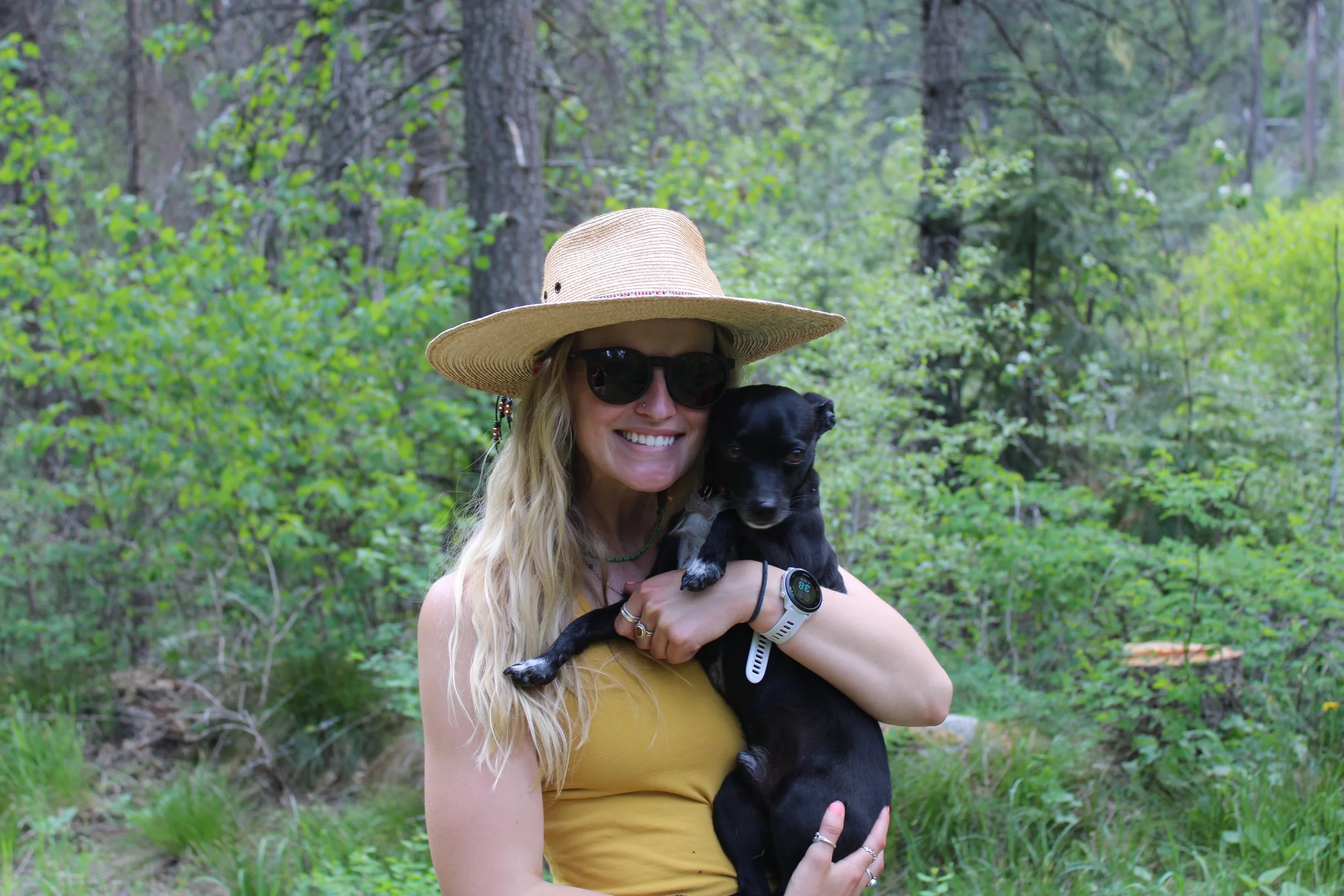
Grace Schwenk is a writer from the Bitterroot Valley of Montana. When not writing, she can be found getting lost in the mountains with her pack of hiking chihuahuas.
Instagram: @grace_schwenk
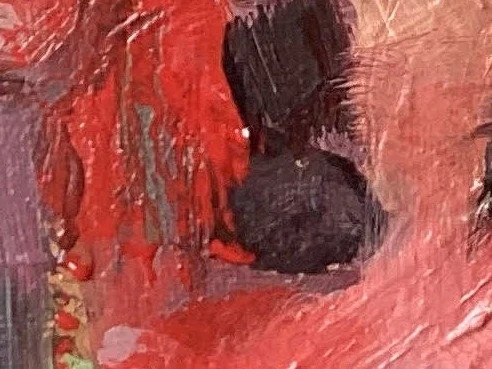
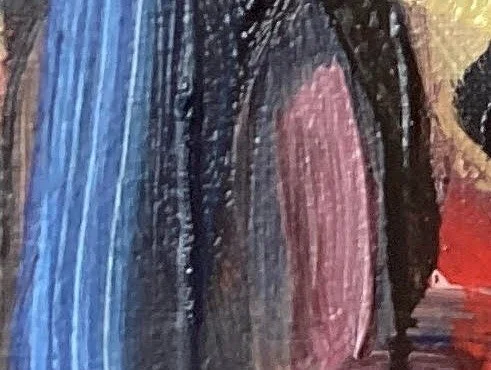
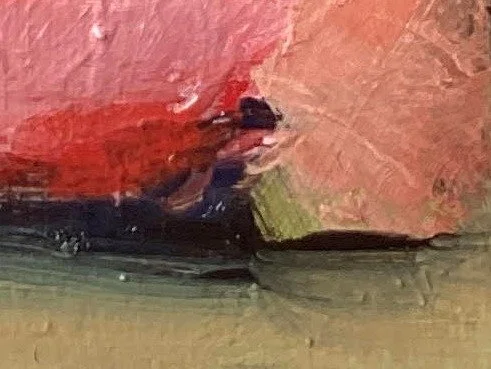
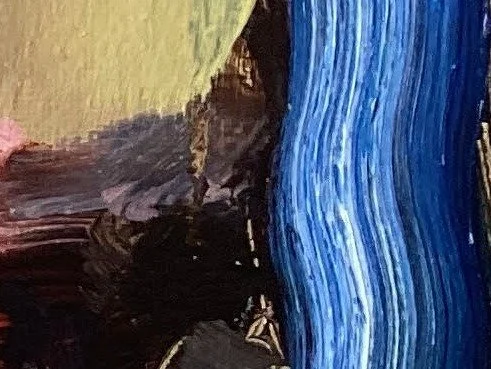
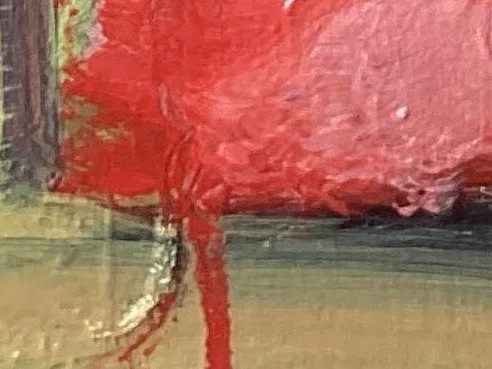
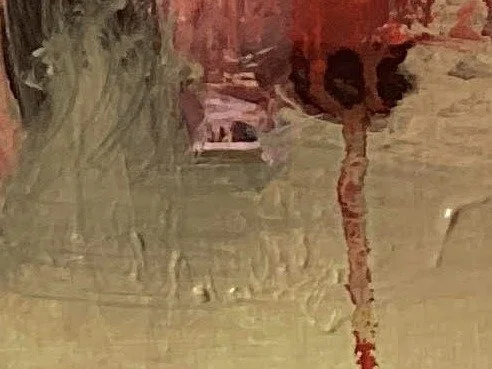
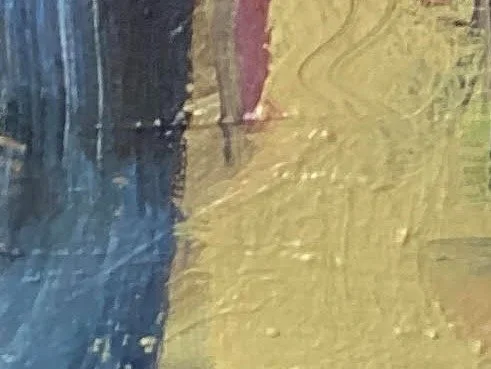
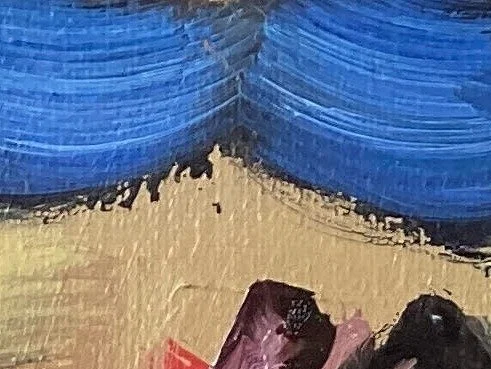
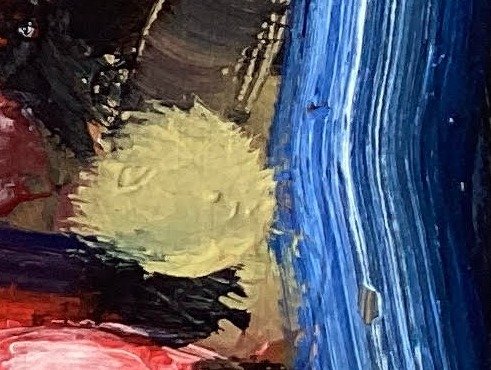
Cover art by Angie Quick
The oil painting “The actress (study)” is a work that explores the performance of sexuality. The painting borrows from imagery of the stage and asks the viewer what production are they witnessing.