Sinking
translated by Katia Grubisic from David Clerson
On the first day, my son confided that he thought his brain was rotting. When he ran his hand through his hair it came out by the fistful. His scalp was dry and scaly, but he said the inside of his skull felt swollen and damp. Sometimes he had the sensation there was something leaking from his cranium and dripping onto his tongue, and he was swallowing it.
More and more, he dreamed he had mushrooms growing inside his head, rooted inside his cortex and proliferating. My son was worried they were spreading in his throat, too, and soon his esophagus, his entire digestive system. He described his brain as heavy, its contents swampy and obscene, like a malignant tumour that could alter his perception of reality; he talked about the apocalyptic world he lived in now—visions of endless muddy fields under a spongy sky. The landscape is dissolving, he said; his reality, I understood, grew out of decay.
He told me this as we walked among the firs near a peatbog, stepping through light-green moss engorged with water and sprouted with ferns. I was wearing rain boots, but my son’s shoes were sopping. He was sweating, too; the day was unnervingly hot and humid, almost a heat wave. He was breathing noisily. Mosquitoes swarmed around him. His T-shirt was soaked with sweat and slick against his chest, and the smell of his body mingled with the sour smell of the bog. He was oddly taller than I remembered (even I, his mother, didn’t remember him being so tall). He was rounder, too. His belly bulged out below his clammy chest. A smattering of grey dotted his cheeks and clumped at his temples. His long hair was plastered to his forehead and straggled down his neck and over his ears, but the top of his head was bare, with only a few hairs growing sparsely, showing patches of sunburnt skin. It occurred to me that I hadn’t seen him that bald since infancy, since the first few months of his newborn life.
He had just shown up at the door that morning at the end of June; there he was when I opened the cottage door. This was the family cottage, in the Mauricie, the cottage I had inherited from my father who had inherited it from his, where since I’d retired I lived alone from early May to the end of October, before the start of winter, with only rare visits from my sister (my daughter almost never came). I hadn’t seen my son for over ten years, and his visit caught me by surprise. I’m not sure I thought he would come back at all, but when I saw him standing there, waiting, not knocking, I recognized him right away. I offered him something to drink. He wanted water. I asked if he was hungry, and he shook his head no. I called him Mathias and he called me Mama and I wanted to believe that nothing had changed since childhood, but I knew otherwise.
He was the one who wanted to go out to the peatlands together, so I walked out with him on the gravel road. There wasn’t a cloud in the sky. A strong wind was coming up, blowing away the mosquitoes and the black flies. The day was so hot I wished I’d brought a hat. Mathias and I slipped under the branches among the ferns. There was no path to get to the bog, but I knew my son remembered the way. Despite the beating sun, the underbrush was dark as we moved east, landmarked by one particular copsed hillock. I only wore reading glasses, but my eyesight was getting worse with age, and the forest around me seemed blurry and by times unreal.
I hadn’t come back to the peat bog for a long time; I never really came out here. I spent my days in solitude, at the cottage. I would roam around the woods behind the house on old ATV runs and hunting trails. Often I went deeper, wandering out beneath the trees. I wasn’t afraid of getting lost. I liked to breathe in the scent of the forest. I was alone. I looked for mushrooms among the thick carpet of needles and deadfall. I watched light glimmering delicately on the ferns.
But that day in June, I was walking in the boggy woods again with my son, listening to him talk about his rotting brain, about reality dissolving, and I remembered his letters, the dozens I had received since he left—pages and pages without paragraph breaks, that round, thick handwriting of his, words spilling into the margins, his thoughts increasingly unhinged as months, then years, went by. The letters were sent from Western Canada, and then, for over a year, from the United States and Mexico. At first I looked forward to their arrival, but that turned to apprehension and even sometimes disgust. Those letters came back to me now as I listened to him speak, his voice deeper, a man’s voice, a bit weary, as we walked farther east of the hill, in a depression hollowing slowly over time.
The trees around us grew spindly. Moss clung to the trunks. As we neared the peat bog, the evergreens grew dense and my son and I pried our way among them, pushing back the branches. I wondered how moose made it through, whether their antlers got caught. We were in the shadows and out of the wind, and clusters of mosquitoes seethed around our heads. It wasn’t the bites I minded, but the susurrating onslaught of their wings. I knew that the only way to avoid bugs in the woods was to walk fast, but the pines were slowing us down. I smacked at the insects as they landed on my skin—skin my son had once known as beautiful, now going slack.
Mathias was walking ahead of me. His massive body sheared through the trees. I could hear him breathing. I knew he was sweating. My foot crushed a milk cap, those nearly immaculate white mushrooms, leaving it mashed on the ground. A stretch of blue sky appeared as we broke through the curtain of trees, stepping into the bog that unfurled suddenly before us in the sun, which was beating down so hard it would surely best the mosquitoes. Our feet sank into the deep green moss like a snare.
The wetland was a tract of moss—green, yellow, and red, sometimes wine-dark, where swam laurel grew, and colonies of bog rosemary, clumps of pitcher plants—those easily recognizable cone-shaped carnivorous plants—and here and there some tamarack. In the centre, a pond opened up like an eye in the sphagnum, closing almost imperceptibly over the years as if the bog were smothering it.
As Mathias and I advanced, our feet sluiced deep holes. They would heal up before long. Sunlight glinted on the surface of the pond. Dragonflies flew around our heads. The heat was heavy. I remembered that when Mathias was a child he thought there were creatures trapped in the peat, their paws or hooves sucked into the moss as it swallowed them up. I remembered too that he wondered if beneath the bog there was still a bit of the lake it had strangled out slowly over centuries, now just a pond, and if any bugs or fish lived down there. And I remembered how he would lean toward the greenish trumpets of the carnivorous plants and shove his finger inside, laughing as he imagined them closing over his skin, and still over the peat bog the sun shone hotter and stronger in that cleft in the heart of the woods.
I remembered his words, what he had said earlier about feeling like there was an apocalypse in his head, like the white stuff in his skull was dripping into his body, irrigating him, and that it was seeping out of him and contaminating reality, asphyxiating it. I saw him standing near the pond. It looked like a dragonfly had landed on his forehead. He was motionless under the blue, saturated sky. His bulk seemed to be sinking into the sphagnum. I wasn’t sure, because of the distance and the sun, but maybe he was closing his eyes, and I wondered what was going on in his head, what stories were sprouting in the rotting matter inside his brain, and whether he would tell me those stories the next day.
I was silent on the way back, as was he. A kettle of turkey vultures circled above the gravel road as the wind blew between the trees. The first drops came when we were back at the cottage. Clouds thickened in the sky as darkness fell. The rain that night was torrential, hammering at the tin roof and drowning out every other sound. It leaked into the time-worn walls. During the few rare moments when the rain stopped, we could hear the deafening shrieks of the peepers around the pond by the road and the heavier lowing of the bullfrogs along the lakeshore below the cottage.
I was tired, but didn’t get to sleep until late. I couldn’t be sure if Mathias had fallen asleep. I hadn’t eaten much, and he’d barely tasted the tourtière I’d taken out of the freezer that morning. The sun had drilled into our skulls. We had gone to bed early, in the only bedroom in the cottage, where for many years I had gotten used to sleeping alone. Mathias had taken his old bed near the stairs, between the shelf still crammed with books he’d read when he was a teenager, and a window battered by the storm.
The wind stayed up even after the rain stopped at dawn, shaking fat drops loose off the leaves. I had only slept a few hours, probably barely two or three, and awoke still tracking the taste of my dreams. I fell back asleep shortly after the break of day.
Translated from David Clerson's Mon fils ne revint que sept jours, published by Héliotrope in 2023; by permission of the publisher.
ABOUT THE CREATORs
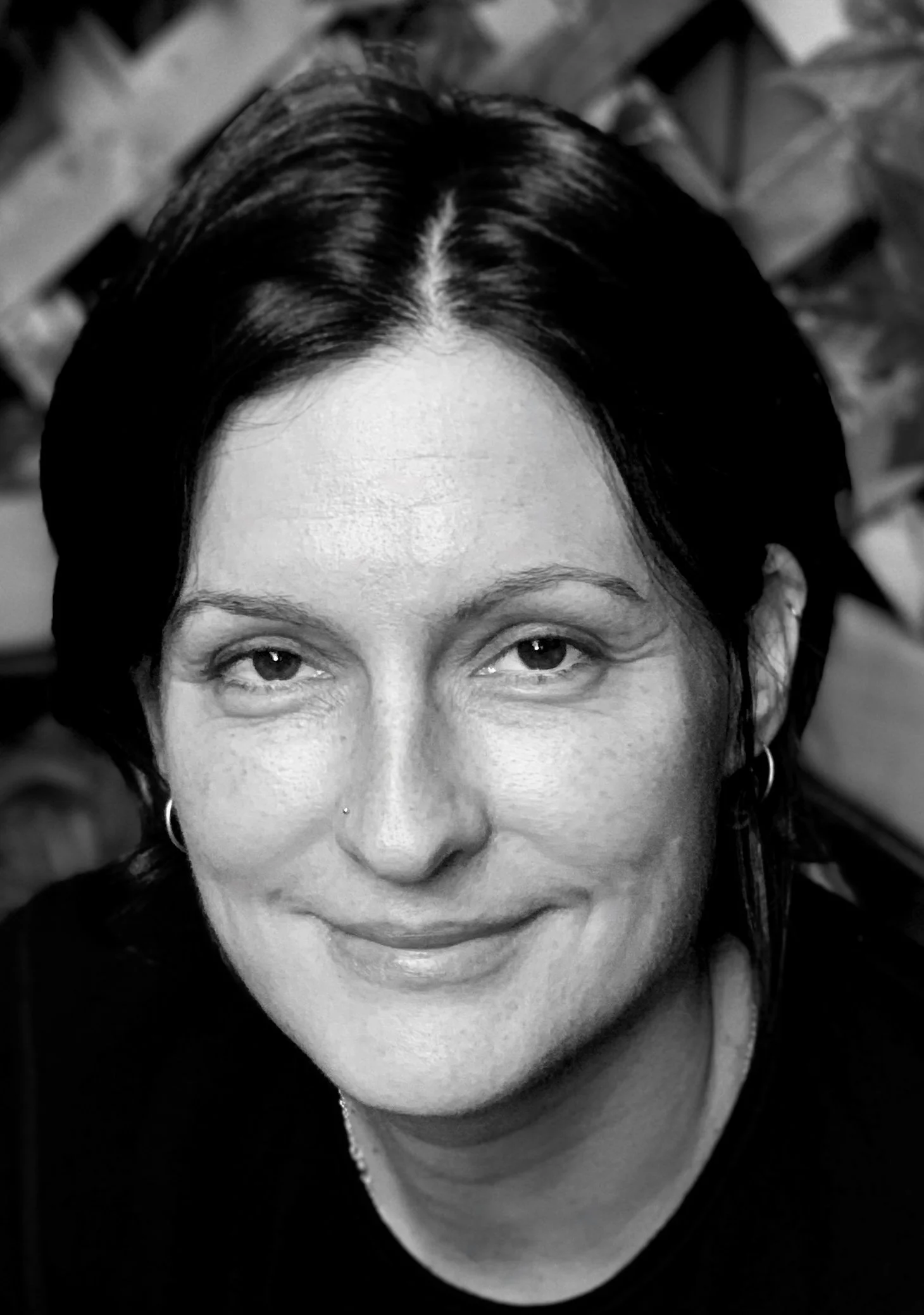
Photo credit: J. Parr
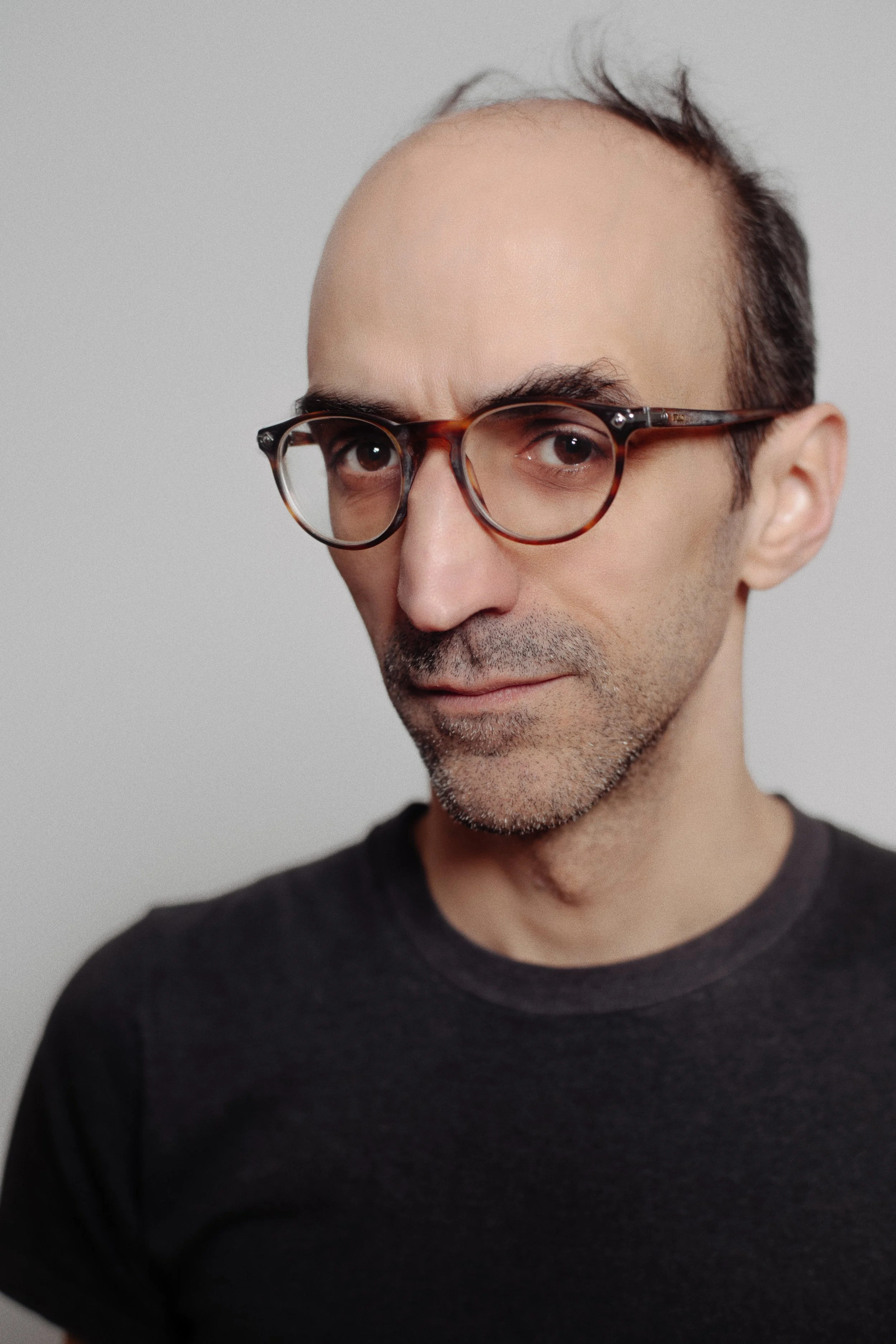
Photo credit: Charlie Marois
Katia Grubisic is a writer and editor as well as a literary translator. She won the Gerald Lampert Memorial Award for her collection of poems What if red ran out, the Cole Foundation Prize for her translation of David Clerson’s book of short stories To See Out the Night, and the Governor General’s Award for her translation of Marie-Claire Blais’s Nights Too Short to Dance.
David Clerson is an award-winning Quebec writer, the author of four novels and a collection of short fiction. His debut novel, Frères, won the Grand Prix littéraire Archambault, and his book of short stories, Dormir sans tête, was shortlisted for the Grand Prix du livre de Montréal. His novel Mon fils ne revint que sept jours, from which this excerpt is taken, was a finalist for the Governor General’s Award and has been adapted for film.
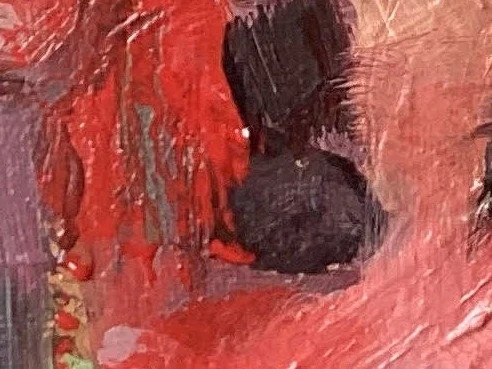
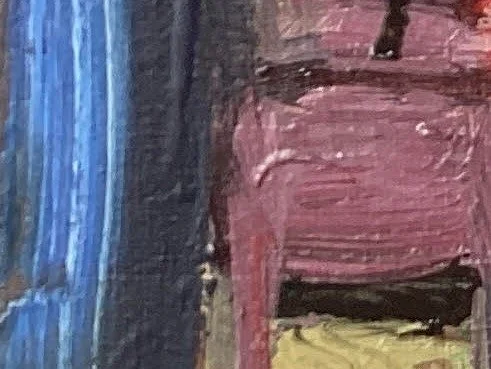
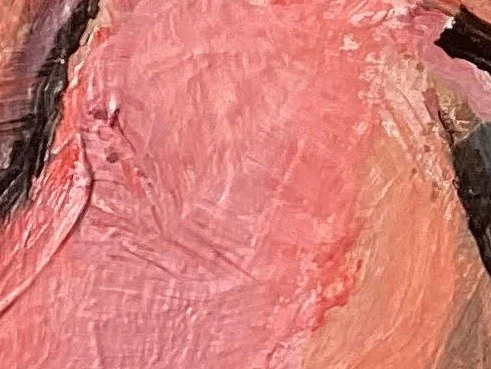
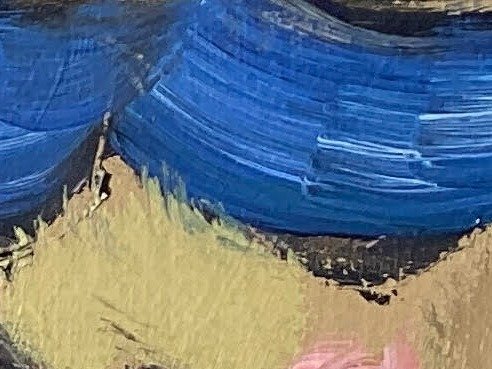
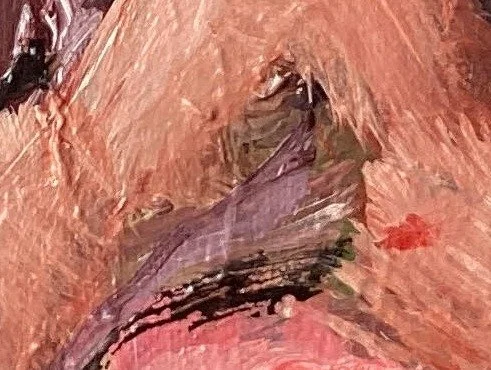
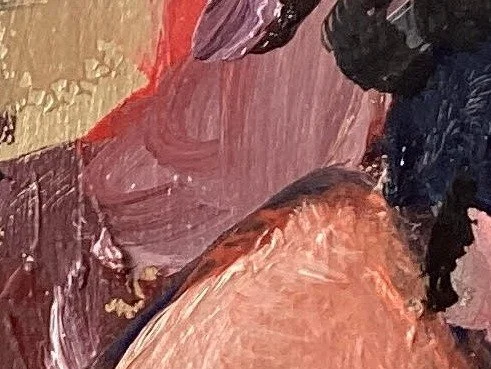
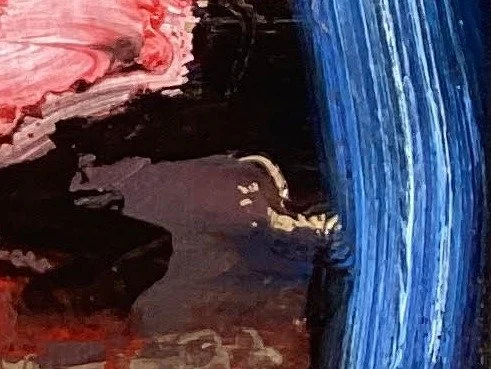
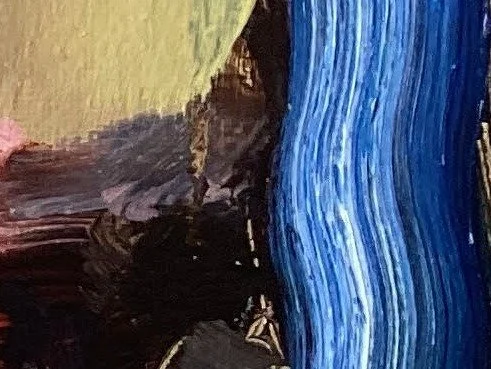
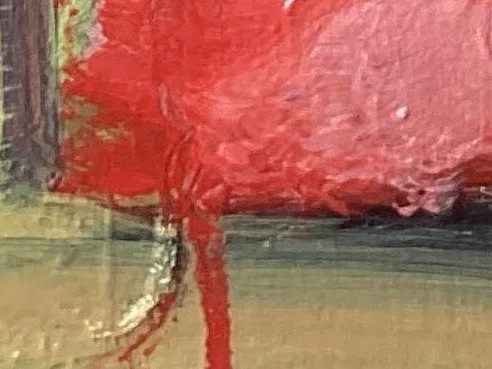
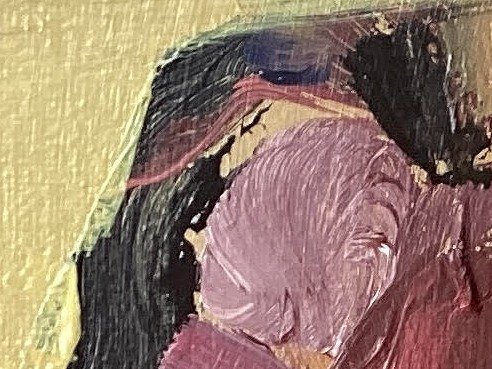
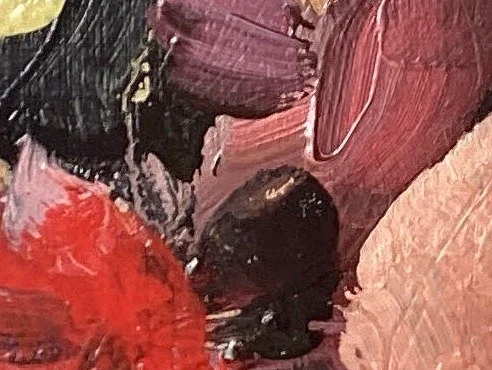
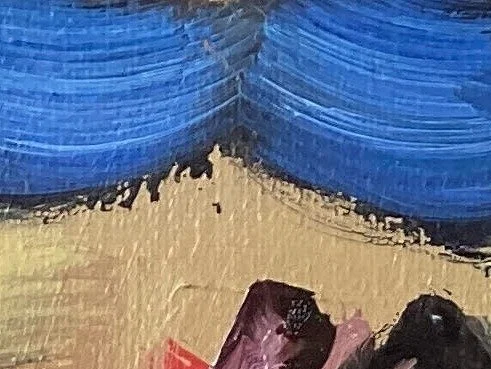
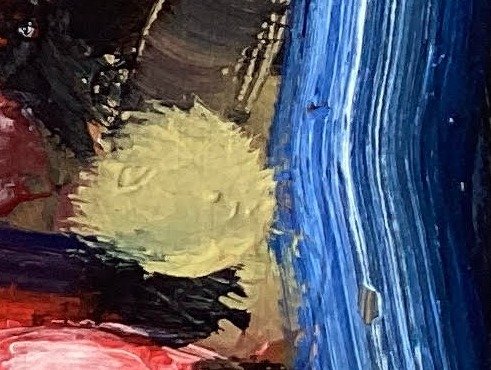
Cover art by Angie Quick
The oil painting “The actress (study)” is a work that explores the performance of sexuality. The painting borrows from imagery of the stage and asks the viewer what production are they witnessing.